Kyushu Winter 2026–27: Weather, Snow and What to Wear
Does Kyushu get snow in winter? Find December to February temperatures, snowfall data, clothing advice and six winter attractions, from frosty mountain scenery to the Nagasaki Lantern Festival. Winter 2026–27 is forecast to be warmer than average.
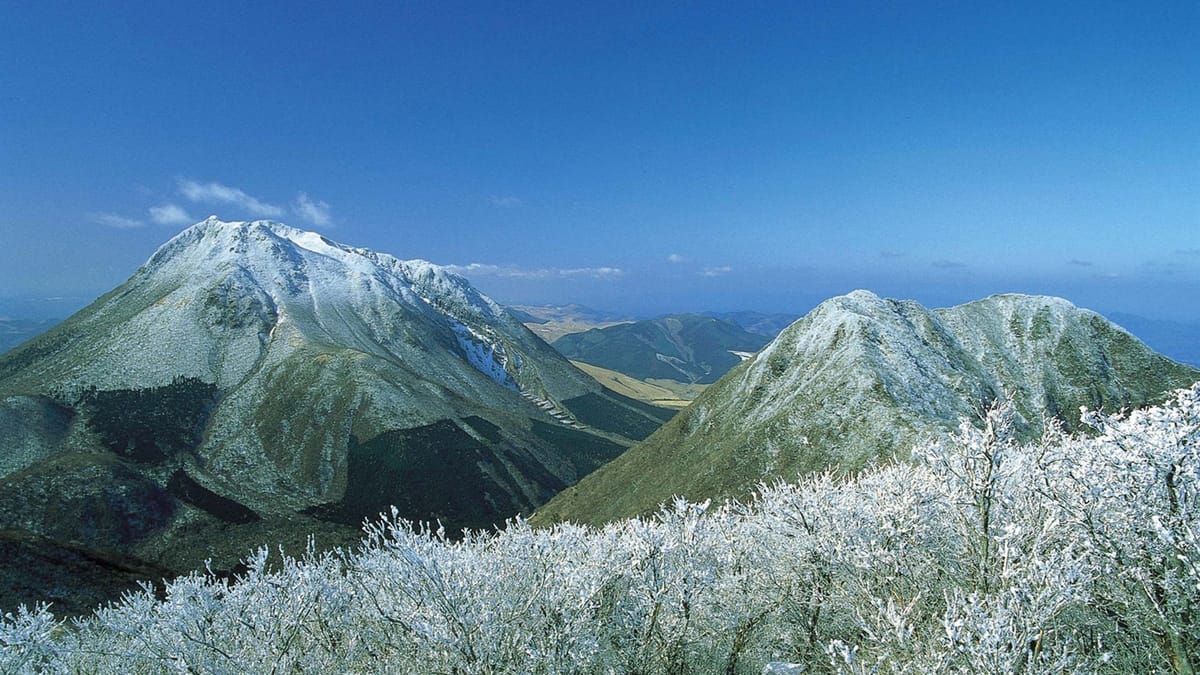
Kyushu (九州) does get snow in winter, but it rarely settles in the cities. Fukuoka (福岡) averages around nine days with snowfall in January, yet its average monthly maximum snow depth is just 1 cm. For proper winter scenery and rime ice, head into the mountains around Aso, Kuju, Unzen or Mount Tsurumi near Beppu. In the cities, thermal layers and a medium-weight winter coat are usually enough.
Two questions come up repeatedly when planning a winter trip to Kyushu: Will there be snow, and do you need a heavy down jacket? The answers depend on where you are going. Cities such as Fukuoka, Nagasaki (長崎) and Kumamoto (熊本) average around 6–7°C in January. Snow occasionally falls, but accumulation is rare. In mountain areas above 1,000 meters, including Aso (阿蘇), Kuju (九重) and Unzen (雲仙), early-morning temperatures regularly drop below freezing, making snow-covered landscapes and rime ice much more likely.
Using Japan Meteorological Agency climate averages and long-range forecasts issued in autumn 2026, this guide compares December to February temperatures, snowfall and clothing needs across six locations in Kyushu. It also covers four mountain areas for winter scenery and six seasonal attractions.
Does it snow in Kyushu in winter?
Yes, but in lowland Kyushu, snow usually melts as soon as it lands. Fukuoka records snowfall, including sleet, on an average of 9.2 days in January, while its average maximum snow depth for the month is just 1 cm. Mount Aso is far more promising for snow, averaging around 20 days of snowfall in January and a maximum snow depth of 17 cm.
| Location | January average / high / low | Average January snowfall days | January maximum snow depth |
|---|---|---|---|
| Fukuoka | 6.9 / 10.2 / 3.9°C | 9.2 days | 1 cm |
| Nagasaki | 7.2 / 10.7 / 4.0°C | 7.0 days | 2 cm |
| Kumamoto | 6.0 / 10.7 / 1.6°C | 6.6 days | 1 cm |
| Oita (大分) | 6.5 / 10.7 / 2.6°C | 6.4 days | 1 cm |
| Kagoshima (鹿児島) | 8.7 / 13.1 / 4.9°C | 4.3 days | 2 cm |
| Mount Aso (mountain observation station) | −1.4 / 1.9 / −4.5°C | 19.9 days | 17 cm |
| Hong Kong (subtropical climate comparison) | 16.5 / 18.7 / 14.6°C | Not applicable | Not applicable |
Figures are the 1991–2020 climate averages. Mount Aso figures are reference values.
Northern Kyushu has plenty of cloudy days in winter but relatively little precipitation. Seasonal winds blow in from the north, crossing only a short stretch of sea and picking up limited moisture. This is why Fukuoka often experiences overcast skies and occasional snowflakes rather than heavy snowfall. Strong cold waves are an exception. On January 22, 2026, a heavy snow advisory forecast up to 5 cm of snowfall over 24 hours in some northern lowland areas. If seeing snow is a priority, reserve a day in your itinerary for the mountains.
What is Fukuoka’s weather like in December?
Fukuoka averages 9.1°C in December, with daytime highs of 12.6°C and early-morning lows of 5.8°C. Snow is observed on approximately six days, but accumulation is extremely rare. In December 2026, sunset in Fukuoka falls between 17:10 and 17:20, so plan outdoor sightseeing for before 16:00 where possible.
Which is coldest in Kyushu: December, January or February?
January is the coldest month, followed by February, while December is comparatively mild. Fukuoka averages 9.1°C in December, drops to 6.9°C in January and rises to 7.8°C in February. Nagasaki averages 8.1°C in February. Since February is only about one degree warmer than January, pack similar winter clothing if you are visiting for the Nagasaki Lantern Festival or early-blooming Kawazu cherry blossoms.
Is Kyushu expected to have a warmer winter in 2026–27?
A warmer-than-average winter is more likely, although temperatures will fluctuate. In its September 18, 2026, cold-season outlook, the Japan Meteorological Agency (JMA) gave northern Kyushu a 60% probability of above-average temperatures from December through February. The probability for southern Kyushu was 50%.
The Fukuoka Regional Meteorological Observatory followed with a three-month forecast on October 20, covering November through January 2027. It predicted that northern Kyushu would experience less cold-air influence, higher-than-average temperatures and above-average precipitation. However, brief incursions of strong cold air could still produce significant temperature swings. A mild seasonal average does not mean every day will be warm, so pack for sudden cold spells.
What should you wear in Kyushu in winter?
For city sightseeing, thermal underwear, a sweater and a medium-weight coat are generally enough. In the mountains, switch to a heavy down jacket with gloves and a warm hat. Shopping malls, stations and restaurants are heated, creating a noticeable temperature difference between indoors and outdoors. Wearing several removable layers makes adjusting much easier.
| Destination or activity | Typical January temperatures | What to wear |
|---|---|---|
| Central Fukuoka, Nagasaki, Kumamoto, Oita and Kagoshima | Around 10–13°C during the day and 2–5°C in the early morning | Thermal underwear, sweater, medium-weight coat or lightweight down jacket, plus a scarf |
| Mountain areas including Aso, Kuju, Unzen and Mount Tsurumi | Around 2°C during the day and −4.5°C in the early morning | Heavy down jacket, insulated pants, gloves, warm hat and shoes with good traction |
| Evening illuminations, early-morning crane watching or rime ice viewing | Around 6–9°C colder than daytime temperatures | Add another layer to your city outfit and consider carrying disposable hand warmers (カイロ, kairo) |
Kumamoto has the greatest difference between daytime and early-morning temperatures, with January averages of 10.7°C and 1.6°C respectively. A lightweight down jacket that can be easily removed and folded away is particularly useful. Ordinary sneakers are fine for city streets, but waterproof shoes with grippy soles are a better choice for the mountains.
Where can you see snow and rime ice in Kyushu?
Aso, Kuju, Unzen and Mount Tsurumi in Beppu (別府) are four of the best places to look, provided a cold wave has passed through and you visit early in the morning. Rime ice (霧氷, muhyo) forms when moisture in fog freezes onto tree branches, creating delicate white ice formations. It requires fog, northerly winds and temperatures below freezing, and begins to melt after sunrise.
Mount Aso: Kyushu’s snowiest observation point
The Mount Aso observation station averages −1.4°C in January, with snowfall recorded on 19.9 days and a maximum snow depth of 17 cm. It is the only location in the comparison table that remains below freezing for extended periods. Mountain roads can become snowy or icy during cold waves. If you are not experienced in winter driving, avoid driving up the mountain under these conditions.
Kuju: Kyushu’s only operating ski resort
Kuju Ski Resort (くじゅうスキー場), also known as Kuju Forest Park Ski Resort (九重森林公園スキー場), is in Kokonoe Town, Oita Prefecture, at elevations of 1,150–1,330 meters. It has six ski runs. Following the closure of Gokase Ski Resort in Miyazaki Prefecture, Kuju became the only ski resort still operating in Kyushu. More than 50 snowmaking machines help maintain the slopes. The 2026–27 season is scheduled to begin on December 11, with opening hours from 9:00 to 17:00 on weekdays and from 8:30 to 17:30 on weekends and public holidays. For the background to Gokase’s closure, see our article Gokase, Japan’s Southernmost Ski Resort, Closes.
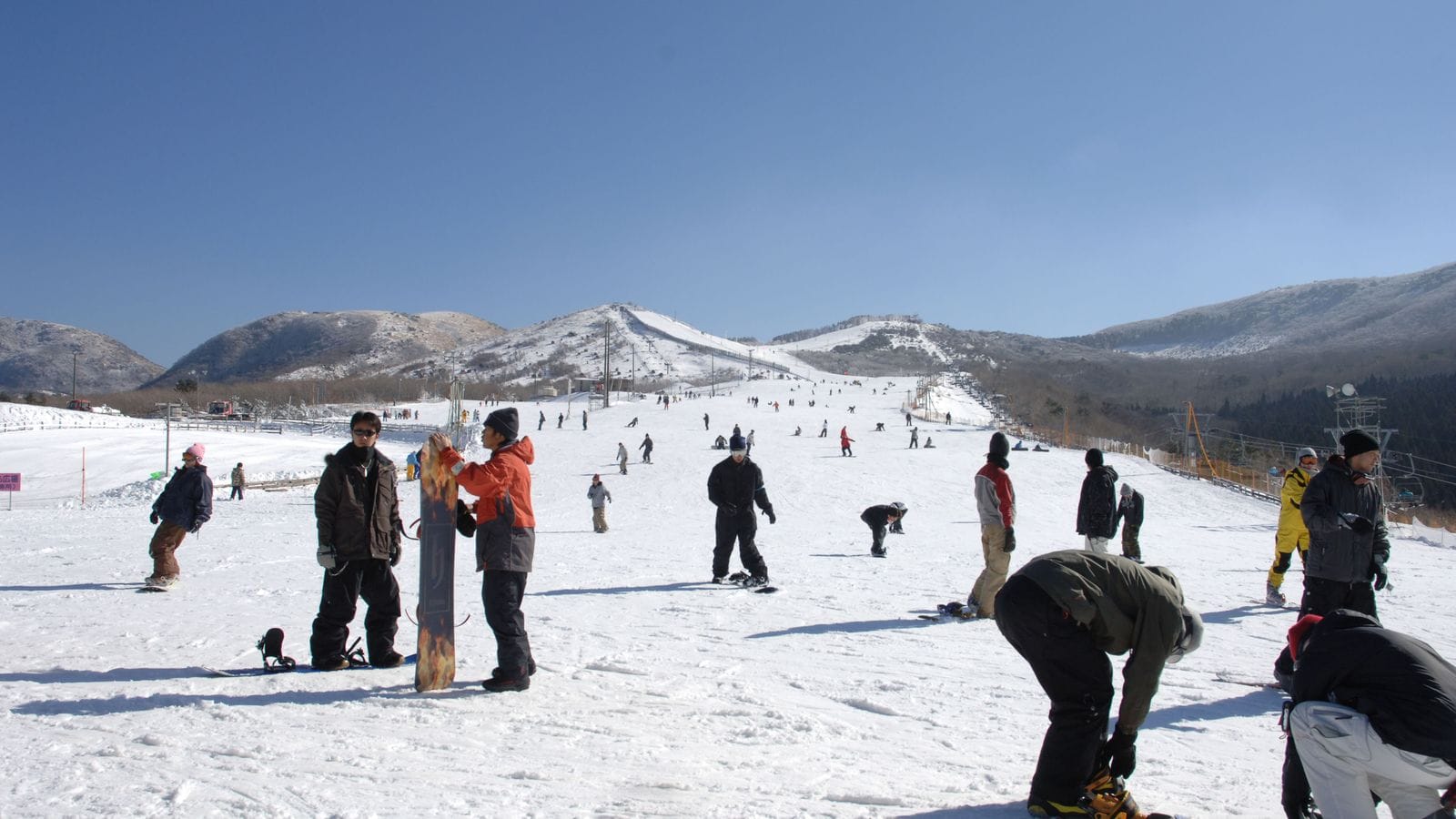
The resort relies almost entirely on artificial snow, so conditions cannot compare with Hokkaido’s natural powder. It is a practical choice for first-time skiers who do not want to travel all the way to Hokkaido. A full-day weekday lift pass cost ¥5,500 in the 2025–26 season; prices for the new season have not yet been announced. If you are driving without winter tires, bring snow chains.
Unzen: Take the ropeway to Mount Myoken for rime ice
The rime ice season in Unzen runs from December to early March, with the best chances from January to mid-February, particularly on the morning after a strong cold wave. You can reach Mount Myoken (妙見岳) without a strenuous hike by taking the Unzen Ropeway (雲仙ロープウェイ) from Nita Pass (仁田峠). During the winter season from November to March, the ropeway starts operating at 8:51, and an adult round-trip ticket costs ¥1,500. The Nita Pass Loop Road is open only from 8:00 to 17:00 in winter and closes during heavy snow. Strong winds can also suspend ropeway operations.
Mount Tsurumi: Reach the summit area in 10 minutes from Beppu
Mount Tsurumi (鶴見岳), rising 1,375 meters behind Beppu’s hot spring district, is accessible via the Beppu Ropeway (別府ロープウェイ). The ride takes approximately 10 minutes to reach the upper station at around 1,300 meters. After a winter cold wave, trees around the summit can become coated in rime ice. From JR Beppu Station, take a Kamenoi Bus (亀の井バス) for approximately 20 minutes to the ropeway station. During the winter season from November 15 to March 14, the ropeway begins operating at 9:00, with the last uphill departure at 16:30. An adult round-trip ticket costs ¥1,800. Of the four mountain areas, Mount Tsurumi is the easiest to include in a hot spring itinerary covering Beppu and Yufuin (由布院): enjoy the rime ice in the morning, then return downhill for an afternoon soak. For a comparison of Yufuin, Beppu, Kurokawa Onsen (黒川温泉) and other hot spring destinations, see our 10 Best Onsen Towns in Kyushu.
What are the best things to do in Kyushu in winter?
The six attractions below were chosen for three reasons: they are seasonal winter experiences, can be visited on a day trip from Fukuoka or with one overnight stay, and fit into a four- or five-day itinerary. They are arranged by the start of their seasons. Kuju Ski Resort and Unzen’s rime ice are covered in more detail above.
| Winter attraction | 2026–27 season | Best for | Less suitable for |
|---|---|---|---|
| Itoshima Oyster Huts (糸島のカキ小屋) | Approximately October 2026–April 2027, depending on the establishment | Groups of friends and families | Travelers who do not eat shellfish |
| Crane Watching in Izumi (出水のツル) | Mid-October–March; greatest numbers from late November to January | Photographers and travelers who enjoy a slower pace | Four-day itineraries focused mainly on shopping |
| Huis Ten Bosch: The Starlight Millions | November 6, 2026–February 25, 2027 | Families and couples who can stay overnight at the park or in Sasebo | Budget-conscious travelers, as admission prices vary by date |
| Kuju Ski Resort | Scheduled to open December 11, 2026 | First-time skiers | Skiers looking for natural powder snow |
| Rime Ice in Unzen (雲仙の霧氷) | December–early March; best chances from January to mid-February | Travelers with flexible schedules who can make an early start | Travelers with fixed dates, as rime ice depends on the weather |
| Nagasaki Lantern Festival (長崎ランタンフェスティバル) | February 5–21, 2027 | Lunar New Year travelers and those who enjoy illuminated night scenery despite the cold | Travelers who prefer to avoid crowds |
Itoshima oyster huts: Winter seafood by the coast near Fukuoka
Itoshima’s (糸島) oyster huts are spread across six fishing ports: Kishi (岐志), Funakoshi (船越), Fukuyoshi (福吉), Kaburi (加布里), Fukae (深江) and Nogita (野北). There are approximately 28 establishments, including takeaway-only businesses. For the 2026 season, individual huts are opening gradually between October 1 and November 14. From Hakata or Tenjin, take a subway service that continues onto the JR Chikuhi Line (JR筑肥線) to Chikuzen-Maebaru Station (筑前前原駅). For Funakoshi and Kishi, transfer to a bus at the north exit, although services are infrequent. On weekends and public holidays from November 7, 2026, to February 28, 2027, selected rapid trains will make temporary stops at Fukuyoshi Station. If you are driving, the driver must not drink alcohol.
Crane watching in Izumi: More than 10,000 cranes winter in the fields
Every year from mid-October, cranes migrate from Siberia and surrounding regions to spend the winter on the Izumi Plain (出水平原) in Kagoshima Prefecture. A survey on November 30, 2024, recorded 12,992 cranes, predominantly hooded cranes (ナベヅル). Their northward migration begins around late January, so the greatest numbers are usually visible from late November through January. The Izumi Crane Observation Center (出水市ツル観察センター) opens annually from November 1 through March, from 9:00 to 17:00. Adult admission is ¥220. The center is approximately 20 minutes by taxi from JR Izumi Station. A sightseeing loop bus also operates from the station’s west exit between December 1 and the end of February.
Huis Ten Bosch: Its first complete winter illumination redesign in 16 years
This season’s The Starlight Millions at Huis Ten Bosch is the park’s first complete overhaul of its winter illuminations in 16 years. The lights come on after sunset. If you are visiting mainly for the illuminations, the After 3 Passport, which allows entry after 15:00, starts at ¥5,900 for adults on weekdays, ¥1,700 less than a full-day ticket. For other light displays across the region, see our Kyushu Illuminations 2026–2027 Guide. Details of the park’s fireworks, New Year’s Eve celebrations and transport options are in our Huis Ten Bosch Winter 2026 Guide.
Nagasaki Lantern Festival: February 5–21, 2027
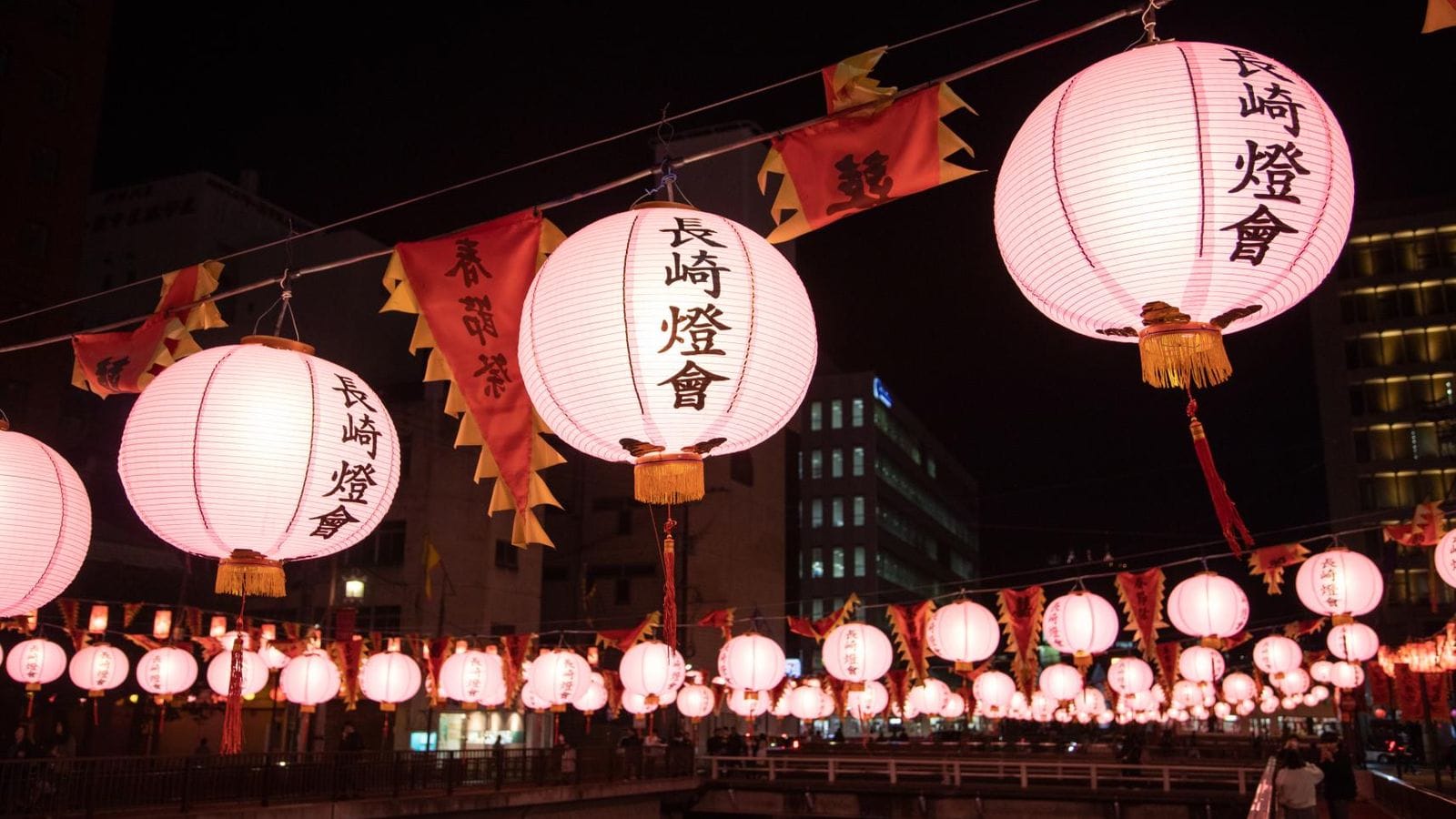
The Nagasaki Lantern Festival fills Shinchi Chinatown (新地中華街), Hamamachi (浜町) and the Kankodori (観光通) area with approximately 15,000 Chinese lanterns, including illuminated installations reaching around 10 meters in height. The 2027 festival runs for 17 days. Major events include the Emperor Parade (皇帝パレード) on Saturdays, February 13 and 20, and the Mazu Parade (媽祖行列) on Sundays, February 7 and 14. Dragon dances take place daily. Nagasaki’s February average is 8.1°C, so a medium-weight winter coat is generally enough for an evening visit.
What should you know about driving in Kyushu in winter?
Before heading into the mountains, confirm that your rental car has winter tires or snow chains. Mountain roads around Aso, Kuju and Unzen can become covered in snow and ice during cold waves, while the Nita Pass Loop Road closes during heavy snowfall. If you are unfamiliar with driving on snowy roads, avoid heading into the mountains on the morning after snow. Wait until roads have been cleared, or use buses and ropeways instead.
Practical information
| Attraction | Location | Dates / hours | Price | Official website |
|---|---|---|---|---|
| Nagasaki Lantern Festival | Shinchi Chinatown, Hamamachi and Kankodori, Nagasaki City | February 5–21, 2027 | Separate admission fee applies at the Confucius Shrine. | Nagasaki Lantern Festival official website |
| Huis Ten Bosch: The Starlight Millions | 1-1 Huis Ten Bosch Machi, Sasebo City, Nagasaki Prefecture | November 6, 2026–February 25, 2027; lights switch on after sunset | After 3 Passport: Adults from ¥5,900 on weekdays | Huis Ten Bosch official website |
| Unzen Ropeway | 551 Unzen, Obama-cho, Unzen City, Nagasaki Prefecture | Winter (November 1–March 31): Opens at 8:51; last uphill departure at 16:51, last downhill departure at 17:11 | Adults: ¥1,500 round trip, ¥830 one way | Unzen Ropeway official website |
| Beppu Ropeway | Foot of Mount Tsurumi, Beppu City, Oita Prefecture | Winter (November 15–March 14): 9:00–17:00; last uphill departure at 16:30 | Adults: ¥1,800 round trip, ¥1,200 one way | Beppu Ropeway official website |
| Izumi Crane Observation Center | 2478-4 Sho, Izumi City, Kagoshima Prefecture | November 1–March of the following year, 9:00–17:00 | Adults ¥220, children ¥110 | — |
| Kuju Ski Resort | 612-1 Yutsubo, Kokonoe Town, Kusu District, Oita Prefecture | 2026–27 season scheduled to begin December 11 | 2025–26 season weekday full-day pass: ¥5,500 | Kuju Ski Resort official website |
Two things to check before your trip:
- Accommodation: The Kyushu Fukko Ouen Wari (九州ふっこう応援割) accommodation subsidy is available for stays through December 25 in most participating prefectures, through December 15 in Fukuoka, and through January 31, 2027, in Kagoshima for bookings made through travel agencies or online booking platforms. Availability is limited and ends when allocations are exhausted. See our Kyushu Fukko Ouen Wari Booking Guide for reservation details.
- Shopping: From November 1, 2026, Japan’s tax-free shopping system changes to a pay-first, refund-on-departure model. Before buying cosmetics, toiletries or souvenirs this winter, read our Guide to Japan’s New Tax-Free Shopping Rules.
Frequently Asked Questions
Does it snow in Kyushu in winter?
Yes, but snow rarely accumulates in Kyushu’s lowland cities. Fukuoka averages around nine days with snowfall in January, while its average monthly maximum snow depth is only 1 cm. Mount Aso records snow on approximately 20 days in the same month, making the mountains a much better choice for snowy scenery.
Do you need a down jacket in Kyushu in winter?
Not necessarily for city sightseeing. Daytime January temperatures in Fukuoka, Nagasaki and Kumamoto are around 10–11°C, so thermal underwear, a sweater and a medium-weight coat are generally sufficient. For mountain areas such as Aso, Kuju and Unzen, or early-morning rime ice viewing, bring a heavy down jacket, gloves and a warm hat.
How cold is Fukuoka in December?
Fukuoka averages 9.1°C in December, with daytime highs of 12.6°C and early-morning lows of 5.8°C. Snow is observed on approximately six days, but accumulation is rare. Sunset is shortly after 17:00.
Where can you see snow in Kyushu?
The mountain areas around Aso, Kuju, Unzen and Mount Tsurumi in Beppu offer the best chances. Mount Aso averages −1.4°C in January, with an average maximum snow depth of 17 cm. Ropeways provide access to rime ice viewing areas at Unzen and Mount Tsurumi. Kuju Ski Resort relies mainly on artificial snow and is scheduled to open for the 2026–27 season on December 11, 2026.
Is Kyushu expected to have a warmer winter in 2026–27?
Yes, a warmer-than-average winter is more likely. The Japan Meteorological Agency gives northern Kyushu a 60% probability of above-average temperatures from December through February, compared with 50% for southern Kyushu. Its three-month forecast issued on October 20 also predicts warmer conditions in northern Kyushu, although brief incursions of strong cold air could cause substantial temperature swings.
Kyushu’s cities average around 6–9°C in January, with little accumulated snow. Thermal underwear and a medium-weight coat are usually enough for city sightseeing. If snow is a priority, allow a day or two for Aso, Kuju, Unzen or Mount Tsurumi, ideally visiting the mountains on the morning after a cold wave. For February trips, the Huis Ten Bosch illuminations and Nagasaki Lantern Festival can fit into the same itinerary. Although winter 2026–27 is forecast to be warmer than average, short cold spells remain possible. Check the weekly forecast from the Japan Meteorological Agency or tenki.jp about a week before departure.
Information updated November 2026