Fukuoka Wisteria Guide 2026: Kawachi Wisteria Garden and Beautiful Nearby Spots
Sakura season is over, and wisteria is taking the spotlight! Kawachi Wisteria Garden 2026 tickets are now on sale, with admission at ¥1,600. Here’s the latest on five top wisteria spots in Kyushu and Kanto—tickets, bloom forecasts, and transport tips. Save it for your trip!
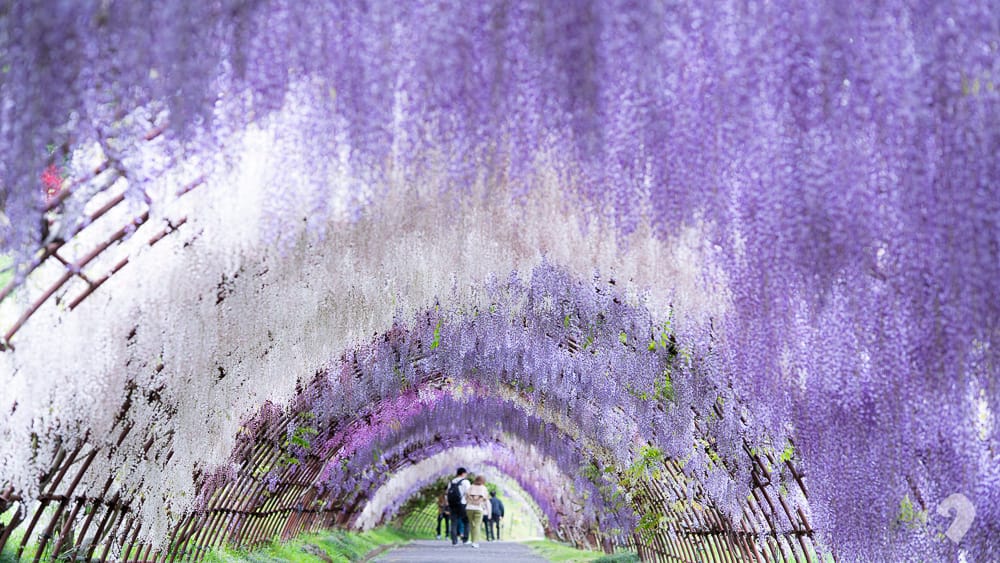
Every year in late April, the valleys of Kyushu are draped in cascades of purple. In Japan, wisteria season generally begins two to three weeks after the cherry blossoms fall. Because Kyushu has a warmer climate, the flowers here usually bloom one to two weeks earlier than in the Kanto region. The overall season runs from mid-April to mid-May, but peak bloom typically lasts only five or six days, so timing is everything.
Unlike cherry blossoms, wisteria is best enjoyed from beneath the trellises, looking up as clusters of flowers hang down overhead. The flower clusters range from a few dozen centimeters to more than a meter in length, with varieties including purple wisteria, white wisteria, kuchibeni wisteria, and Yaekokuryu. Their colors range from soft pink and purple to white, creating a tunnel-like gradient effect when mixed together. Wisteria also has a delicate, sweet fragrance, making the experience of standing beneath the flowers completely different from simply looking at photos.
Kawachi Wisteria Garden: One of Japan’s Most Beautiful Spots Selected by CNN
Kawachi Wisteria Garden is located in the mountains near Kawachi Reservoir in Yahatahigashi Ward, Kitakyushu. The site was first developed in 1968 and officially opened in 1977, meaning it has now been operating for 49 years. The garden covers approximately 3,000 tsubo and is home to around 150 wisteria trees of 22 different varieties. Its biggest highlights are the two wisteria tunnels, measuring 80 meters and 110 meters respectively. Inside the tunnels, different varieties of wisteria intertwine to create a gradient of pink, pale purple, and white, making this the most popular photo spot in the garden. In addition to the tunnels, the garden also has a large wisteria trellis of about 1,000 tsubo, where Noda long wisteria hangs down from the frame in an equally spectacular display.
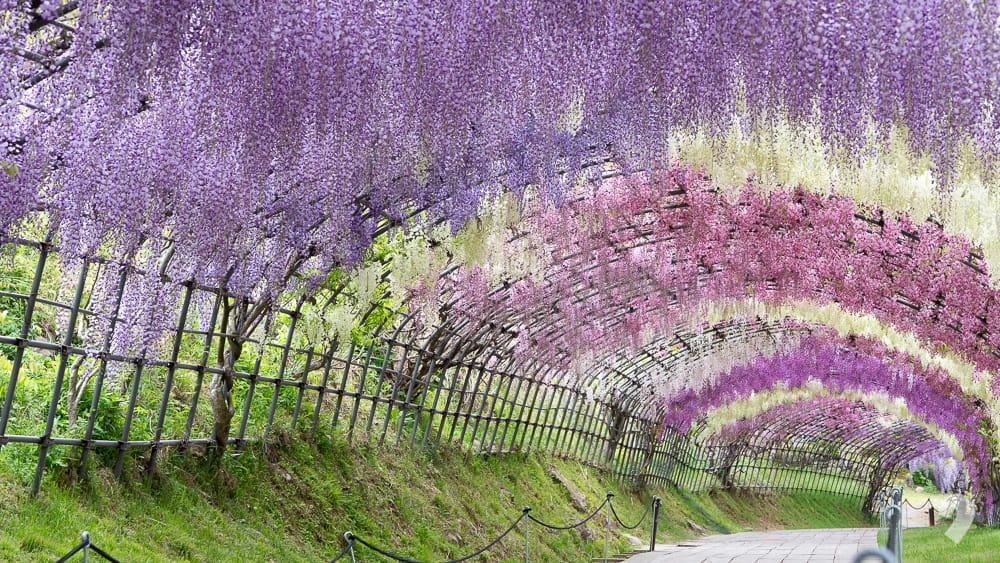
For 2026, the reservation ticket period runs from April 18 to May 6. Online tickets go on sale at 10:00 a.m. on March 25, while convenience store tickets go on sale at midnight on April 1. Starting in 2026, the admission fee will be adjusted to 1,600 yen per adult, consisting of a 600-yen reservation ticket plus an additional 1,000-yen fee paid on the day of entry. Admission varies depending on the bloom conditions, ranging from 600 to 1,600 yen. Each adult may bring up to two children of elementary school age or younger free of charge. Outside the mandatory reservation period, the garden will still be open and reservations will not be required, but it will no longer be the main wisteria-viewing season.
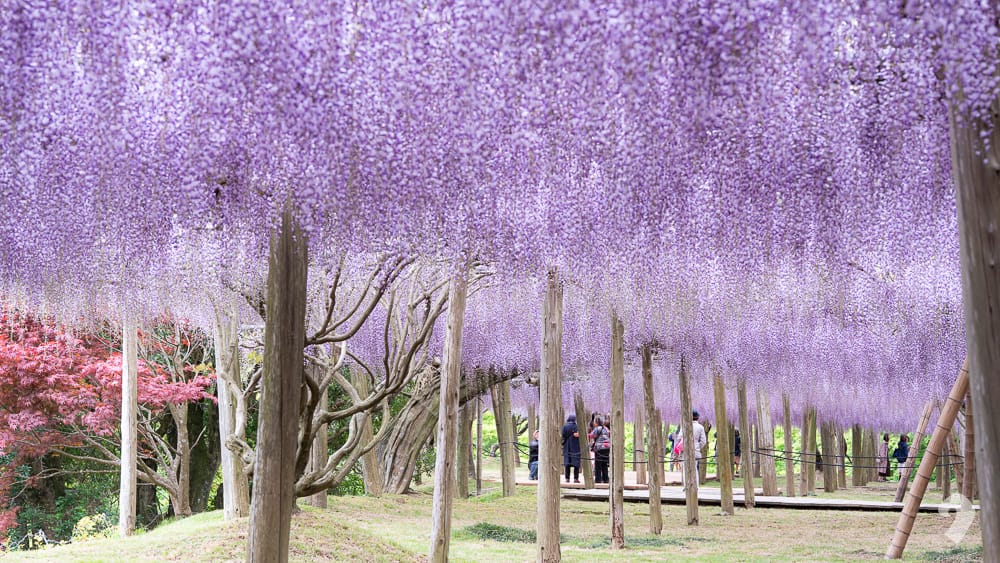
Ticket Information for Kawachi Wisteria Garden
Please note that during the ticketing period, there is no ticket counter on site, and visitors without tickets will not be allowed to enter. There are two ways to purchase tickets. Online tickets can be bought through the official Kawachi Wisteria Garden website, which is available in English. Tickets can also be purchased at convenience stores in Japan, but they usually sell out quickly, so it is not recommended to wait until you arrive in Japan. It is much safer to plan your itinerary and buy your tickets early.
Reservation tickets are divided into five time slots: 08:00-10:00, 10:00-12:00, 12:00-14:00, 14:00-16:00, and 16:00-18:00. Once you have selected a time slot, you must enter the garden within that period, but there is no limit on how long you can stay after entering. For the final slot, visitors must enter by 17:15. A full walk around the garden takes about 30 to 40 minutes. With time for photos, it is best to allow 1.5 to 2 hours.
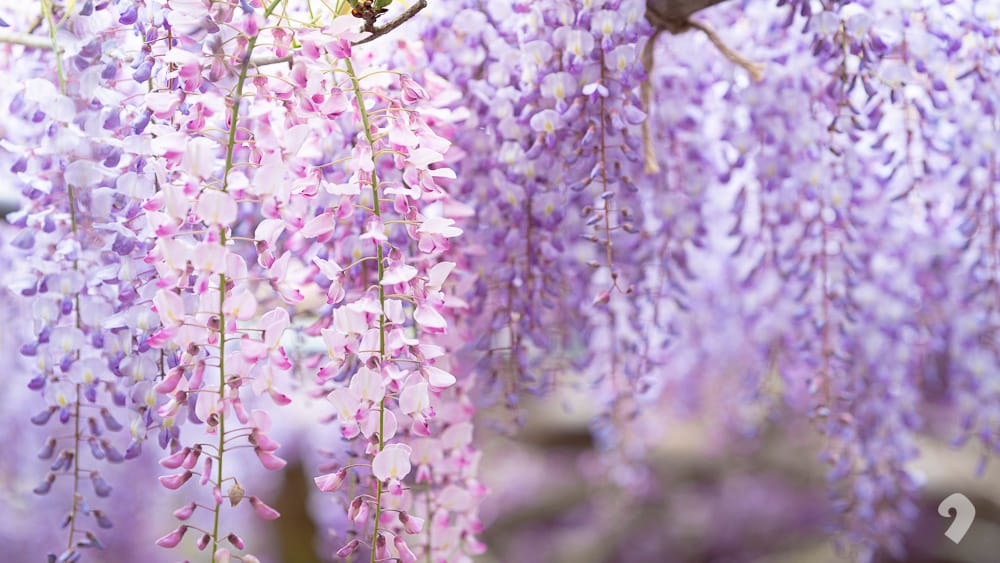
Basic Information for Kawachi Wisteria Garden
- Address: 2-2-48 Kawachi, Yahatahigashi Ward, Kitakyushu, Fukuoka Prefecture
- Telephone: 093-652-0334
- Opening hours: 08:00-18:00 during wisteria season
2026 ticketing period: April 18 to May 6 - Admission: 1,600 yen for adults, junior high school students and above. Each adult may bring up to two children of elementary school age or younger free of charge
- Parking: Free, approximately 200 spaces
- Official website: kawachi-fujien.com
- Important notes: Drones, tripods, and monopods are prohibited. The paths inside the garden are unpaved, so sneakers are recommended. There are no restrooms inside the garden; please use the facilities in the parking area. There are no restaurants or shops, so bringing your own drinks is recommended
- Payment methods: The additional fee payable on site can be paid by credit card, including Visa, Mastercard, JCB, and AMEX, as well as transport IC cards such as Suica and electronic payment services such as PayPay
Access
It takes about 25 minutes by car from Yahata Station on the JR Kagoshima Main Line. The garden is located in the mountains, and there are no public bus routes nearby. Driving is the most convenient option. From the Otani or Sanji exits on the Kitakyushu Urban Expressway, it takes around 15 to 20 minutes to reach the garden. It is recommended to approach from the Okura side of Yahatahigashi Ward.
Three Other Famous Wisteria Spots Nearby
In addition to Kawachi Wisteria Garden, Fukuoka Prefecture has several other wisteria spots worth visiting. They vary in scale and atmosphere, and most are either free or inexpensive to enter, making them good alternatives if you cannot get tickets for Kawachi Wisteria Garden.
Nakayama Great Wisteria, Yanagawa City
Nakayama Great Wisteria is located within the grounds of Nakayama Kumano Shrine in Mitsuhashi-machi, Yanagawa City. The tree is over 300 years old and has been designated a Natural Monument of Fukuoka Prefecture. The wisteria trellis covers about 350 tsubo, and at full bloom the flower clusters can reach 130 centimeters in length, hanging down to shoulder height. The most distinctive sight here is the wisteria arch over the stone bridge, which looks especially photogenic when paired with kimono.
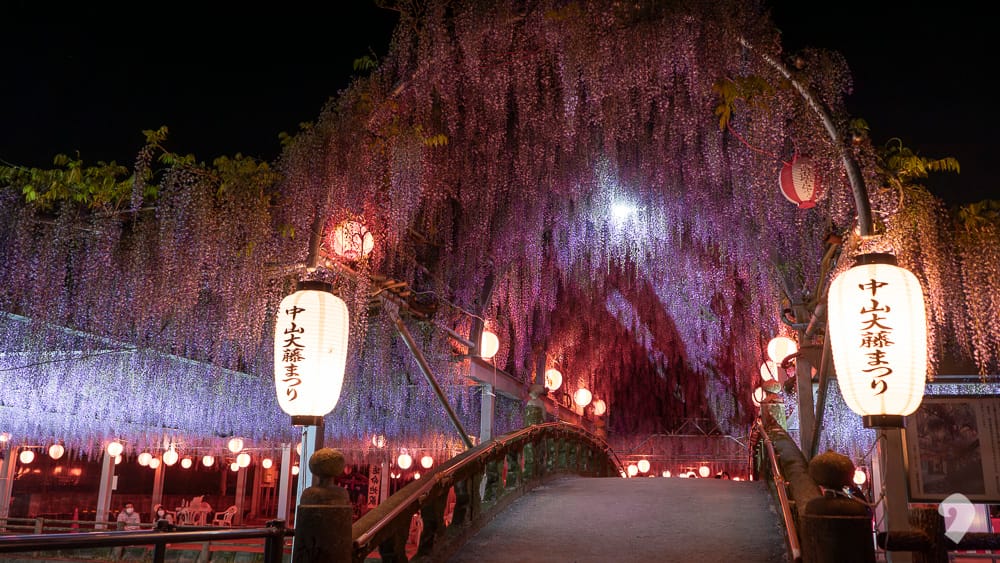
The 2026 Nakayama Great Wisteria Festival will be held from April 15 to April 28. During the festival, there will be local product stalls, a jazz concert on April 25, and evening illuminations from sunset until 21:00. A free shuttle bus will also run from the venue to Kiyomizuyama Peony Garden in nearby Miyama City.
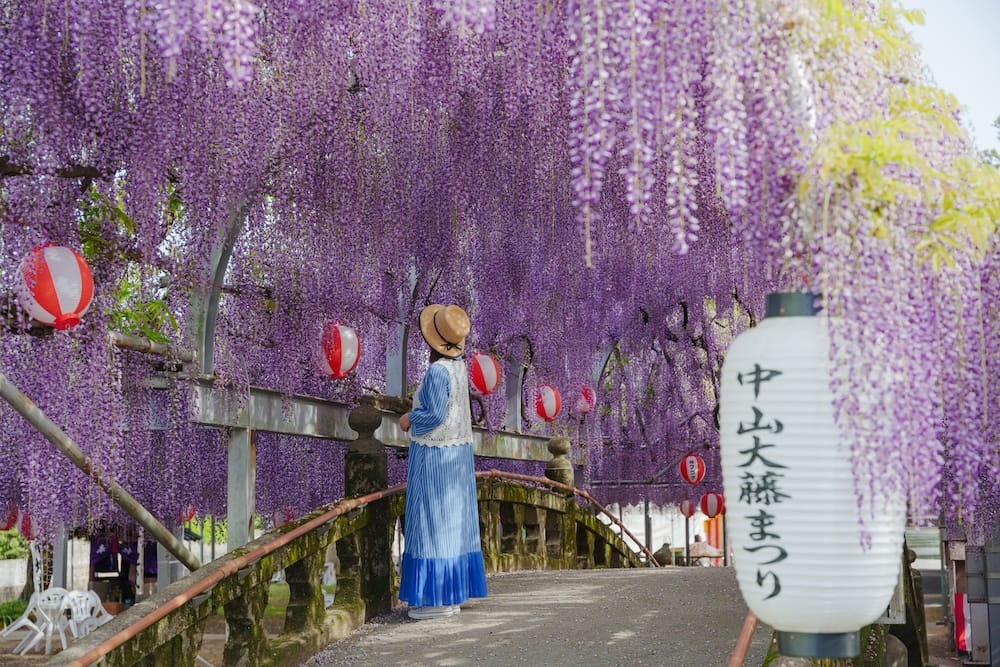
- Address: 538-1 Nakayama, Mitsuhashi-machi, Yanagawa, Fukuoka Prefecture, within Nakayama Kumano Shrine
- Environmental maintenance contribution: 100 yen per person, free for junior high school students and younger
- Access: Temporary route buses run to the venue from Nishitetsu Yanagawa Station and JR Chikugo-Funagoya Station
- Best viewing period: Mid to late April
After viewing the wisteria, you can also experience Yanagawa’s famous kawakudari, a traditional river cruise by small boat. Boat boarding points are available from Nishitetsu Yanagawa Station, and the ride takes around 70 minutes. For lunch, Yanagawa’s local specialty, steamed eel rice, is highly recommended.
Kurogi Great Wisteria, Yame City
Kurogi Great Wisteria is located within the grounds of Susanoo Shrine in Kurogi-machi, Yame City. The tree is around 630 years old and has been designated a National Natural Monument. The wisteria trellis covers approximately 3,000 square meters, and the flower clusters exceed one meter in length. Around 200,000 visitors from across Japan come here each year during the blooming season.
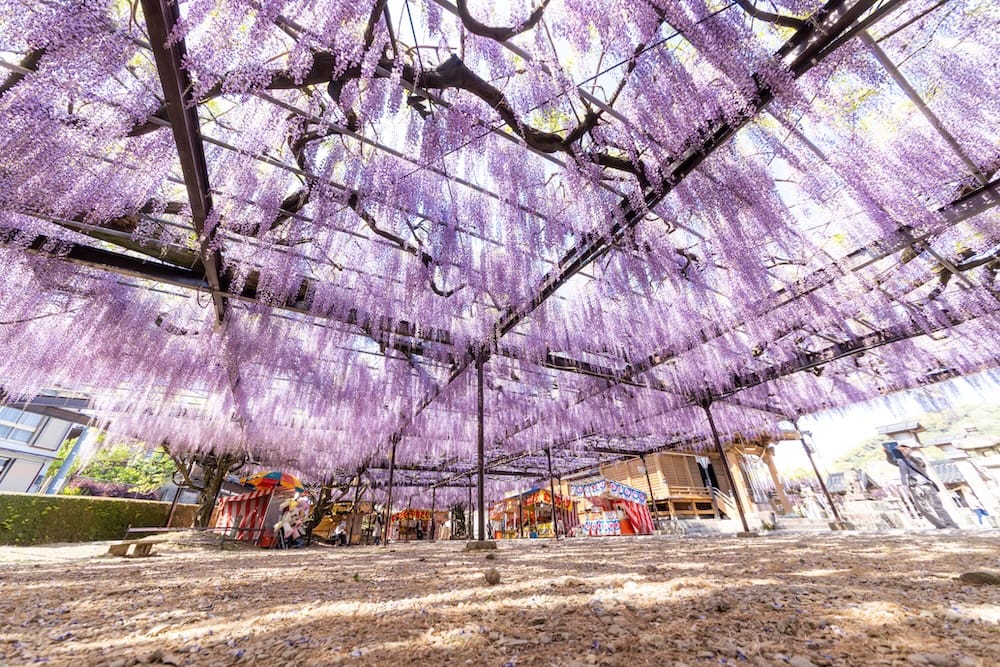
The 2026 Yame Kurogi Great Wisteria Festival will be held from April 10 to April 26. During the festival, there will be a local products fair, free tastings of Yame tea, and evening illuminations from 19:00 to 21:00. Kurogi-machi itself preserves the streetscape of a traditional architecture conservation district, and two long-established sake breweries nearby also open for tours and tastings during the festival. For those who enjoy Yame tea and Japanese sake, this area offers a richer cultural experience than Kawachi Wisteria Garden.
- Address: 5-2 Kurogi, Kurogi-machi, Yame, Fukuoka Prefecture, within Susanoo Shrine
- Admission: Free
- Access: About 30 minutes by car from the Yame Interchange on the Kyushu Expressway. On selected days during the festival, temporary buses run from JR Kurume Station, so it is best to confirm before departure
- Best viewing period: Mid-April to early May
Buzoji Temple “Choja no Fuji”, Chikushino City
Buzoji Temple is the oldest temple in Kyushu and is also known as “Fuji-dera,” or the Wisteria Temple. The temple’s “Choja no Fuji” is said to be around 1,300 years old and has been designated a Natural Monument of Chikushino City. The trellis is about 20 meters wide and 10 meters deep, and at full bloom the flower clusters exceed one meter in length. Although it is not as large as Kawachi Wisteria Garden, it is easy to access and is only about a 15-minute walk from Futsukaichi Onsen, making it ideal for a half-day itinerary combining wisteria viewing and a hot spring visit. Every year in late April, the temple holds the Fuji Kuyo ceremony, during which sake is poured at the roots of the wisteria to pray for abundant blooms and longevity. This is a unique tradition found only here.
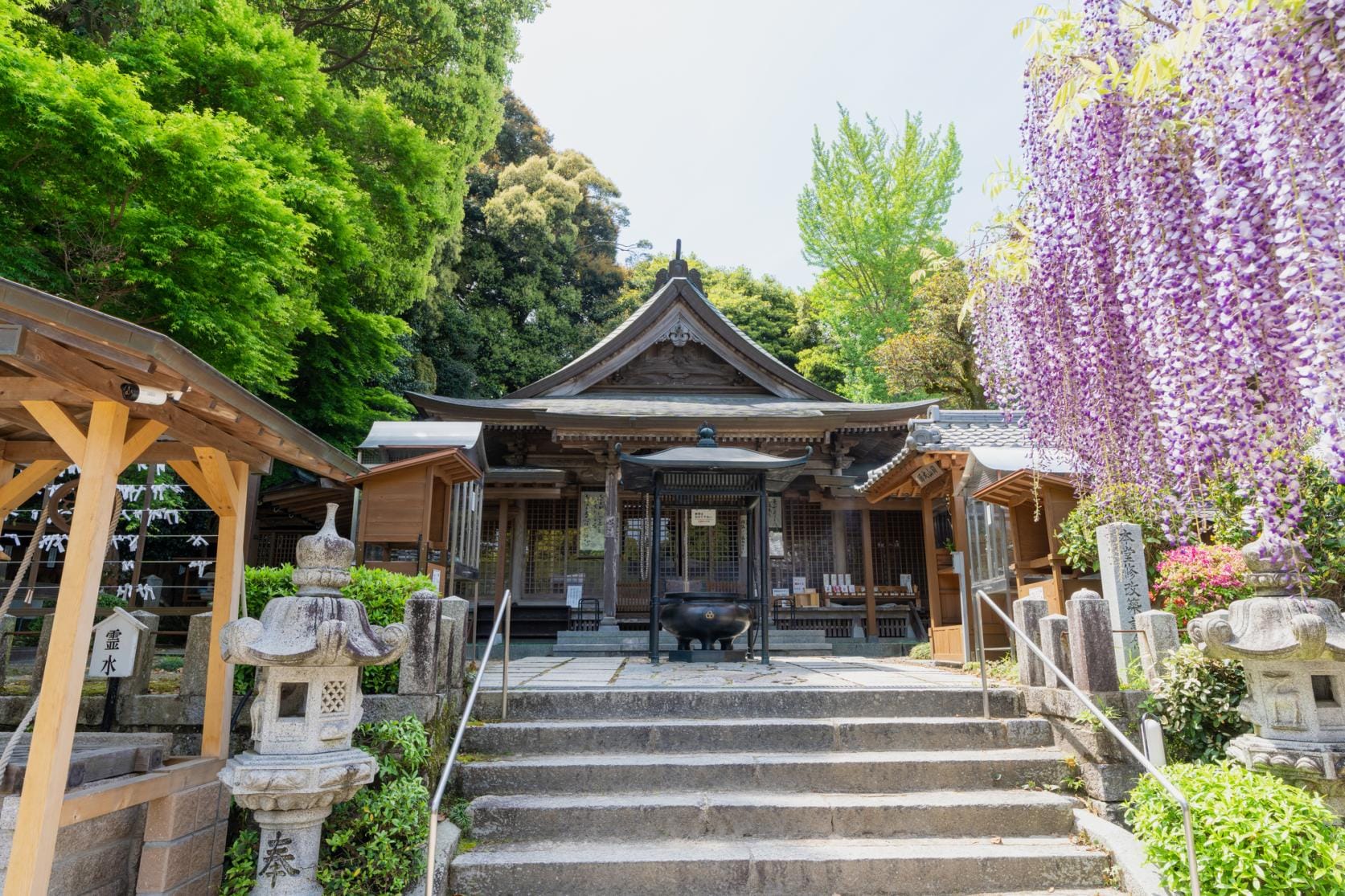
- Address: 621 Musashi, Chikushino, Fukuoka Prefecture
- Admission: Free to visit
- Access: About 15 minutes on foot from JR Futsukaichi Station, or about 20 minutes on foot from Nishitetsu Futsukaichi Station
- Best viewing period: Mid to late April
Useful Tips
Best time to see wisteria: Wisteria blooms from south to north, and Kyushu is usually about one to two weeks earlier than the Kanto region. However, temperatures vary from year to year, so the actual flowering period can change. Before departure, it is recommended to check the official websites or social media accounts of each spot for bloom updates. Peak bloom usually lasts only five or six days, and even missing it by a day or two can make a noticeable difference.
Photography tips: The light inside wisteria tunnels tends to be dim. Early morning offers soft light and fewer crowds, making it the best time for photography. The first time slot at Kawachi Wisteria Garden, from 08:00 to 10:00, is the most competitive, but it also offers the best photo conditions.
What to wear: The ground at both Kawachi Wisteria Garden and Kurogi Great Wisteria is unpaved, and it can become muddy on rainy days or after rain, so non-slip sneakers are essential. Kawachi Wisteria Garden also has uphill sections, which may be challenging for visitors with limited mobility.
Suggested itinerary combination, self-drive day trip from Fukuoka: Visit Kawachi Wisteria Garden in the morning with a reservation for the 08:00-10:00 slot, return to central Kitakyushu for lunch, then head south in the afternoon to Nakayama Great Wisteria or Kurogi Great Wisteria. After enjoying the evening illuminations, return to Fukuoka. For those not driving, Buzoji Temple paired with Futsukaichi Onsen makes for an easy half-day trip, with a travel time of under 30 minutes from Hakata.
2026 Fukuoka Wisteria Spots Overview
| Spot | Area | Best Viewing Period | Admission | Highlights |
|---|---|---|---|---|
| Kawachi Wisteria Garden | Kitakyushu City | Late April to early May | 600-1,600 yen | 80m + 110m wisteria tunnels |
| Nakayama Great Wisteria | Yanagawa City | Mid to late April | 100 yen | 300-year-old wisteria, stone bridge wisteria arch |
| Kurogi Great Wisteria | Yame City | Mid-April to early May | Free | National Natural Monument, sake brewery visits |
| Buzoji Temple Choja no Fuji | Chikushino City | Mid to late April | Free | 1,300-year-old wisteria, close to Futsukaichi Onsen |
| Ashikaga Flower Park | Tochigi Prefecture | Mid-April to mid-May | 1,200-2,300 yen | 350 wisteria trees, evening illuminations |
Wisteria season is fleeting, and being able to catch the flowers at full bloom is already a stroke of luck. Rather than trying to chase the perfect timing, it is better to secure your tickets, plan your itinerary, and simply enjoy the purple canopy and gentle fragrance beneath the trellises once you arrive. The 2026 wisteria season is just around the corner, so now is the time to start planning.
Some photos provided by the Fukuoka Prefecture Tourism Association.