Why Sakura Trees Fall: Lessons from Maizuru Park’s Cherry Blossom Collapse
At Fukuoka’s Maizuru Park, a 15 m Somei Yoshino sakura tree suddenly collapsed during the Fukuoka Castle Sakura Festival, with people picnicking beneath it. These iconic trees usually live only 60–80 years, and most across Japan are clones of the same original tree.
A Loud Crack During blossom view— Then a 15-Meter Sakura Tree Fell
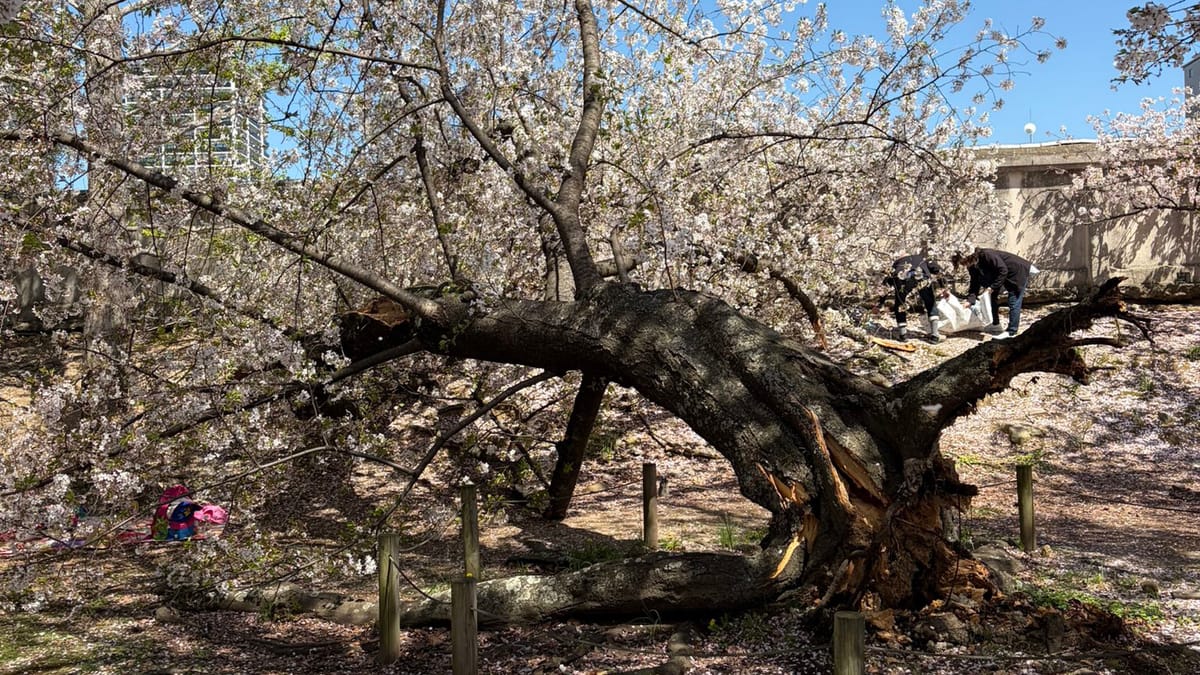
On April 8, a sakura tree collapsed at Maizuru Park, one of Fukuoka City’s best-known cherry blossom spots. According to Japanese media reports, the incident took place along the uphill section connecting Meiji-dori to Kaminobashi Bridge, where a sakura tree snapped near its roots and fell across the ground.
A woman who witnessed the scene said she heard a loud cracking sound, after which the entire tree slowly tilted and fell over the course of several minutes. People had been enjoying blossom viewing picnics beneath the tree at the time, but because it fell relatively slowly, everyone managed to move away in time. No injuries were reported.
According to the Maizuru Park management office, the fallen tree was a Somei Yoshino sakura. It stood about 15 meters tall, had a trunk circumference of around 2.4 meters, and was estimated to be 50 to 70 years old. After inspection, officials found that the tree had deteriorated with age, and the inside of its trunk had become hollow and spongy.
The park usually conducts visual inspections and asks certified arborists to assess weaker trees, but the abnormality was not detected this time. The fallen tree will be cut up and removed, and all trees in the park will undergo more detailed inspections to prevent similar incidents from happening again.
This was not the only case of sakura trees falling this season. According to a report by The Nikkei on April 5, several sakura trees fell in Tokyo as the blossom viewing season entered its latter half. On the afternoon of April 2, a sakura tree collapsed in Tokyo Metropolitan Kinuta Park, blocking a pathway. In March, a fallen tree in a park in Setagaya Ward even caused injuries.
The report noted that many Somei Yoshino trees planted during Japan’s period of rapid economic growth are now entering old age, and maintenance checks are struggling to keep up. On the day of the Maizuru Park incident, the Fukuoka Castle Sakura Festival was also on its final day, drawing large crowds of blossom viewers.
Somei Yoshino Sakura Trees Have a Surprisingly Short “Lifespan”
When people think of trees, they often imagine life spans stretching hundreds or even thousands of years, such as the ancient Yakusugi cedars of Yakushima or sacred trees at shrines. But the Somei Yoshino, the sakura variety most commonly seen during blossom viewing, is very different.
Somei Yoshino sakura trees generally live for about 60 to 80 years. Their growth peaks at around 30 to 40 years old. After about 50 years, the tree’s vitality begins to decline, and the inside of the trunk becomes more prone to decay. The tree that collapsed in Maizuru Park was right within this “old age” range.
By comparison, other sakura varieties live much longer. One of the parent species of the Somei Yoshino, the Edo Higan sakura (エドヒガン), has an average lifespan of more than 500 years. The famous Yamataka Jindai Zakura in Hokuto City, Yamanashi Prefecture, is estimated to be 1,800 to 2,000 years old and is one of Japan’s “Three Great Sakura Trees.” Another variety, the Yamazakura, has records of trees living up to 800 years.
So why is the Somei Yoshino so short-lived compared with other sakura trees?
Japan’s Somei Yoshino Sakura Trees Are Essentially the Same Tree
It may sound unbelievable, but almost all Somei Yoshino sakura trees across Japan are genetically identical. They are clones of the same original tree.
The Somei Yoshino is a cultivated variety created between the late Edo period and early Meiji era by crossing the Oshima cherry with the Edo Higan sakura. It is not a wild species. It cannot reproduce naturally by seed and must instead be propagated through grafting or cuttings. In other words, every Somei Yoshino from Hokkaido to Kyushu can trace its origin back to the same group of parent trees.
This trait has its advantages. The reason the Japan Meteorological Agency can issue nationwide sakura bloom forecasts each year is precisely because Somei Yoshino trees share nearly identical genes and respond to climate conditions in highly synchronized ways. That is what creates the spectacular sight of sakura blooming and falling almost in unison across the country.
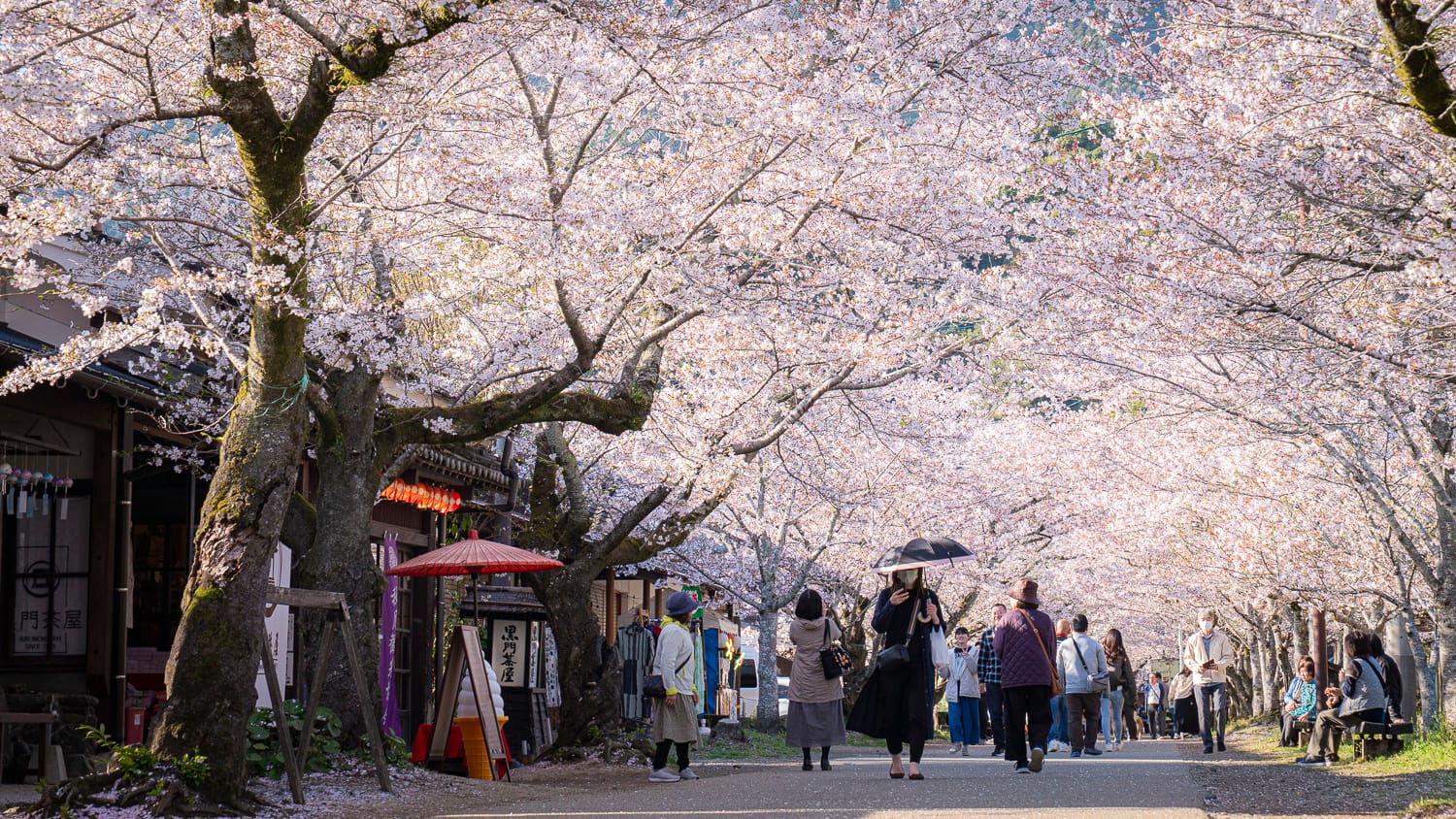
But this is also their fatal weakness. A lack of genetic diversity means that Somei Yoshino trees across Japan share the same vulnerabilities to pests, diseases and environmental changes. Broken branches and cuts can allow decay fungi to enter, and the trees are also susceptible to infectious diseases such as witches’ broom disease. When large numbers of them are planted at the same time, they also grow old at the same time.
From Japan’s postwar reconstruction period to the years around the Tokyo Olympics, roughly the 1950s and 1960s, Somei Yoshino trees were planted extensively at schools, parks and along riverbanks throughout the country. Counting forward, many of those trees are now reaching the critical age of 60 to 70 years. The string of fallen sakura trees seen across Japan this season is not a coincidence. It is the result of an entire generation of sakura trees entering old age together.
Some Somei Yoshino Trees Live Over 100 Years — Thanks to the “Hirosaki Method”
This may sound worrying, but there are solutions. In Hirosaki Park, Aomori Prefecture, there is a Somei Yoshino tree planted in 1882, during the Meiji era, that is estimated to be over 140 years old. It still blooms beautifully every year and is considered one of the oldest surviving Somei Yoshino trees.
According to official information from the Hirosaki Cherry Blossom Festival, the park has more than 300 sakura trees over 100 years old, and around 1,200 trees over 60 years old. It is home to one of the longest-living sakura groves in Japan.
The secret lies in a management technique known as the Hirosaki Method. Since the mid-1950s, Hirosaki City has applied pruning techniques from local apple cultivation to sakura tree care. This challenged the traditional saying that “only fools cut sakura trees,” replacing it with active, scientific pruning. Today, the park is managed year-round by arborists and specialist teams, who continuously handle soil improvement, fertilization, pest control and pruning.
The example of Hirosaki Park shows that the commonly cited “60-year lifespan” is what happens when trees are not properly cared for. It is not the true biological limit of the Somei Yoshino. Hiroyuki Wada, an expert from the Flower Association of Japan, has noted that Somei Yoshino trees do not have a fixed lifespan like animals do; the key is how they are managed.
Be Kinder to the Sakura Trees
Although the Maizuru Park incident caused no injuries, it serves as a reminder: the pink blossoms that appear so reliably each year exist only because people are quietly working behind the scenes to protect them.
Some common blossom viewing habits can shorten the life of sakura trees. Stepping on tree roots can damage them. Spilled drinks and sauces can seep into the soil and be absorbed by the tree, affecting its health. Littering can pollute the soil. These actions may seem minor, but over time they can cause real harm to Somei Yoshino trees.
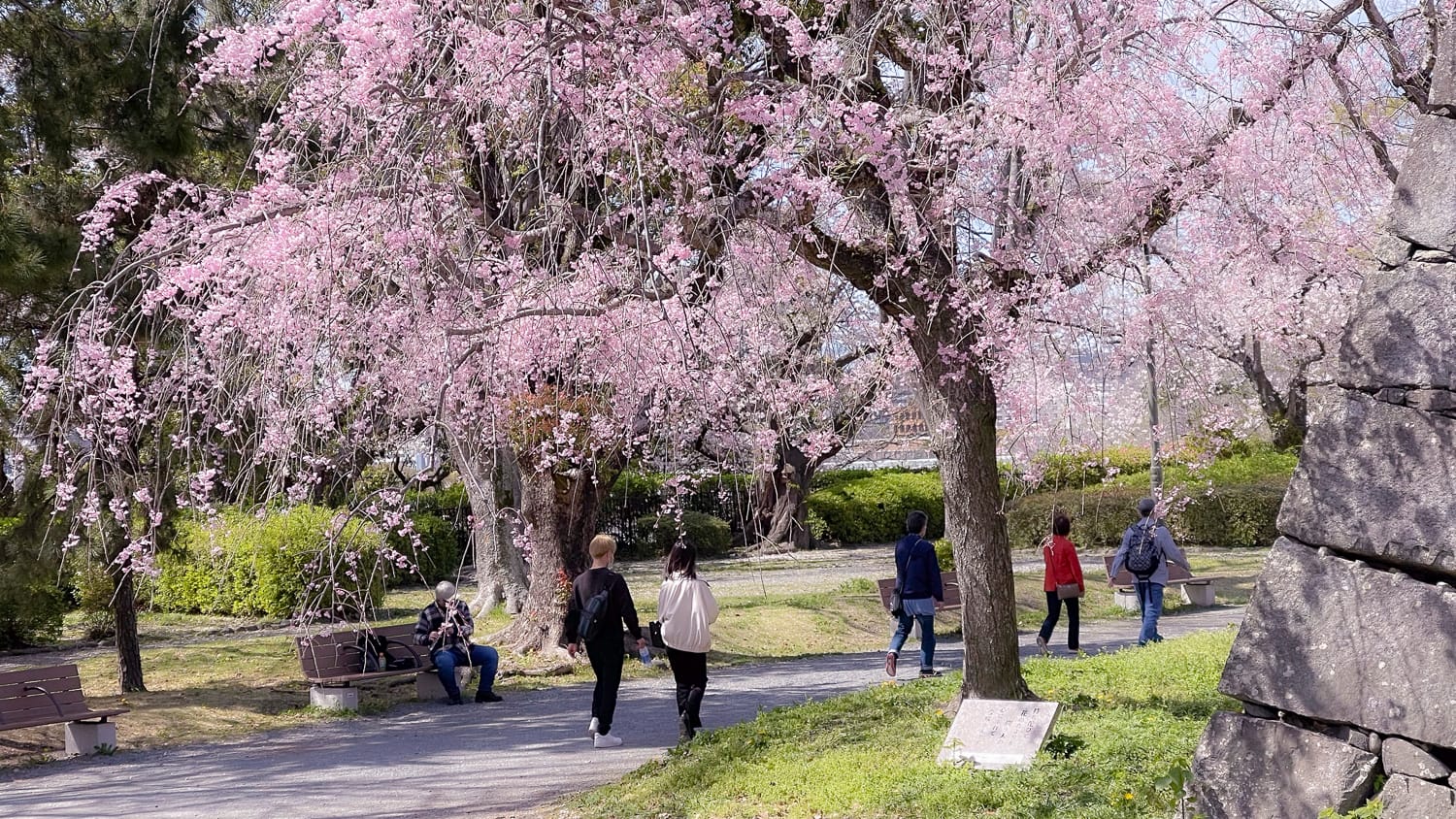
Practical Information
Maizuru Park / Fukuoka Castle Ruins
- Address: 1 Jonai, Chuo-ku, Fukuoka City, Fukuoka Prefecture
- Access: About 8 minutes on foot from Akasaka Station or Ohori Park Station on the Fukuoka City Subway Kuko Line
- Admission: The park itself is free to enter. Some areas, including the castle tower base and the Korokan Ruins, may charge admission.
- Cherry blossom season: Around late March to early April. Check the latest bloom conditions before visiting.
Blossom Viewing Tips
- Check the condition of branches overhead, and avoid trees that look obviously old or show signs of decay.
- Avoid stepping on the soil around tree roots.
- Place picnic mats on grassy areas rather than directly over tree roots.
- Take all rubbish home with you, and do not pour drinks under the trees.
- After strong winds or rain, old trees are at higher risk of falling, so take extra care.
The moment a tree falls may be the result of decades of maintenance conditions, climate effects and genetic factors. The next time you stand beneath a sakura tree in full bloom, look up at its sturdy trunk and imagine how many generations of visitors it has watched over. Learn a little more, and cherry blossom viewing becomes that much more meaningful.
Image source: X @t_sota0703