Fukuoka Travel Guide 2026: Where to Stay, Eat and Explore
Plan your first Fukuoka trip with this 2026 guide to attractions, food, hotels and transportation. Includes the 5-minute airport subway, ¥640 daily contactless fare cap, Hakata vs. Tenjin and an easy 4-day itinerary.
Four days and three nights is an ideal introduction to Fukuoka. The subway from Fukuoka Airport to Hakata takes just 5 minutes and costs ¥260. Stay around Hakata or Tenjin, spend two days exploring the city, and set aside another day for Dazaifu or Yufuin.
Fukuoka is one of Kyushu’s most accessible cities. The airport is just two subway stops from the city center, and Fukuoka is more compact than Tokyo or Osaka. Most major attractions are concentrated around Hakata, Tenjin and the waterfront, making walking and the subway sufficient for much of your trip.
Fukuoka has seen several changes in 2026. The Tenjin redevelopment project has brought new shopping complexes, including ONE FUKUOKA BLDG, while the Shin-Tencho Shopping Arcade is scheduled for demolition in 2027. Dazaifu Tenmangu has completed its first major main-hall restoration in 124 years, and Japan introduced a departure-based tax refund system on November 1. This first-time visitor’s guide covers how long to stay, transportation, neighborhoods, attractions, food and the best seasons to visit, with practical fares and travel times.
How many days do you need in Fukuoka?
For a first visit, four days and three nights is a good starting point. Extend your stay to five days and four nights if you want to include longer day trips to Yufuin, Kokura or Nagasaki. Allow two full days for city attractions, one day for Dazaifu, and time for arrival and departure on the first and last days.
Direct flight schedules and journey times depend on your departure city. If you arrive around midday, you can spend your first afternoon sightseeing. For a late-evening arrival, plan to check in and have dinner.
| Day | Suggested 4-day, 3-night itinerary | Additions for a 5-day, 4-night trip |
|---|---|---|
| Day 1 | Arrival, Hakata Station area, Kushida Shrine and Nakasu yatai stalls | Same as the 4-day itinerary |
| Day 2 | Tenjin shopping, Ohori Park, Fukuoka Castle ruins, Momochihama and Fukuoka Tower | Same as the 4-day itinerary |
| Day 3 | Half-day at Dazaifu Tenmangu, followed by central Fukuoka or Yanagawa in the afternoon | Same as the 4-day itinerary |
| Day 4 | Shopping around Hakata Station, then departure | Day trip to Yufuin, Kokura or Itoshima |
| Day 5 | Not applicable | Half-day at Uminonakamichi or Nokonoshima, then departure |
If you have only three days and two nights, concentrate on Hakata and Tenjin. With seven days or more, you can travel south from Fukuoka by Shinkansen to Kumamoto and Kagoshima.
How do you get from Fukuoka Airport to Hakata or Tenjin?
The Fukuoka City Subway from the Domestic Terminal is the fastest option, taking approximately 5 minutes to Hakata and 11 minutes to Tenjin, with both journeys costing ¥260. International flights arrive at the International Terminal, where you can take a direct bus or the free shuttle to the Domestic Terminal and transfer to the subway.
Four transportation options from the International Terminal
| Transportation | Destination | Adult fare | Best for |
|---|---|---|---|
| Direct Nishitetsu bus | Hakata Station Chikushi Exit | ¥400 (¥380 with a transportation IC card or credit card) | Staying near Hakata Station without wanting to transfer |
| Airport bus | Tenjin | ¥500 (¥480 with a transportation IC card; credit cards not accepted) | Staying around Tenjin |
| Free shuttle bus + subway | Hakata, Tenjin, Nakasu-Kawabata and other subway stations | Subway fare ¥260 | Avoiding road traffic during rush hour or staying near a subway station |
| Taxi | Hakata area | Approximately ¥1,500–¥2,500 | Travelers with heavy luggage or groups sharing the fare |
Getting around Fukuoka: Subway day pass or contactless payment?
Fukuoka’s subway is the easiest way to get around the city. Hakata to Tenjin takes 6 minutes and costs ¥210. A one-day subway pass costs ¥640 for adults and ¥320 for children. Alternatively, use contactless credit card payment at the ticket gates. Across all 36 subway stations, fares charged to the same card are capped at ¥640 per day, effectively giving you the same benefit as a day pass without buying a separate ticket.
Accepted cards include Visa, JCB, American Express, Diners Club, Discover and UnionPay. Mastercard joined the system in December 2024. Check with your card issuer that overseas contactless payments are enabled before traveling. Nationwide interoperable transportation IC cards such as Suica are also accepted.
If your plans include buses, JR trains and Nishitetsu trains, consider the FUKUOKA TOURIST CITY PASS, available to international visitors. The Fukuoka City version costs ¥2,500 for adults, while the version including Dazaifu costs ¥2,800. Both allow unlimited travel for one day on eligible city subways, Nishitetsu buses, JR and Nishitetsu trains. A passport is required when purchasing. Contactless payment is sufficient if you are only using the subway, while the tourist pass becomes more attractive for a day combining Dazaifu and Fukuoka Tower. Confirm current prices before departure.
Where should you stay in Fukuoka? Hakata vs. Tenjin
Hakata Station and Tenjin are the most convenient places to stay on your first visit. Hakata is the main hub for Shinkansen and JR services, making it ideal for multiple day trips. Tenjin is the city’s main shopping and dining district. The two areas are only 6 minutes apart by subway.
| Neighborhood | Advantages | Things to consider | Best for |
|---|---|---|---|
| Hakata Station area | Shinkansen and JR connections, 5-minute subway ride from the airport, extensive station shopping | Fewer evening dining choices than Tenjin; busy streets around the station | Multiple day trips or the first and last nights of your stay |
| Tenjin | Department stores and underground shopping arcade; Nishitetsu trains to Dazaifu and Yanagawa | Subway transfer required to reach the Shinkansen | Shopping and nightlife |
| Nakasu-Kawabata and Gion | Between Hakata and Tenjin, close to yatai stalls and Kushida Shrine | Some streets in Nakasu can be noisy at night | Travelers who want easy access to both Hakata and Tenjin |
Hotels in Fukuoka City charge an accommodation tax. For rooms costing less than ¥20,000 per person per night, the tax is ¥200 per person per night. For rooms costing ¥20,000 or more, it is ¥500 per person per night, including both prefectural and city taxes.
To save on accommodation, consider spending a night outside Fukuoka City. Fukuoka Prefecture’s Go! Fukuoka program runs from July 7, 2026, to February 28, 2027, offering international visitors a ¥3,000 discount per person per night on eligible accommodation in places such as Dazaifu, Yanagawa and Itoshima when booked through Expedia, Agoda or Trip.com. Availability is limited. See our Guide to Fukuoka’s ¥3,000-per-Night Hotel Discount for International Visitors.
What are the must-see attractions in Fukuoka?
For a first visit, prioritize Kushida Shrine in Hakata, Ohori Park and the Fukuoka Castle ruins west of Tenjin, Fukuoka Tower on the waterfront, and Dazaifu Tenmangu outside the city. These attractions are relatively easy to reach, can each be explored in two or three hours, and offer a distinctive look at Fukuoka’s history or scenery.
Kushida Shrine (櫛田神社)
Kushida Shrine is Hakata’s principal guardian shrine and the starting point of the annual Hakata Gion Yamakasa (博多祇園山笠) festival in July. An elaborate decorative festival float, known as a kazariyamakasa (飾り山笠), is displayed in the grounds throughout the year except June, so visitors can see one up close even outside the festival period. Kawabata Shopping Arcade and Canal City Hakata (キャナルシティ博多) are both a few minutes’ walk away. Canal City’s East Building reopened on September 4, 2026.
- Address: 1-41 Kamikawabata-machi, Hakata Ward, Fukuoka
- Visiting hours: 4:00–22:00, open year-round
- Admission: Free
- Getting there: Approximately 5 minutes on foot from Gion or Kushida Shrine-mae subway station
Ohori Park and Fukuoka Castle ruins (Maizuru Park)
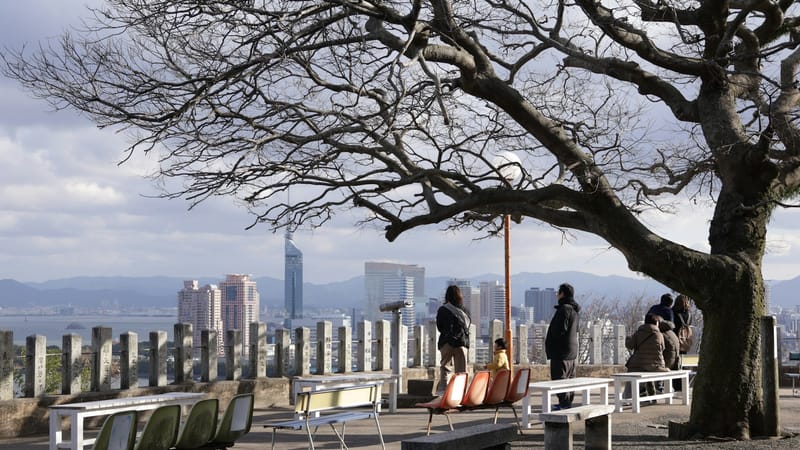
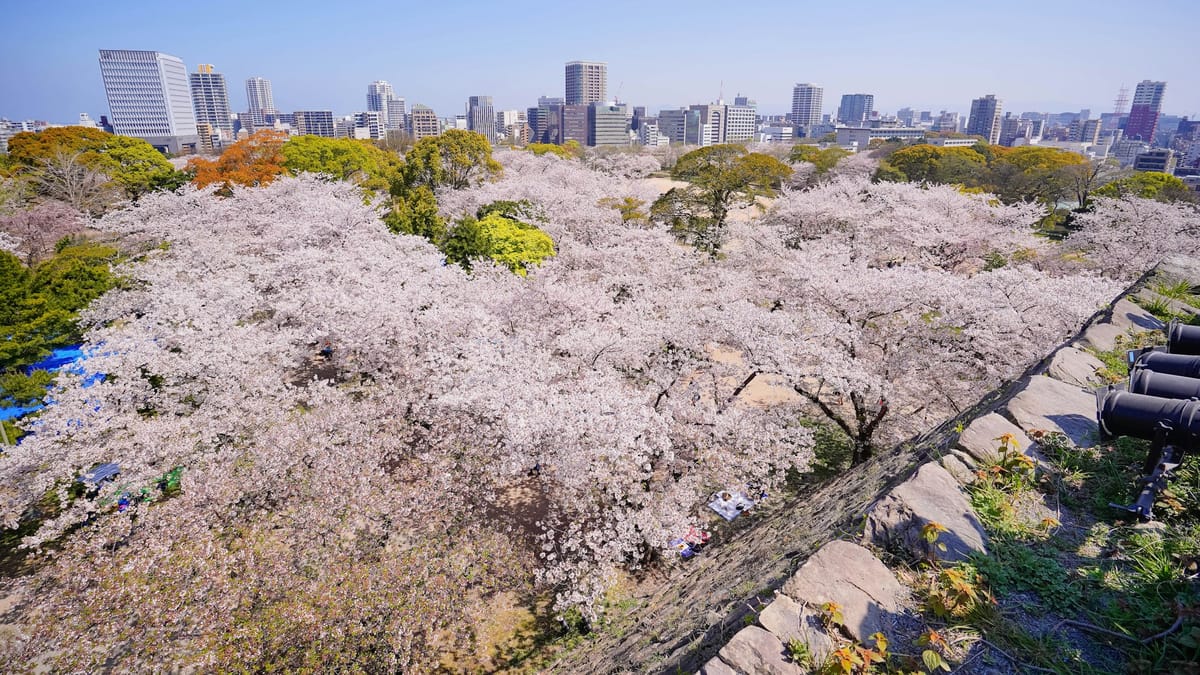
Ohori Park (大濠公園) and the neighboring Fukuoka Castle ruins (福岡城跡) are worth half a day west of Tenjin. Ohori Park has an approximately 2 km walking path around its lake, with cafes along the waterfront. The castle ruins retain sections of stone walls and the former main tower foundation, and are among Fukuoka’s main cherry blossom viewing spots in spring. Both are free to enter and accessible by subway from Tenjin, via Ohori Park or Akasaka Station. If you are short on time, head straight to the former castle tower site for city views.
Momochihama and Fukuoka Tower (福岡タワー)
Fukuoka Tower stands 234 meters tall, with an observation deck overlooking Hakata Bay and the city. At its base is Momochihama (シーサイドももち), an artificial beach. A sunset walk along the waterfront followed by nighttime views from the tower makes a relaxed half-day outing.
- Address: 2-3-26 Momochihama, Sawara Ward, Fukuoka
- Opening hours: 9:30–22:00 (last ticket sales 21:30)
- Closed: Monday and Tuesday of the last week of June each year
- Observation deck admission: Adults ¥1,000; elementary and junior high school students ¥500
- Getting there: Approximately 2 minutes on foot from the Nishitetsu Bus Fukuoka Tower Minamiguchi stop, or 20 minutes on foot from Nishijin subway station
- Official website: https://www.fukuokatower.co.jp/
Dazaifu Tenmangu (太宰府天満宮)
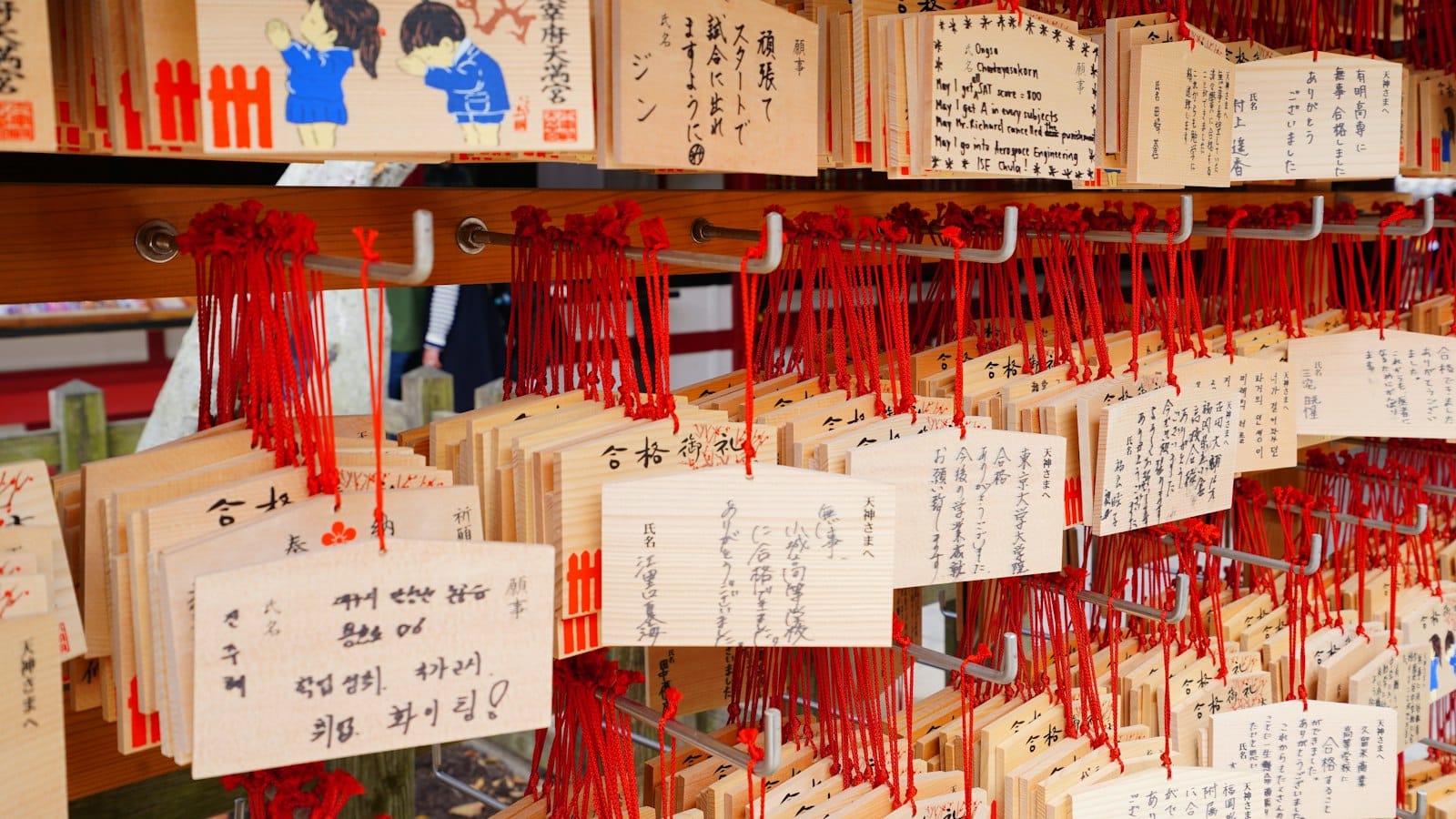
Dazaifu Tenmangu is one of the best excursions from Fukuoka for first-time visitors, approximately 30 minutes from Tenjin by Nishitetsu train. Dedicated to Sugawara no Michizane, the deity of learning, its main shrine hall has undergone its first major restoration in 124 years and was shown to the media in May 2026. The approach to the shrine is lined with shops selling umegae mochi (梅ヶ枝餅), along with the distinctive Starbucks Dazaifu Tenmangu Omotesando branch. Arrive in the morning to avoid the midday crowds.
- Address: 4-7-1 Saifu, Dazaifu
- Opening hours: Generally 6:30–19:00, varying by season
- Admission: Shrine grounds free; Treasure Hall ¥500 for adults
- Getting there: From Nishitetsu Fukuoka (Tenjin) Station, take a limited express or express train to Nishitetsu Futsukaichi and transfer to the Dazaifu Line. Fare ¥480. Approximately 5 minutes on foot from Nishitetsu Dazaifu Station.
For a comparison of the best umegae mochi shops and souvenirs to take home, see our Dazaifu Tenmangu Souvenir Guide.
Uminonakamichi: A coastal outing if you have an extra day
If you have five days in Fukuoka or are traveling with children, consider Uminonakamichi Seaside Park (海の中道海浜公園) on Hakata Bay. Marine World Uminonakamichi aquarium is next to the park. See our Uminonakamichi Seaside Park and Marine World Day Trip Guide. Alternatively, take the approximately 10-minute ferry ride from Meinohama Ferry Terminal to Nokonoshima Island (能古島).
What are the best day trips from Fukuoka?
Popular day trips from Fukuoka include Dazaifu, Yanagawa, Itoshima, Kokura and Yufuin. The first three can be reached in under an hour, while Yufuin takes more than two hours each way and deserves a full day. Choose Dazaifu for historic sites, Yanagawa for a canal boat ride, Itoshima for the coast (approximately 40 minutes by JR Chikuhi Line), or Yufuin for hot springs.
| Destination | Transportation from Hakata or Tenjin | One-way journey | One-way fare |
|---|---|---|---|
| Dazaifu | Nishitetsu train from Tenjin, changing at Futsukaichi | Approximately 30 minutes | ¥480 |
| Yanagawa | Nishitetsu train from Tenjin | Approximately 50 minutes | Check current fares before departure |
| Kokura | Sanyo Shinkansen from Hakata | Approximately 16 minutes | Non-reserved seat ¥2,160 |
| Yufuin | JR Yufuin no Mori (ゆふいんの森) limited express from Hakata, reserved seats only | Approximately 2 hours 12 minutes | ¥6,130 |
Yufuin no Mori has three scheduled departures from Hakata on operating days, but does not run every day. Check the operating calendar and reserve your seat in advance. For sightseeing and accommodation in Yufuin and Beppu, see our Oita Travel Guide. Dazaifu and Yanagawa can also be visited on the same day, as both are served by Nishitetsu trains.
What should you eat in Fukuoka? Hakata ramen, motsunabe and yatai street food
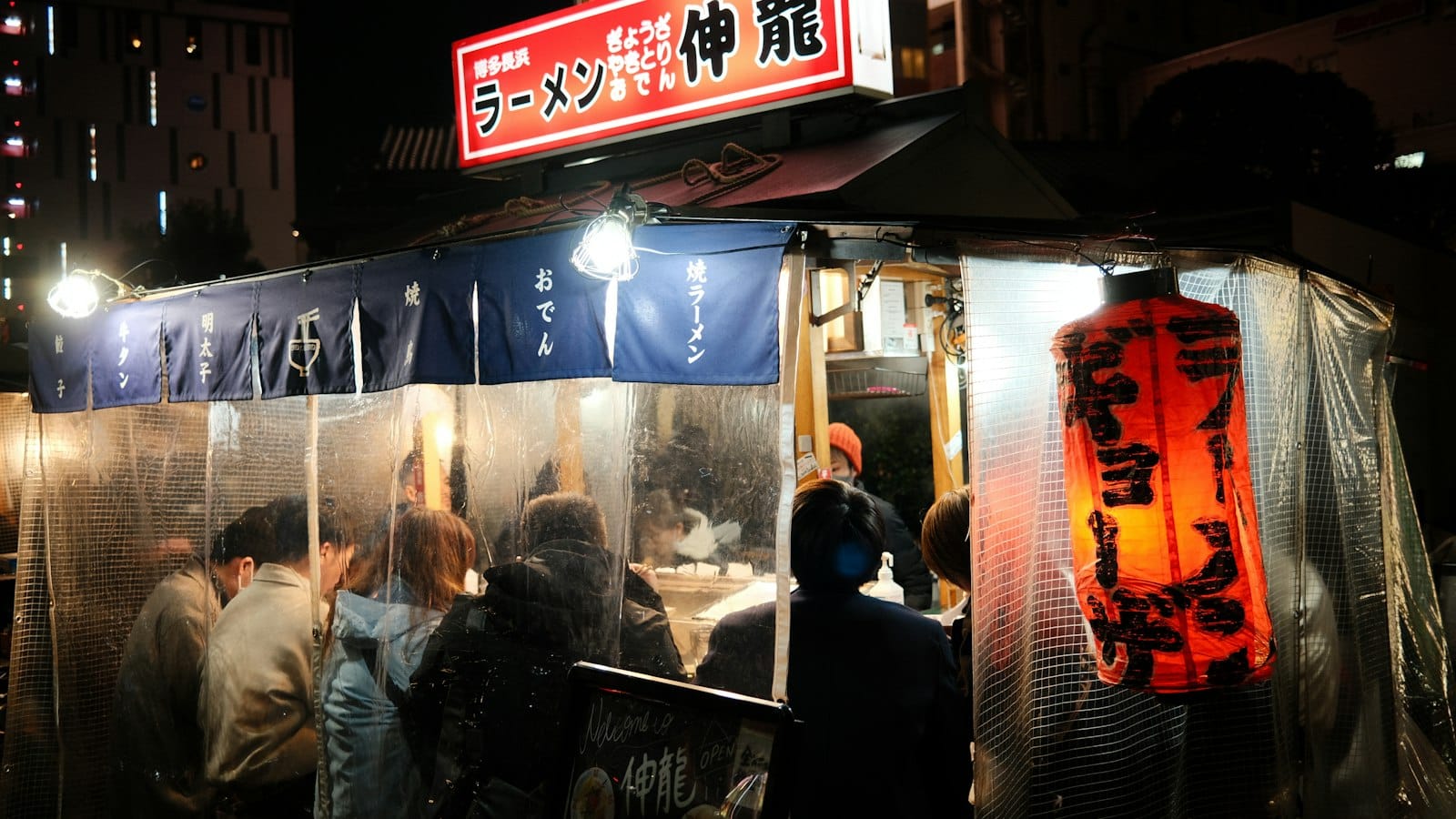
Fukuoka’s essential dishes are Hakata ramen, motsunabe (もつ鍋), mizutaki (水炊き) chicken hot pot and mentaiko (明太子). In the evening, visit one of the city’s yatai food stalls. A bowl of ramen costs around ¥1,000, and most shops offer extra noodles, called kaedama (替え玉). Eating alone is perfectly normal.
| Specialty | What makes it special | Where to try it |
|---|---|---|
| Hakata ramen | Rich pork-bone broth and very thin, straight noodles, with a choice of noodle firmness | Around Hakata Station, Nakasu and Nagahama |
| Motsunabe | Beef small intestine with cabbage and garlic chives in soy sauce or miso broth | Tenjin and Hakata; some restaurants require a minimum order for two people |
| Mizutaki | Chicken-bone broth served first as soup, followed by the chicken | Nakasu and Tenjin; dinner reservations recommended |
| Mentaiko | Spicy marinated pollock roe, served with rice or sold as a souvenir | Hakata Station and department store basement food halls in Tenjin |
If you are concerned about ordering in Japanese, Ichiran Main Shop (一蘭 本社総本店) is an accessible introduction to Hakata ramen. Order from a ticket machine, then use a multilingual order sheet, including Chinese, to choose your broth richness and noodle firmness.
- Address: 5-3-2 Nakasu, Hakata Ward, Fukuoka
- Opening hours: Listed as open 24 hours, year-round, with possible temporary closures for maintenance
- Getting there: Approximately 1 minute on foot from Exit 2 of Nakasu-Kawabata subway station
What should you know before visiting a Fukuoka yatai?
Fukuoka has approximately 100 yatai (屋台) street food stalls, more than any other city in Japan. Most are concentrated along the Naka River in Nakasu, around Tenjin and in Nagahama. They generally open in the evening and operate until late at night. Seating is limited, and popular stalls often develop queues after dark. For a more relaxed meal, arrive shortly after they open.
- Check the menu prices first: Fukuoka City requires yatai operators to display prices clearly. Even dishes sold at market prices must show that day’s price.
- Ask about additional charges: Some stalls charge an otoshi (お通し) appetizer fee. Confirm before sitting down.
- Avoid lingering after your meal: Order at least one drink per person and make room for other customers when you have finished eating.
Yatai prices are often higher than those at regular restaurants. One option is to have dinner first, then stop at a stall for a drink and one or two small dishes.
Where should you shop in Fukuoka?
Fukuoka’s two main shopping areas are Tenjin and Hakata Station. Tenjin has department stores, Tenjin Underground Mall and ONE FUKUOKA BLDG, which opened in April 2025 at 1-11-1 Tenjin. The complex has approximately 130 shops and restaurants, with retail hours from 11:00 to 20:00 and opening at 10:00 on weekends and public holidays. Hakata Station has extensive shopping malls and souvenir stores. The long-established Shin-Tencho Shopping Arcade (新天町商店街) is scheduled for demolition in 2027. See our Guide to Tenjin’s Redevelopment and Shin-Tencho’s 2027 Demolition.
From November 1, 2026, shoppers pay the tax-inclusive price at the time of purchase and receive their tax refund after verification at the airport when departing Japan. Fukuoka Airport supports the process through Visit Japan Web. For instructions, see our Guide to Japan’s New Tax-Free Shopping Rules from November 2026.
When is the best time to visit Fukuoka? Weather and what to pack
Fukuoka’s most comfortable weather is generally from March to May and October to November. June and July bring the rainy season. Winter lows are around 4°C, with snow accumulation relatively rare.
| Month | Average high | Average low | Seasonal highlights |
|---|---|---|---|
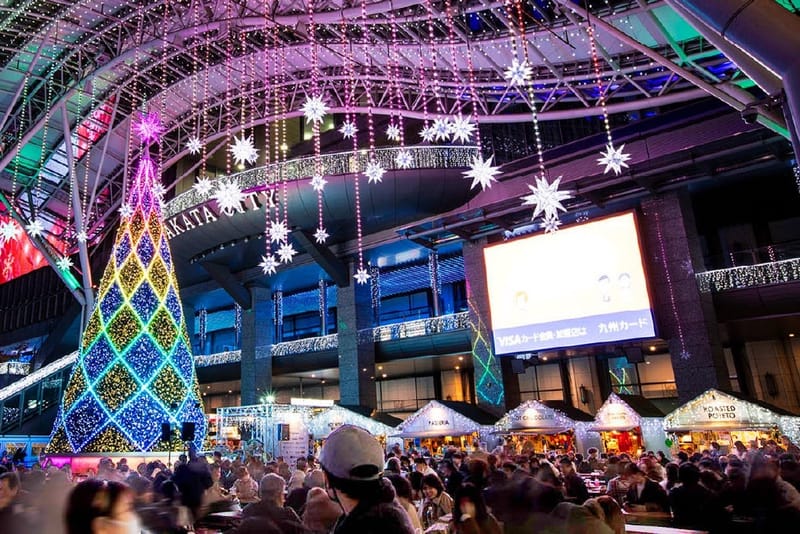
| January | 10.2°C | 3.9°C | Strawberry season and winter illuminations |
| April | 19.9°C | 11.5°C | Cherry blossoms (late March to early April) and wisteria |
| July | 31.2°C | 24.6°C | Hakata Gion Yamakasa festival and the final stage of the rainy season |
| October | 23.7°C | 16.0°C | Autumn events and generally the most settled weather |
| November | 18.2°C | 10.6°C | Autumn foliage and the start of Christmas markets |
Temperatures are 1991–2020 climate averages recorded at the Japan Meteorological Agency’s Fukuoka station. From November to February, bring a warm coat or down jacket, as mornings and evenings can be noticeably colder. In summer, wear breathable clothing and carry a folding umbrella.
Practical information for visiting Fukuoka
| Item | Details |
|---|---|
| Airport to Hakata | Subway from Domestic Terminal: 5 minutes, ¥260; Nishitetsu bus from International Terminal: ¥400 |
| Subway one-day pass | Adults ¥640, children ¥320; contactless credit card payments capped at ¥640 per day |
| FUKUOKA TOURIST CITY PASS | Fukuoka City version ¥2,500; version including Dazaifu ¥2,800; passport required |
| Fukuoka City accommodation tax | Rooms under ¥20,000: ¥200 per person per night; rooms at ¥20,000 or more: ¥500 per person per night |
| Currency | Japanese yen (JPY); prices are listed in yen |
| Tourist information | Official Fukuoka City Tourism Websitehttps://gofukuoka.jp/ |
Transportation fares, pass prices and opening hours may change. Check the latest information before departure.
Frequently asked questions
How many days do you need in Fukuoka?
Four days and three nights is a good length for a first visit to Fukuoka. Allow two full days for the city, one day for Dazaifu, and time for arrival and shopping on the first and last days. Extend your trip to five days and four nights if you want to include a day trip to Yufuin or Kokura.
What is the fastest way from Fukuoka Airport to Hakata Station?
The subway from Fukuoka Airport’s Domestic Terminal is fastest, taking approximately 5 minutes to Hakata Station and costing ¥260. From the International Terminal, you can take a direct Nishitetsu bus to Hakata Station’s Chikushi Exit for ¥400, or ¥380 when paying with a transportation IC card or credit card.
Is Hakata or Tenjin better for staying in Fukuoka?
Stay near Hakata Station if you plan several day trips, or choose Tenjin if shopping, dining and nightlife are your priorities. The two areas are only 6 minutes and ¥210 apart by subway, so either is a convenient base for a first visit.
Can you use contactless credit cards on the Fukuoka subway?
Yes. All 36 Fukuoka City Subway stations accept contactless payments with cards including Visa, Mastercard, JCB, American Express and UnionPay. Daily fares on the same card are capped at ¥640, matching the price of a one-day subway pass.
Final tips: Start with Hakata and Tenjin on your first visit
Fukuoka is an easy city to explore. The airport is less than 10 minutes from the city center, major attractions are relatively close together, and a contactless credit card is enough for subway travel. There is no need to pack every attraction into your first visit. Start with Hakata and Tenjin, then add Dazaifu, Yufuin or the coast according to your interests. On a return trip, Fukuoka also makes an excellent starting point for exploring Kumamoto, Oita and Nagasaki.
Information updated October 2026