Fukuoka Weather by Month 2026–27: Temperatures and What to Wear
Planning a trip to Fukuoka? Find monthly temperatures, rainfall and packing advice, from December’s average high of 12.6°C to the summer rainy season. Includes the 2026–27 winter outlook, snow chances and typical cherry blossom and fall foliage dates.
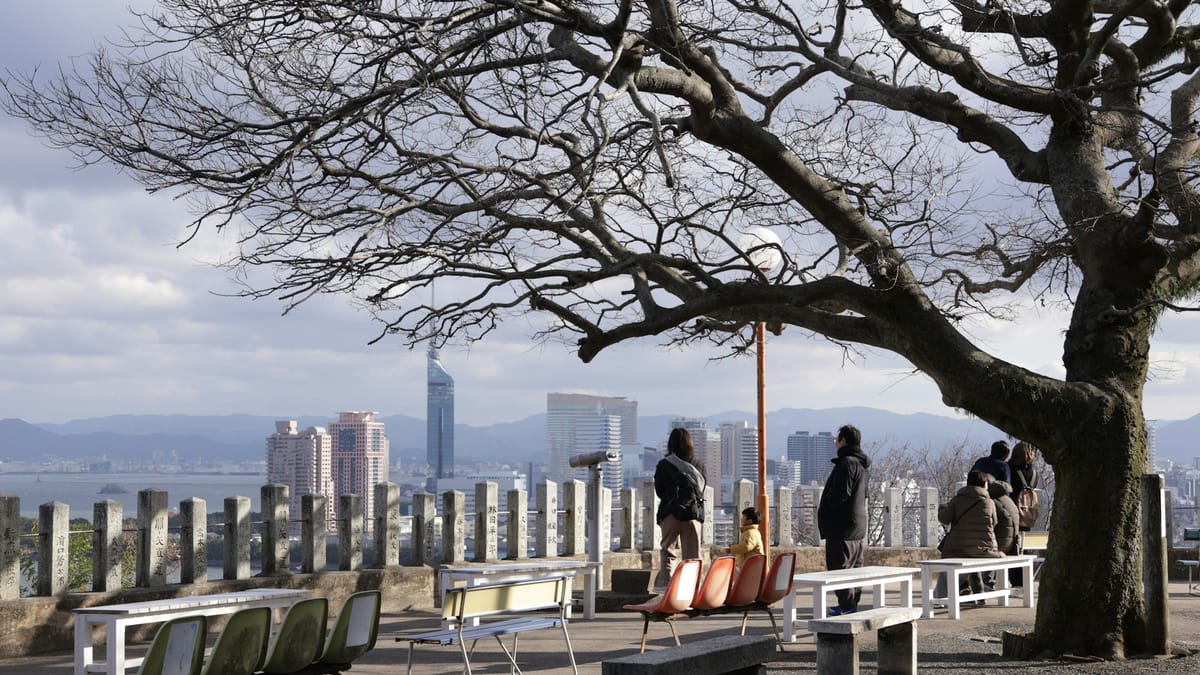
Fukuoka (福岡) has four distinct seasons. January is the coldest month, with an average high of 10.2°C and low of 3.9°C, while August is the hottest, with highs averaging 32.5°C. Annual rainfall is around 1,687 mm, with the heaviest rain falling during the June and July rainy season. Pack a warm coat and sweater for winter, short sleeves and rain gear for summer, and removable layers for the changing temperatures of spring and fall.
Fukuoka’s climate changes dramatically with the seasons. Step outside Fukuoka Airport (福岡空港) on a December morning and you may find temperatures hovering around 5°C, with northerly winds off the Genkai Sea (玄界灘) making it feel several degrees colder. By August, afternoon temperatures in the city regularly exceed 32°C. Humidity is high, and even after sunset there is little relief from the heat. Packing for the wrong season can make an otherwise enjoyable trip uncomfortable.
Weather forecasts can tell you what to expect over the next week or two, but when planning a trip months ahead, the more useful question is what the weather is normally like at that time of year. This guide uses Fukuoka City’s 30-year climate averages for 1991–2020 to break down monthly highs, lows, rainfall and sunshine hours, with practical clothing recommendations for each month. It also covers the typical timing of the rainy season, typhoons, yellow dust, first snowfall, cherry blossoms and fall foliage, along with the latest outlook for winter 2026–27.
What Is Fukuoka’s Weather Like Throughout the Year? Monthly Temperatures and Rainfall
Fukuoka has an annual average temperature of 17.3°C. January is the coldest month, August the hottest and July the wettest. The table below shows Fukuoka City’s monthly climate averages. The clothing column is based on typical daytime highs and overnight lows, making it a useful starting point when deciding what to pack.
| Month | Average high | Average low | Rainfall | Sunshine | What to wear |
|---|---|---|---|---|---|
| January | 10.2°C | 3.9°C | 74.4 mm | 104.1 hours | Thermal base layer, sweater, down jacket or heavy coat |
| February | 11.6°C | 4.4°C | 69.8 mm | 123.5 hours | Same as January, plus scarf and gloves |
| March | 15.0°C | 7.2°C | 103.7 mm | 161.2 hours | Sweater with a coat or substantial trench coat |
| April | 19.9°C | 11.5°C | 118.2 mm | 188.1 hours | Long-sleeved top and light jacket |
| May | 24.4°C | 16.1°C | 133.7 mm | 204.1 hours | Short sleeves or lightweight long sleeves, with a light jacket for evenings |
| June | 27.2°C | 20.3°C | 249.6 mm | 145.2 hours | Breathable T-shirts, quick-drying clothes and rain gear |
| July | 31.2°C | 24.6°C | 299.1 mm | 172.2 hours | T-shirts, hat, sun protection and rain gear |
| August | 32.5°C | 25.4°C | 210.0 mm | 200.9 hours | T-shirts, hat, sun protection and a light layer for air-conditioned interiors |
| September | 28.6°C | 21.6°C | 175.1 mm | 164.7 hours | Mostly short sleeves; watch for typhoons |
| October | 23.7°C | 16.0°C | 94.5 mm | 175.9 hours | Lightweight long sleeves and a light jacket for mornings and evenings |
| November | 18.2°C | 10.6°C | 91.4 mm | 137.3 hours | Knitwear with a trench coat or lightweight coat |
| December | 12.6°C | 5.8°C | 67.5 mm | 112.2 hours | Sweater with a heavy coat or lightweight down jacket |
Fukuoka’s winters are considerably colder than those of subtropical coastal cities. For comparison, Hong Kong averages highs of 20.4°C and lows of 16.2°C in December. Fukuoka is roughly 8°C colder by day and 10°C colder at night. Summer tells a different story: Hong Kong’s average August high is 31.3°C, while Fukuoka reaches 32.5°C, although its nights are slightly cooler. Fukuoka receives around 1,687 mm of rain annually, roughly 70% of Hong Kong’s total, with much of it concentrated in June and July.
A few points are worth keeping in mind when reading the table. These figures are 30-year averages, and individual years can vary by 1–2°C. In recent years, most months have tended to be slightly warmer than the long-term average. Daily minimum temperatures generally occur around dawn, so when walking back to your hotel at 21:00 or 22:00, expect temperatures somewhere between the listed high and low. Winter also brings the least sunshine of the year. January averages just 104 hours, and overcast skies can make it feel colder than the thermometer suggests.
What Should You Wear in Fukuoka in November and December?
November calls for knitwear with a trench coat or lightweight coat. By December, switch to a sweater and a heavy coat or lightweight down jacket. November averages highs of 18.2°C and lows of 10.6°C. A long-sleeved top and jacket will generally be enough for daytime shopping in Tenjin (天神) or Hakata (博多), but temperatures fall toward 10°C after dark, so choose a jacket you can fasten. December is colder throughout the day, with an average high of 12.6°C and low of 5.8°C. A thin jacket alone will not be enough.
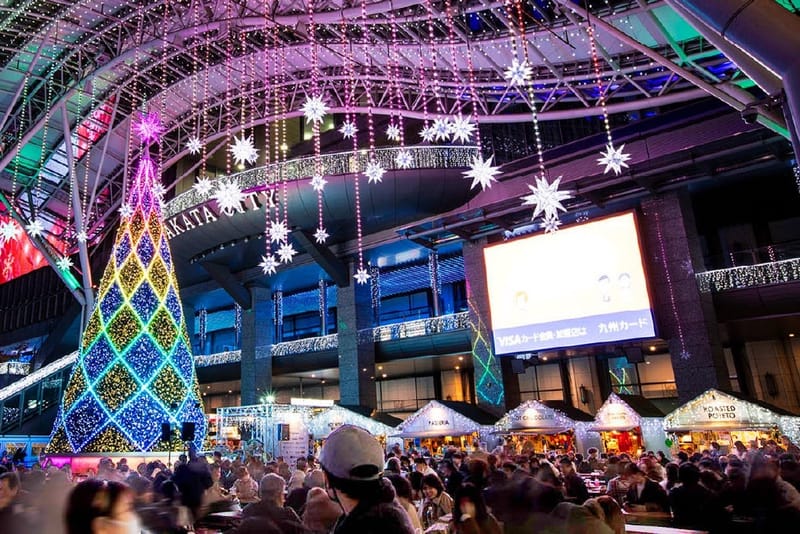
These two months are particularly popular for Fukuoka’s winter events. Christmas markets take place around Tenjin and Hakata Station in November and December. Standing outside with a cup of hot mulled wine or waiting in line for food for half an hour or more feels considerably colder than walking around. For an evening at the Fukuoka Christmas markets, wear an extra sweater under your coat and bring a scarf and gloves. For fall foliage, parks within Fukuoka City typically reach peak color from late November to early December. Mountain locations such as Mt. Hiko (英彦山) and Nomiyama Kannonji Temple (呑山観音寺) peak earlier, usually in early to mid-November. See our Kyushu fall foliage calendar if you want to time your trip around the autumn colors.
Winter 2026–27 Weather Forecast
The three-month forecast for northern Kyushu from November 2026 through January 2027 calls for above-average temperatures and rainfall. Weaker cold-air outbreaks should make the season milder than usual overall, although more rainy days are possible, so keep a folding umbrella in your day bag. Northern Kyushu has experienced persistently below-average rainfall since the rainy season ended in early July 2026. The next three-month forecast is scheduled for release on November 24.
Warmer than average does not mean warm. Fukuoka’s typical first snowfall occurs on December 16. In 2025, the first snow arrived on December 25, nine days later than normal. If you are traveling in late December, it is still safest to pack for typical winter temperatures.
Does It Snow in Fukuoka in January and February? What Should You Wear?
Fukuoka does get snow in January and February, but significant accumulation is rare. In the city, it is more often light flurries or sleet than settled snow. Snowfall is recorded on around nine days in January and six in February, while the typical maximum snow depth is only about 1 cm. Snow that reaches the ground usually melts quickly. For landscapes covered in snow, head into the mountains around Mt. Hiko, Aso (阿蘇) or Kuju (九重).
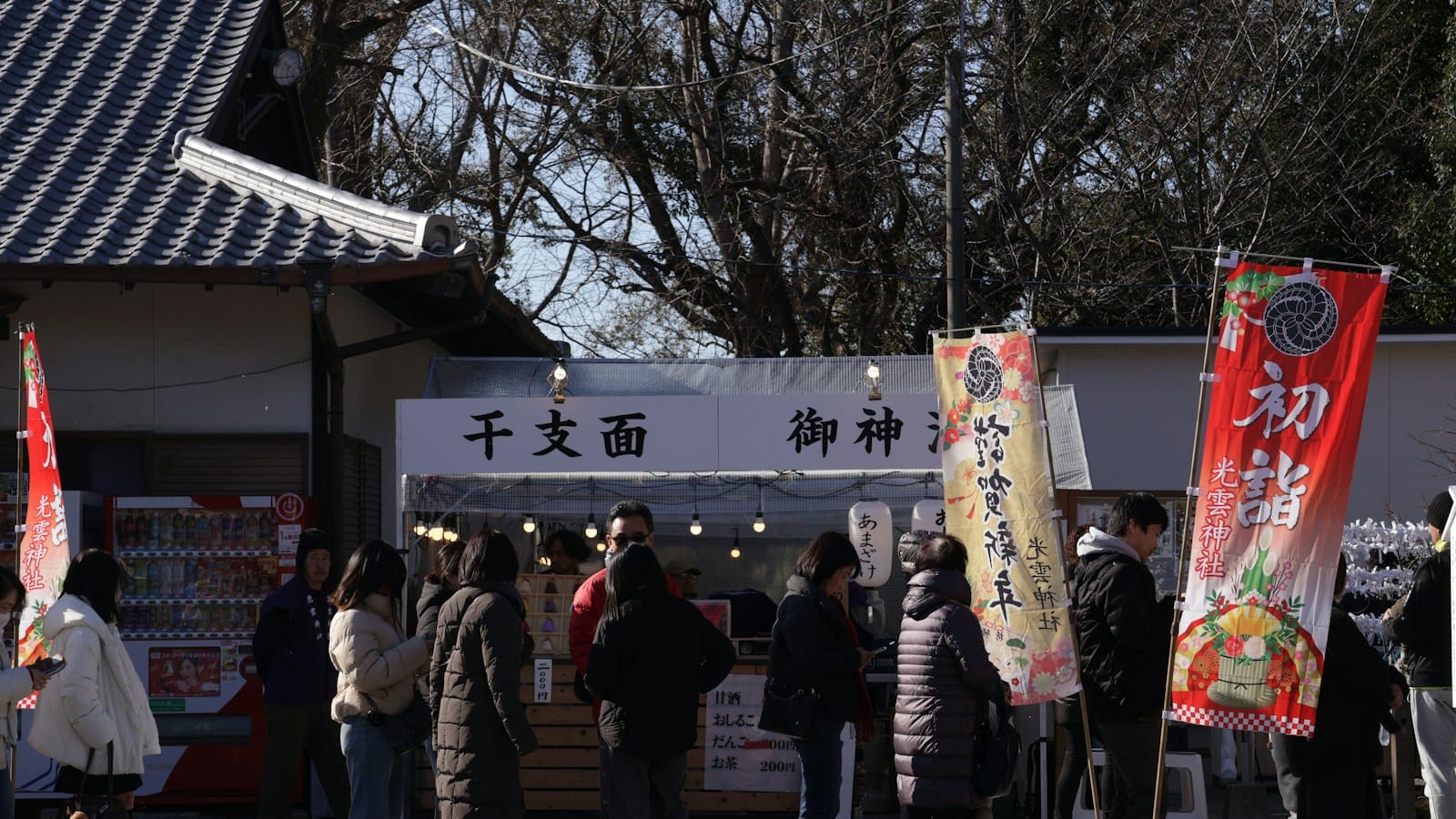
January is Fukuoka’s coldest month, with an average high of 10.2°C and low of 3.9°C. February is slightly warmer at 11.6°C and 4.4°C respectively. For both months, dress in three layers: a thermal base layer against your skin, a sweater or fleece in the middle, and a down jacket or heavy coat on top. Northerly winds are common in winter, and overcast days are frequent. Coastal areas such as Momochihama (百道浜), Nokonoshima (能古島) and Itoshima (糸島) tend to be windier than central Fukuoka, making a windproof outer layer more useful than simply wearing thicker clothes.
Indoors, the situation is quite different. Shopping malls, subway trains, restaurants and hotels are usually well heated, and heavy clothing can leave you sweating as soon as you step inside. Choose an outer layer that is easy to remove and fold away, and avoid an excessively thick turtleneck underneath. You should feel comfortable once your coat is off. Snow boots are unnecessary for exploring central Fukuoka. Sneakers or ankle boots with grippy soles are sufficient. If you plan to visit snowy mountains or hot springs in the highlands, our Kyushu winter weather and clothing guide covers snowfall chances and winter destinations across the region.
A few other winter essentials are worth packing. Disposable heat packs, known in Japan as kairo (カイロ), are sold in convenience stores and drugstores. You can stick them to your back or keep them in your coat pockets. Winter air is also dry, so bring lip balm, hand cream and facial moisturizer.
Fukuoka in Spring, March to May: What to Wear for Cherry Blossoms and Yellow Dust
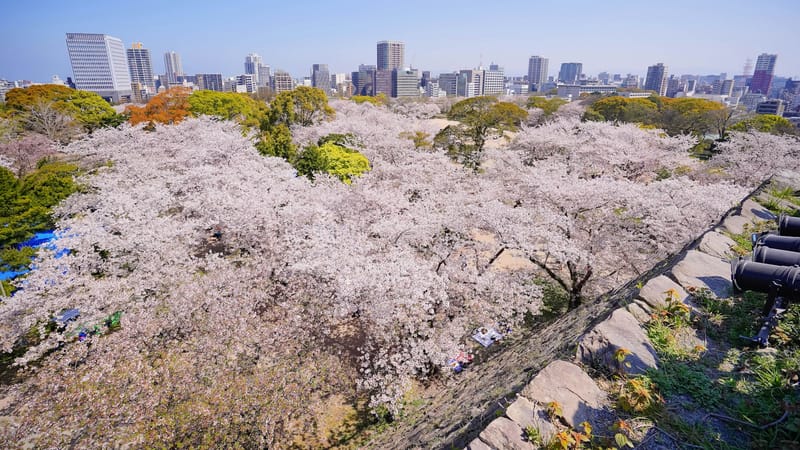
Spring temperatures vary considerably in Fukuoka. You will still need a coat in March, but short sleeves can be comfortable during the day by May. Check whether you are traveling at the beginning or end of the month before packing. March averages highs of 15.0°C and lows of 7.2°C. If you visit Maizuru Park (舞鶴公園) to see the illuminated cherry blossoms after dark, it can feel almost like winter. April is milder, with an average high of 19.9°C and low of 11.5°C, ideal for long sleeves and a light jacket. By May, highs average 24.4°C, and the month receives 204.1 hours of sunshine, more than any other month of the year.
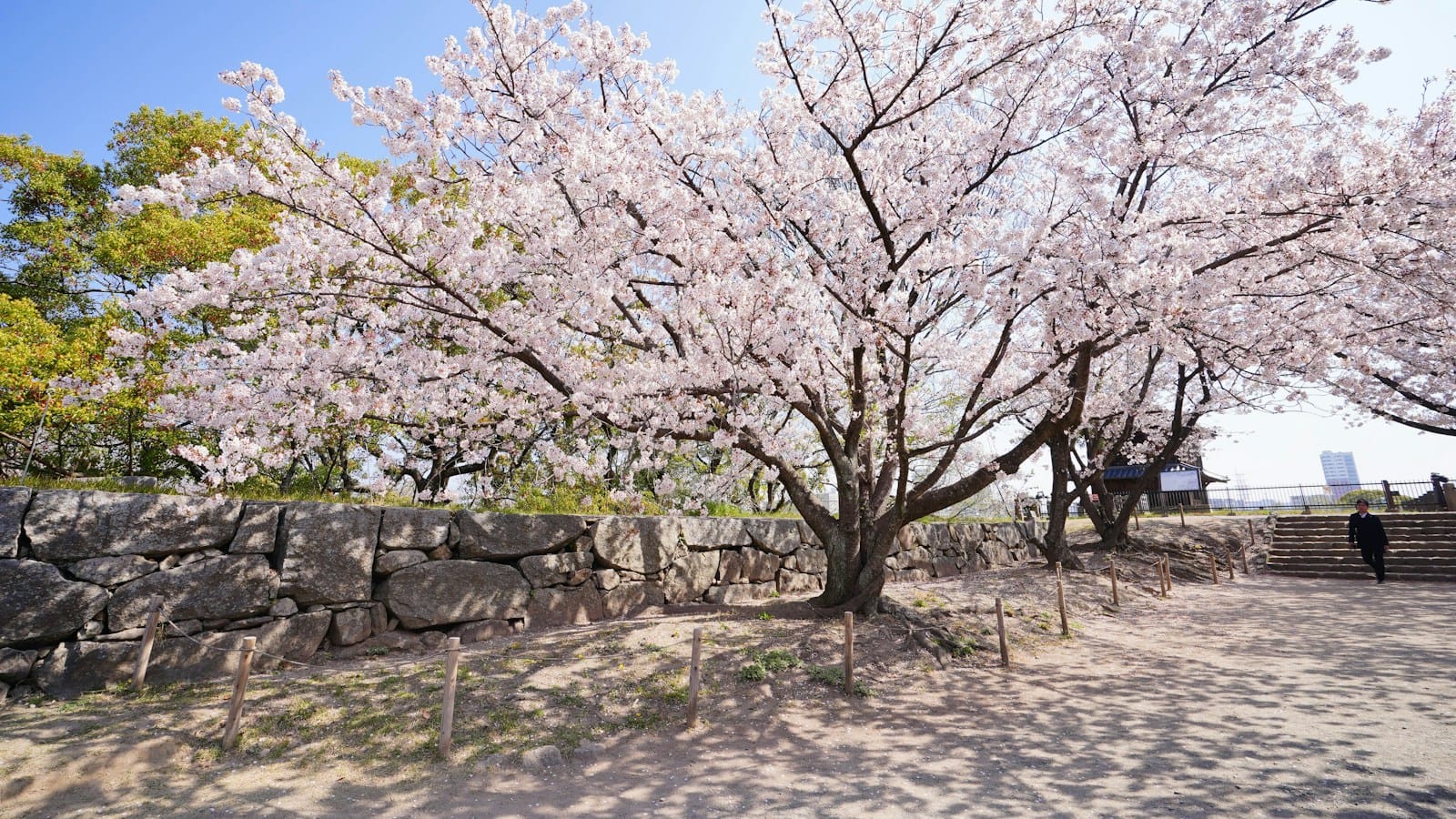
When Do Cherry Blossoms Bloom in Fukuoka?
Fukuoka’s Somei Yoshino (染井吉野) cherry blossoms typically begin flowering on March 22 and reach full bloom on March 31. In 2026, flowering began on March 24 and full bloom was recorded on April 3, both two to three days later than average. Full bloom generally follows the first flowers by about a week to 10 days, making the last week of March through the first week of April the best period for cherry blossom viewing.
What Should You Know About Yellow Dust and Pollen?
Yellow dust becomes more frequent in Fukuoka from February, with the peak season running from March through May. When dust blows in, the sky can turn a hazy gray-yellow and distant views become blurred. Some particles are small enough to contribute to higher PM2.5 readings. If you are sensitive to air pollution or have allergies or asthma, bring a face mask and save outdoor viewpoints for days with lower dust levels. Spring is also cedar pollen season in Japan. Hay fever medication is readily available at drugstores, but check the rules for bringing particular ingredients into your home country before purchasing any to take back.
Golden Week in early May brings the Hakata Dontaku Port Festival (博多どんたく港まつり), held every year on May 3 and 4. Central Fukuoka gets crowded, but the weather is generally sunny and warm. A hat and sunscreen should be sufficient.
Fukuoka in Summer, June to September: How to Handle Rain, Heat and Typhoons
Summer in Fukuoka begins with the rainy season, gives way to intense heat and ends with typhoon season. From June through September, it is worth having a wet-weather backup plan. Short sleeves are suitable throughout these four months, but your other essentials will change from rain gear to sun protection, along with extra flexibility in your itinerary.
Rainy Season: Early June to Mid-July
Northern Kyushu’s rainy season, known as tsuyu (梅雨), typically begins around June 4 and ends around July 19. June and July receive a combined average of approximately 549 mm of rain, accounting for about one-third of Fukuoka’s annual total. In 2026, the rainy season began around June 4 but ended in early July, earlier than usual. July is the wettest month of the year, averaging 299.1 mm, with short bursts of heavy rain particularly common toward the end of the rainy season.
It does not rain every day during Fukuoka’s rainy season, but overcast skies are common, humidity hovers around 75%, and clothes can take a long time to dry. Pack quick-drying clothing, waterproof shoes or sandals, and a lightweight folding umbrella. Clear plastic umbrellas are also easy to buy at convenience stores. Build more indoor stops into your itinerary, such as shopping malls, museums and aquariums, and keep outdoor attractions flexible. For more on the weather pattern and ways to enjoy the season, see our guide to Japan’s rainy season.
Peak Summer Heat: Late July to August
August is Fukuoka’s hottest month, with an average high of 32.5°C and low of 25.4°C. Even at night, temperatures frequently remain above 25°C. The sun is intense, and August receives 200.9 hours of sunshine. Schedule outdoor activities for the morning or late afternoon, and spend the hours around midday indoors. Bring a wide-brimmed hat, sunglasses, sunscreen and drinks that help replenish lost salts. Air conditioning can be quite cold indoors, so a light jacket is useful on Shinkansen journeys or during long visits to shopping malls.
Hakata Gion Yamakasa (博多祇園山笠), held from July 1 to 15, is Fukuoka’s biggest summer festival. The climactic Oiyama (追い山) race in the early morning of July 15 draws large crowds. July’s average low is 24.6°C, so even before sunrise, temperatures are already close to 25°C. Drink plenty of water, particularly in crowded viewing areas.
Typhoon Season: July to September
Typhoons approach northern Kyushu most frequently between July and September, and Fukuoka Prefecture has experienced typhoon landfalls in September. Approaching storms can lead to flight cancellations and suspended Shinkansen and ferry services. For September trips, travel insurance covering delays is advisable, along with an extra day of flexibility in your schedule. September remains hot, with an average high of 28.6°C, and temperatures generally do not begin to ease until late in the month.
Is October the Best Month for Weather in Fukuoka?
October is arguably Fukuoka’s most comfortable month, with mild temperatures, relatively little rain and plenty of sunshine. The average high is 23.7°C and the low is 16.0°C. Rainfall averages 94.5 mm, just one-third of July’s total, while sunshine reaches 175.9 hours. Lightweight long sleeves are comfortable during the day, with a light jacket for mornings and evenings. Conditions are well suited to walking around the city, visiting the Itoshima coast or exploring Dazaifu (太宰府).
For the best balance of temperature and rainfall, consider April, May, October or early November. Yellow dust can affect April and May, occasional typhoons still reach the area in early October, and temperatures begin dropping noticeably in late November. If your main priorities are avoiding heavy rain and extreme heat, October is the safest choice. Choose late November for fall foliage, or December for Christmas illuminations and markets.
What to Wear in Fukuoka by Temperature: A Practical Clothing Chart
The easiest way to decide what to wear is to check the forecast high and low for your travel dates and compare them with the chart below. Japanese weather websites often publish a clothing index to help people dress for the forecast. This version is tailored to Fukuoka’s climate.
| Daytime high | Recommended clothing | Typical months |
|---|---|---|
| Above 30°C | T-shirts, breathable fabrics, hat and sun protection | Late July to August |
| 25–29°C | T-shirts, with a light layer for air-conditioned interiors | June, September |
| 20–24°C | Lightweight long sleeves, light jacket for mornings and evenings | May, October |
| 15–19°C | Long-sleeved top with knitwear or a trench coat | April, November |
| 10–14°C | Sweater, heavy coat or lightweight down jacket, scarf | March, December |
| Around 10°C or below | Thermal base layer, sweater, down jacket and gloves | January, February |
Temperature is not the only consideration. Wind can make it feel several degrees colder, particularly along the coast or at higher elevations, where an extra layer is useful. On rainy days, footwear can become the biggest problem. Once canvas sneakers are soaked, they can remain uncomfortable for the rest of the day, so waterproof shoes are a sensible choice during the rainy season and in winter. In months with a day-to-night temperature difference of around 8°C, particularly March through May and October through November, layers work best. Leave room in your daypack for the jacket you take off.
For a four- or five-day winter trip, one coat with three or four interchangeable sweaters or sweatshirts is more practical than packing two coats. Fukuoka has plenty of affordable clothing stores, including UNIQLO and GU, so you can pick up extra items if needed. Thermal underwear and gloves are also easy to find in major shopping malls during winter.
Fukuoka Weather Reference: Typical Dates for Seasonal Events
The table below summarizes the typical timing of Fukuoka’s main seasonal weather events and the corresponding observations for 2026. It is a useful reference when planning a cherry blossom trip, timing fall foliage or avoiding the rainy season.
| Seasonal event | Typical date | 2026 observation |
|---|---|---|
| Cherry blossom flowering (Somei Yoshino) | March 22 | March 24 |
| Cherry blossoms at full bloom | March 31 | April 3 |
| Peak yellow dust season | March to May | Yellow dust weather advisory issued April 20 |
| Rainy season begins (northern Kyushu) | Around June 4 | Around June 4 |
| Rainy season ends (northern Kyushu) | Around July 19 | Early July |
| Most frequent typhoon approaches | July to September | Not specified |
| Peak fall foliage in the city | Late November to early December | Not specified |
| First snowfall | December 16 | December 25 in 2025 |
About a week before departure, check the Japan Meteorological Agency’s Fukuoka Prefecture weather forecast for the seven-day outlook and chance of rain. Use the figures for the Fukuoka area (福岡地方), as temperatures in Kitakyushu (北九州) and Chikugo (筑後) differ slightly from those in Fukuoka City.
Frequently Asked Questions About Fukuoka Weather
Is Fukuoka Cold in December? Do I Need a Down Jacket?
December in Fukuoka is firmly winter weather, with an average high of 12.6°C and low of 5.8°C. A sweater with a heavy coat or lightweight down jacket is usually sufficient. A thicker down jacket is more useful in January and February, or when spending extended periods outdoors at night.
Does It Snow in Fukuoka During Winter?
Yes, but snow rarely accumulates. January averages around nine days with recorded snowfall, usually light flurries or sleet. The typical maximum snow depth is about 1 cm, and Fukuoka’s average first snowfall date is December 16.
When Is the Rainy Season in Fukuoka?
The rainy season in northern Kyushu typically begins around June 4 and ends around July 19. June and July receive approximately 549 mm of rain combined, accounting for roughly one-third of Fukuoka’s annual rainfall.
Which Month Has the Best Weather in Fukuoka?
April, May, October and early November generally offer the most comfortable and stable weather in Fukuoka. October is particularly reliable for avoiding heavy rain and extreme heat, with an average high of 23.7°C and monthly rainfall of 94.5 mm.
When Is Typhoon Season in Fukuoka?
Typhoons approach northern Kyushu most frequently from July through September. If you are traveling during this period, consider travel insurance that covers delays and allow an extra day of flexibility in your itinerary.
Fukuoka’s weather is relatively straightforward once you know the seasonal pattern. Winters are considerably colder than in subtropical coastal cities, summers are just as hot, and June and July bring the heaviest rain. Use the monthly temperature chart above to choose your clothing, then check the forecast again a week before departure. If this is your first visit, pair this guide with our Fukuoka travel guide to attractions, transportation and accommodation to plan the rest of your trip.
All temperature, rainfall and sunshine figures in this article are based on the 1991–2020 climate averages. Actual conditions vary from year to year.
Last updated: November 2026