Kumamoto Travel Guide 2026: Aso, Kurokawa Onsen and More
Explore Kumamoto in 2026 after the July earthquake. Kumamoto Castle, Aso, Kurokawa Onsen and Amakusa have reopened. Includes transport fares, a half-price contactless payment offer and a 4-day itinerary without a car.
Kumamoto’s major attractions, including Kumamoto Castle, the Kusasenri grasslands of Aso, Kurokawa Onsen and Amakusa, have reopened following the July 2026 earthquake. For a first visit, spend two nights in Kumamoto City and one at Kurokawa Onsen. You can explore all these areas by bus without renting a car.
Kumamoto Prefecture’s attractions are spread across four distinct areas. Kumamoto City lies near the center, Aso and Kurokawa Onsen occupy the volcanic highlands to the northeast, and the Amakusa islands stretch southwest toward the sea. Journey times between them range from one to three hours. Traveling without a car is possible: buses leave Kumamoto Station daily for Mount Aso, Kurokawa Onsen and Amakusa. Services are limited, however, so planning around the timetables is essential.
A magnitude 7.1 earthquake struck Kumamoto on July 28, 2026, leading to widespread accommodation cancellations during the summer vacation period. Nearly three months later, major attractions had resumed welcoming visitors. From October 29, Kumamoto City Tram and operators including Sanko Bus also introduced a 50% fare discount for contactless credit card payments. This guide covers the attractions, transportation costs and schedules in each area. For detailed reopening information, see our Latest Kumamoto Earthquake Transport and Attraction Updates.
Where should you go in Kumamoto? Comparing four areas
Here is how Kumamoto’s four main areas compare for sightseeing and transportation.
| Area | Highlights | Travel from Kumamoto Station (approx.) | Recommended stay | Best for |
|---|---|---|---|---|
| Kumamoto City | Kumamoto Castle, Suizenji Jojuen Garden, Kumamon Square, horse meat and ramen | City center; tram approximately ¥200 per ride | 1–2 days | First-time visitors, families and older travelers |
| Aso (阿蘇) | Kusasenrigahama, Daikanbo, Aso Shrine and volcanic landscapes | Approximately 2 hours by bus or 1 hour 30 minutes by sightseeing limited express train | 1 day | Nature lovers and photographers |
| Kurokawa Onsen (黒川温泉) | Outdoor baths, Nyuto Tegata onsen hopping and a mountain hot spring village | Approximately 2 hours 50 minutes by Kyushu Odan Bus | 1 night | Couples and travelers seeking a traditional ryokan stay |
| Amakusa (天草) | Sakitsu village and church, dolphin watching and island scenery | Approximately 2 hours 25 minutes by express bus | 1–2 days | Repeat visitors, island lovers and history enthusiasts |
Three restrictions remain important after the earthquake. Entry is prohibited within approximately 1 km of Mount Aso’s Nakadake First Crater. The Minami-Kyushu Expressway between Yatsushiro JCT and Yatsushiro-Minami IC remains closed, with reopening expected around the end of 2028, affecting driving routes toward Kagoshima. International flight services to Kumamoto may also be limited, so check the Aso Kumamoto Airport International Flight Timetable. For background on the earthquake fault systems, see our Guide to the Kumamoto and Fukuoka Fault Zones and Their Risks.
How to spend one day in Kumamoto City: The castle, Suizenji and Kumamon
Kumamoto City’s main attractions are concentrated along the tram network. You can visit Kumamoto Castle, Kumamon Square and Suizenji Jojuen Garden in a single day. A tram ride costs ¥200 for adults, and both nationwide transportation IC cards such as Suica and contactless credit cards are accepted.
Is Kumamoto Castle open to visitors?
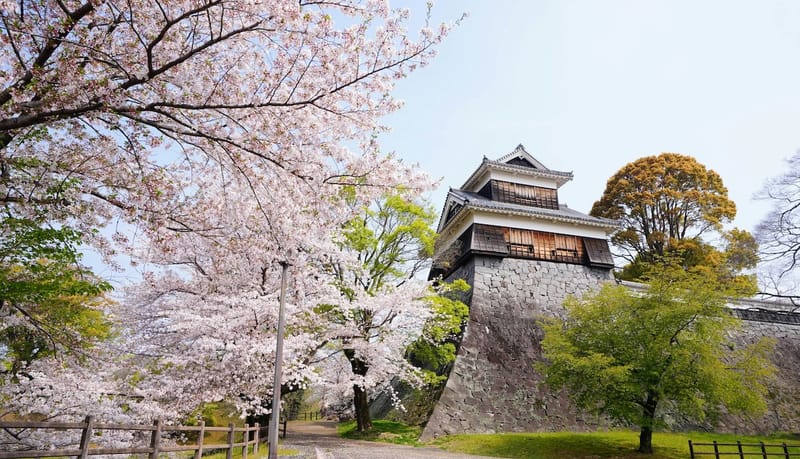
Yes. Kumamoto Castle (熊本城) reopened on August 13, 2026. From November, opening hours are 9:00 to 17:00, with last admission at 16:00. The main castle tower underwent approximately five years of restoration following the 2016 earthquake, while the latest earthquake caused further stone wall collapses. Visitors can follow designated viewing routes and see sections of the walls undergoing repairs. Admission is ¥800 for adults. A combined ticket with the neighboring Wakuwakuza (わくわく座) history experience center costs ¥850, just ¥50 more if you plan to visit both.
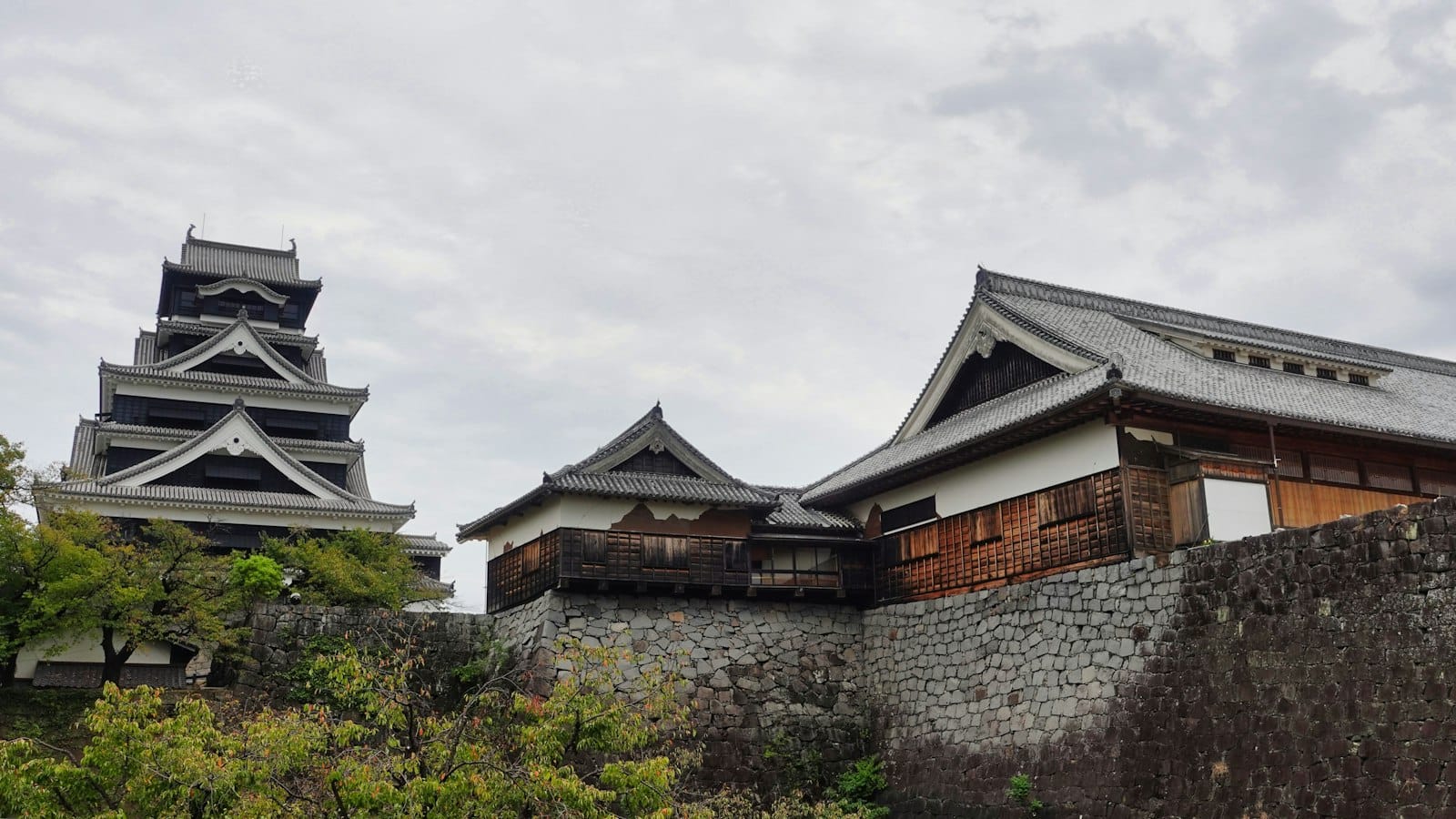
At the foot of the castle, Sakuranobaba Josaien (桜の馬場 城彩苑) has shops selling Kumamoto snacks and souvenirs, making it a convenient lunch stop after sightseeing. Take the tram from Kumamoto Station to Kumamotojo-Shiyakushomae.
Kumamon Square and Suizenji Jojuen Garden
Kumamon Square (くまモンスクエア) is the official “office” of Kumamoto’s mascot Kumamon. Admission is free, and opening hours are 10:00 to 19:00. Kumamon’s scheduled stage appearances vary each day, so check the calendar on the official website before visiting.
Suizenji Jojuen Garden (水前寺成趣園) is a traditional strolling garden created by the Hosokawa family. Its miniature hills and spring-fed pond recreate scenes from the historic Tokaido route. The garden reopened on July 30 following the earthquake. Adult admission is ¥500, and it is approximately 4 minutes on foot from Suizenji Koen tram stop.
What should you eat in Kumamoto City?
Kumamoto’s best-known specialty is basashi (馬刺し), raw horse meat served with soy sauce, minced garlic or grated ginger. If you are unfamiliar with raw horse meat, lean cuts offer a less fatty introduction. Kumamoto ramen is distinguished by its pork-bone broth, fried garlic chips and fragrant roasted garlic oil. Another local dish, taipien (タイピーエン), is a Chinese-influenced soup with glass noodles, fried egg, seafood and vegetables. Restaurants are especially concentrated around the Shimotori and Kamitori covered shopping arcades, making it easy to find dinner without traveling far.
How do you reach Aso without a car? Can you visit Kusasenri?
Yes. A daily direct bus, the Aso Sanjo Line (阿蘇山上線), runs from Kumamoto Station via Kusasenri. Alternatively, take a JR train to Aso Station and transfer to the Aso Tozan Line (阿蘇登山線) mountain bus. The volcanic crater remains closed, so the main attraction at present is Aso’s grassland scenery rather than the crater itself.
Kusasenrigahama and Mount Aso
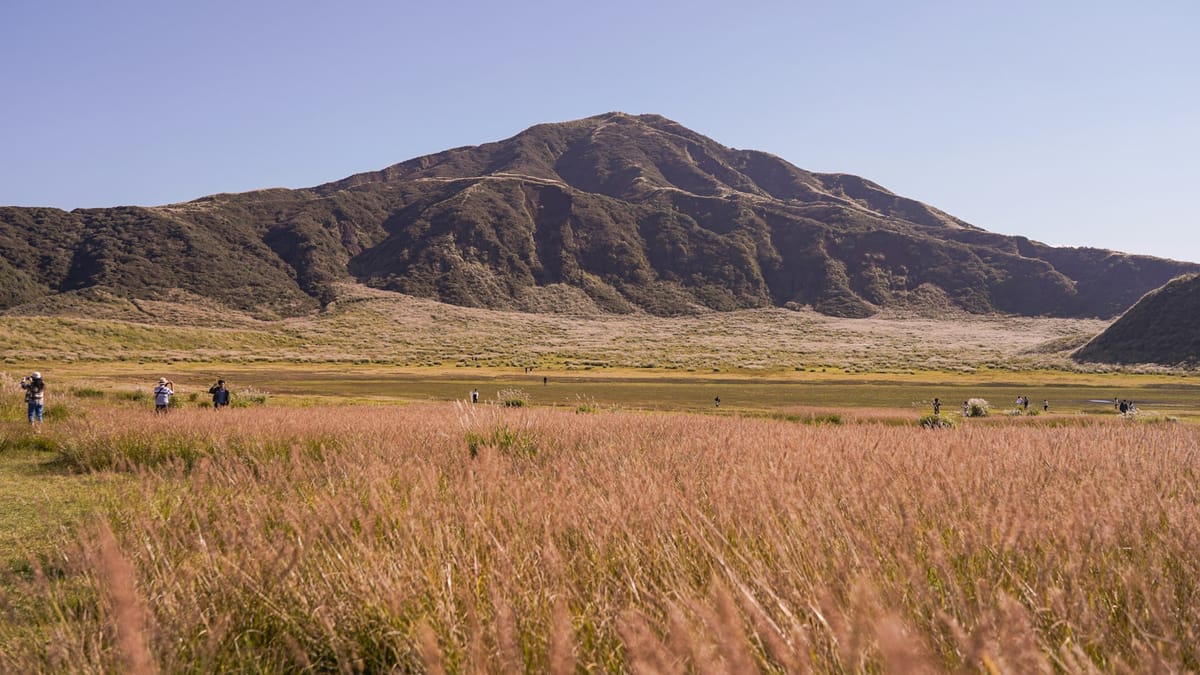
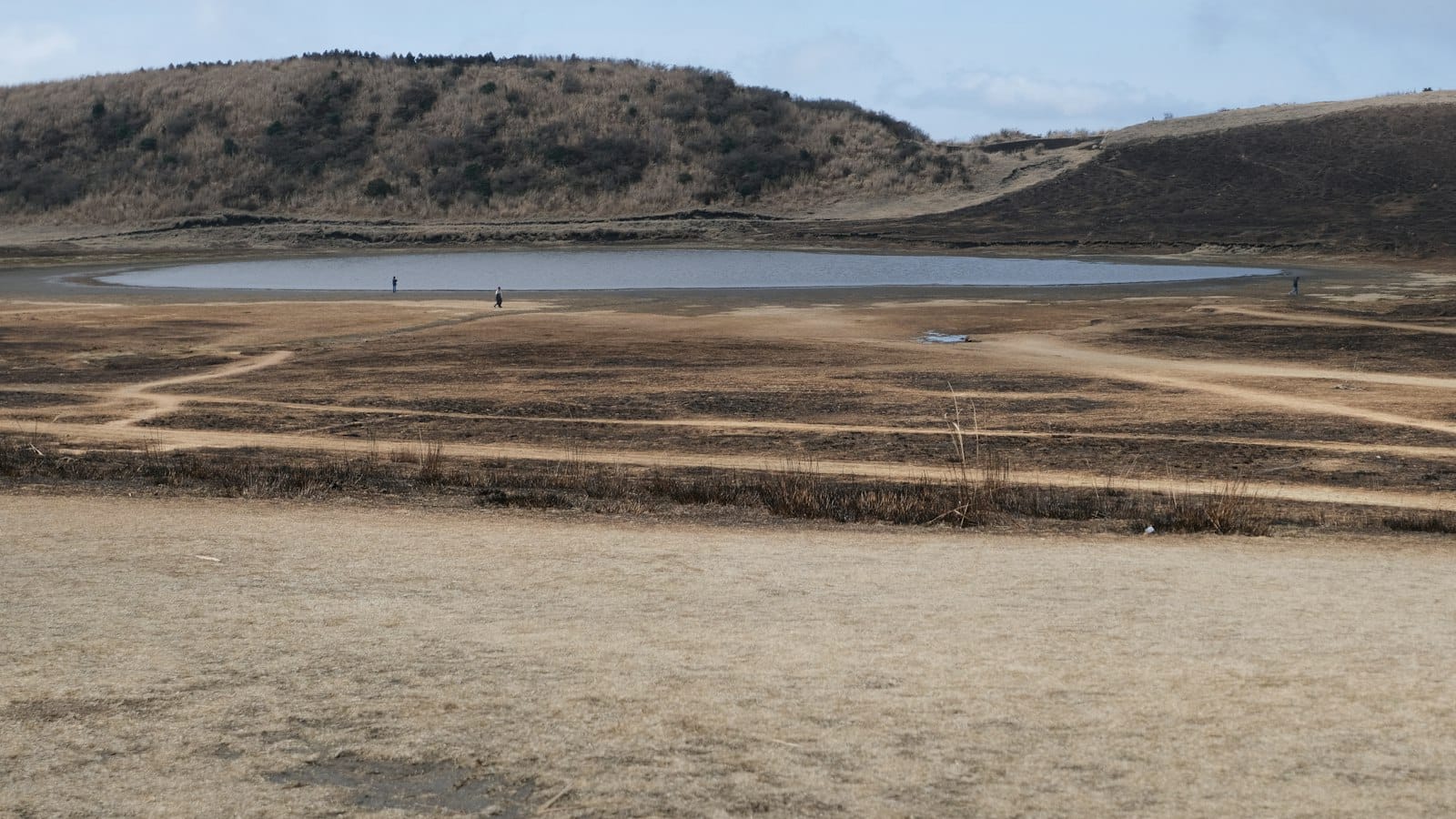
Kusasenrigahama (草千里ヶ浜) is an extensive grassland on the northern slopes of Mount Eboshi. Rainwater collects in shallow ponds across the grassland, horses can often be seen grazing, and visitors can follow the walking paths. The nearby Aso Sanjo Terminal (阿蘇山上ターミナル) is outside the restricted crater zone and remains accessible. Mount Aso is currently at Volcanic Alert Level 2, with entry prohibited within approximately 1 km of Nakadake First Crater. The Aso San Koen Road leading toward the crater is also closed.
| Route | Schedule (October 2026) | Adult fare | Notes |
|---|---|---|---|
| Aso Sanjo Line (Kumamoto Station → Kusasenri → Mount Aso) | Departs 9:33, arrives at Kusasenri 11:32; return departs Mount Aso at 16:00, arrives at Kumamoto Station 17:59 | ¥2,000 to Kusasenri; ¥2,200 to Mount Aso | One round trip daily; reservation required |
| Aso Tozan Line (Aso Station → Kusasenri → Mount Aso) | 9 daily departures between 9:40 and 16:30; approximately 35 minutes | ¥1,000 | First come, first served; boarding may not be possible during busy periods |
| JR Aso Boy! (あそぼーい!) limited express (Kumamoto → Aso) | Departs 9:57, arrives at Aso 11:27 | Check the JR Kyushu website | Reserved seats only; operates on selected dates according to the official calendar |
If Kusasenri is your only destination, the direct Aso Sanjo Line avoids a transfer. To include Daikanbo or Aso Shrine, plan your route around Aso Station.
Daikanbo and Aso Shrine
Daikanbo (大観峰) sits on the northern rim of the Aso caldera, offering panoramic views of the five peaks of Aso and the farmland across the caldera floor. On autumn and winter mornings, a sea of clouds sometimes forms below the viewpoint. Public transportation is limited. Sanko Bus added a stop closer to the observation area in 2024, but you still need to check the schedule carefully. Driving is considerably more convenient.
Aso Shrine (阿蘇神社) completed the restoration of its monumental gate in December 2023 after it collapsed in the 2016 earthquake. The nearby Monzenmachi Shopping Street (門前町商店街) has croquette shops and natural spring water spots, all within walking distance. The shrine is approximately 15 minutes on foot from JR Miyaji Station. Aso’s signature dish is akaushi (あか牛) beef rice bowl, made with relatively lean local beef.
[Editor’s note: Confirm the exact location of Daikanbo’s new bus stop and the walking time to the viewpoint.]
Is Kurokawa Onsen worth an overnight stay? How does the Nyuto Tegata work?
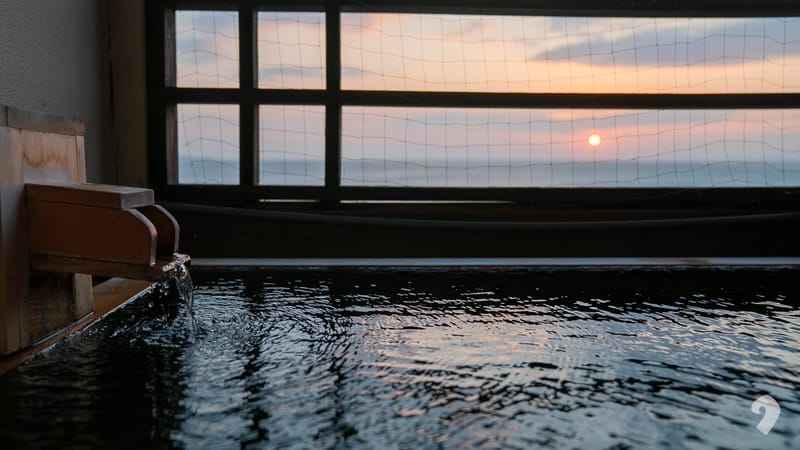
Yes. Around 30 traditional inns line the valley at Kurokawa Onsen, and lanterns illuminate the hot spring village in the evening. A day trip gives you little more than time for a quick bath; staying overnight lets you enjoy the atmosphere after the day visitors leave. No major damage was confirmed at Kurokawa Onsen following the earthquake, and normal operations resumed on July 29.
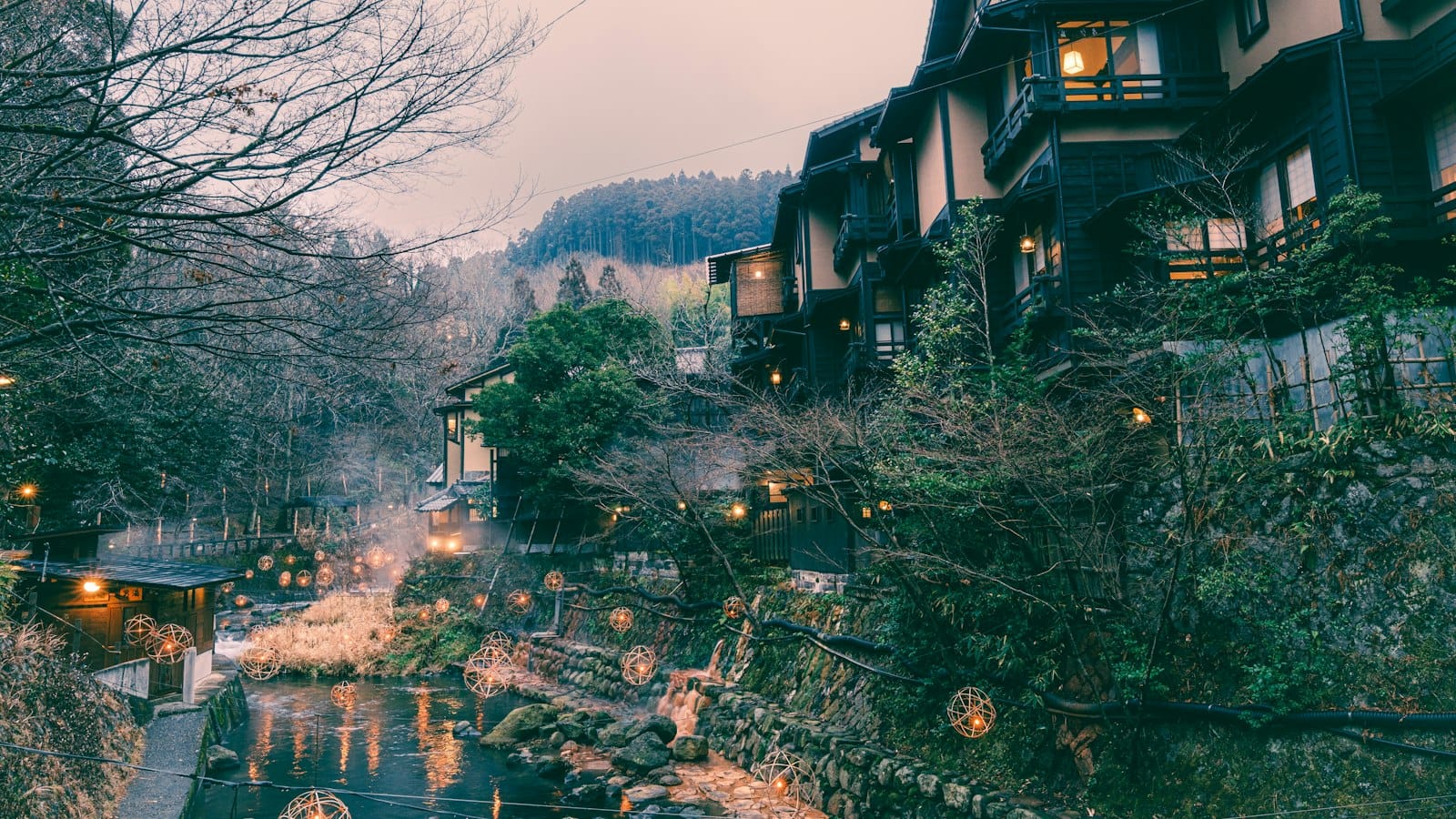
For a day visit or a chance to experience several ryokan outdoor baths, buy a Nyuto Tegata (入湯手形). The wooden bathing pass costs ¥1,500 for adults and allows you to choose three outdoor baths from 25 participating inns. One of the three uses can instead be exchanged for food, drinks or souvenirs. The pass is valid for six months from purchase, with bathing hours from 8:30 to 21:00. The Nyuto Tegata celebrates its 40th anniversary in 2026, with a limited edition of 50,000 commemorative passes available while stocks last. Anniversary activities continue until the end of March 2027. Photography is generally prohibited in outdoor baths.
From Kumamoto, take the Kyushu Odan Bus (九州横断バス), departing Kumamoto Station at 7:23 or 8:23 and arriving at Kurokawa Onsen at 10:15 or 11:15. The fare is ¥3,400. From Fukuoka’s Tenjin district, direct highway buses take approximately 3 hours and cost ¥4,000; reservations are required. Kurokawa Onsen lies near the Kumamoto–Oita prefectural border, and the Kyushu Odan Bus continues to Yufuin for ¥2,700 from Kurokawa. This makes it easy to connect with an Oita itinerary covering Yufuin and Beppu.
For a comparison of hot spring towns across Kyushu, including Yufuin and Beppu, read our Guide to Kyushu’s 10 Best Onsen Towns.
How do you get to Amakusa? Is a day trip enough?
Amakusa is best suited to travelers spending at least five days in Kyushu or returning to Kumamoto for a second visit. A day trip from Kumamoto is possible, but with bus journeys of around 2 hours 25 minutes each way, you will have time for only one or two attractions. An overnight stay allows a much more relaxed visit.
There are two main ways to reach Amakusa. The most direct is the Rapid Amakusa-go (快速あまくさ号) bus from Kumamoto Station to Hondo Bus Center, costing ¥2,700. There are 10 round trips daily, with no reservation required. For a more scenic journey, take the JR A-Train (A列車で行こう) sightseeing limited express, departing Kumamoto at 10:21 and reaching Misumi at 11:30. From Misumi Port, the Amakusa Takarajima Line (天草宝島ライン) high-speed boat takes approximately 20 minutes to Matsushima in Kamiamakusa. The sightseeing train operates only on selected dates, so check JR Kyushu’s operating calendar.
Amakusa has two main attractions. The first is the World Heritage-listed Sakitsu Village (﨑津集落), a fishing community centered on the Gothic-style Sakitsu Church (﨑津教会), which reflects the history of Japan’s Hidden Christians during the Edo period. From Hondo Bus Center, transfer at Icchoda Chuo; services are limited. The second is dolphin watching (イルカウォッチング) around Itsuwa in northern Shimoshima. Boat trips last approximately 1 hour and cost around ¥3,000 per adult, with reservations required. Confirm current prices before visiting. You can reach Futae Port by bus from Hondo. Sakitsu Church was not damaged by the earthquake, and related facilities reopened on August 1.
How to explore Kumamoto without a car: Transportation and a 4-day itinerary
Without a rental car, the most efficient route is Kumamoto City → Aso → Kurokawa Onsen, using Kumamoto Station as your starting point. Travelers arriving in Fukuoka can take the Kyushu Shinkansen south to Kumamoto.
How do you reach Kumamoto from Fukuoka or the airport?
| Route | Transportation | Approximate time | Adult one-way fare | Notes |
|---|---|---|---|---|
| Hakata → Kumamoto | Kyushu Shinkansen Sakura (さくら) | 38 minutes | Reserved seat ¥5,230; non-reserved seat ¥4,700 | Frequent departures; fastest option |
| Tenjin/Hakata → Kumamoto Sakuramachi | Hinokuni-go (ひのくに号) highway bus | 2 hours, depending on traffic | ¥2,500 | Cheapest option; fixed seating capacity |
| Aso Kumamoto Airport → Kumamoto Sakuramachi | Special Rapid Airport Bus | 45 minutes | ¥1,400 | Revised timetable from November 1 |
| Aso Kumamoto Airport → Kumamoto Station | Airport bus | 65 minutes | ¥1,400 | Most frequent service |
From October 29, 2026, Kumamoto City Tram and operators including Sanko Bus introduced the Contactless Payment Half-Fare Campaign (タッチ決済 運賃半額キャンペーン). Pay with a Visa, Mastercard, JCB or other eligible contactless credit card or mobile device to receive 50% off the fare. No registration is required, and the offer ends when the allocated budget is exhausted. Tram fares drop from ¥200 to ¥100. The Rapid Amakusa-go service to Amakusa and the Aso Tozan Line from Aso Station are also included. The Kyushu Odan Bus and Aso Sanjo Line are not among the eligible routes listed by Sanko Bus.
International visitors can purchase the JR Kyushu Rail Pass. The 3-day Northern Kyushu Pass costs ¥15,000 and covers Fukuoka, Kumamoto, Oita, Nagasaki and Saga. If you are only making one round trip between Hakata and Kumamoto, individual tickets are cheaper.
How to plan a 4-day, 3-night Kumamoto itinerary
- Day 1: Arrive in Fukuoka and take the Shinkansen to Kumamoto. Explore the Shimotori and Kamitori shopping arcades in the evening, then have horse meat or Kumamoto ramen for dinner. Stay in Kumamoto City.
- Day 2: Visit Kumamoto Castle and Josaien in the morning. Take the tram to Kumamon Square and Suizenji Jojuen Garden in the afternoon. Stay in Kumamoto City.
- Day 3: Take the 8:23 Kyushu Odan Bus toward Aso Station, then transfer to the Aso Tozan Line for Kusasenri. Return to Aso Station in the afternoon and catch the 14:09 Kyushu Odan Bus to Kurokawa Onsen. Stay overnight at an onsen ryokan.
- Day 4: Spend the morning enjoying the baths with your Nyuto Tegata, then take the direct highway bus to Fukuoka Tenjin at 10:00, 11:00 or 14:00. The journey takes approximately 2 hours 50 minutes and requires a reservation. Alternatively, continue to Yufuin on the Kyushu Odan Bus.
Transportation and bathing costs for this itinerary total approximately ¥16,600: ¥5,230 for a reserved Shinkansen seat, ¥1,800 for the bus from Kumamoto to Aso, ¥2,000 for a round trip on the Aso Tozan Line, ¥1,600 from Aso to Kurokawa Onsen, and ¥4,000 from Kurokawa to Fukuoka, plus ¥500 for a tram day pass and ¥1,500 for the Nyuto Tegata. Accommodation and meals are not included.
With an extra day, you could add Amakusa. Kumamoto Prefecture’s Kumamoto Fukko Oenwari (熊本ふっこう応援割) accommodation subsidy offers discounts of up to 60% for stays on or before December 25, subject to available funding. For booking details, see our Kyushu Earthquake Recovery Accommodation Discount Guide.
Practical information for Kumamoto’s main attractions
| Attraction | Address | Opening hours | Closed | Admission | Official website |
|---|---|---|---|---|---|
| Kumamoto Castle | 1-1 Honmaru, Chuo Ward, Kumamoto City, Kumamoto Prefecture | 9:00–17:00 (last admission 16:00) | December 29 | Adults ¥800; elementary and junior high school students ¥300; combined ticket with Wakuwakuza ¥850 for adults | castle.kumamoto-guide.jp |
| Suizenji Jojuen Garden | 8-1 Suizenji Koen, Chuo Ward, Kumamoto City, Kumamoto Prefecture | 8:30–17:00 (last admission 16:30) | Open year-round | Adults ¥500; children ¥200 | suizenji.or.jp |
| Kumamon Square | 1F Tetoria Kumamoto Building, 8-2 Tetorihoncho, Chuo Ward, Kumamoto City, Kumamoto Prefecture | 10:00–19:00 | Not specified on the official website | Free | kumamon-sq.jp |
| Kurokawa Onsen Nyuto Tegata | Ryokan Association, Kaze no Ya (風の舎), Minamioguni, Aso District, Kumamoto Prefecture | Bathing hours 8:30–21:00 | Cleaning days vary by ryokan | Adults ¥1,500; children ¥700 | kurokawaonsen.or.jp |
- Bus timetables, fares and service updates: Sanko Bus
- Mount Aso crater restrictions: Aso Volcano Crater Access Information
- Tram fares and day passes: Kumamoto City Transportation Bureau
Bus fares are based on Sanko Bus’s fare table effective August 1, 2026. Opening hours, transportation schedules and volcanic access restrictions may change, so confirm the latest details before departure.
Frequently asked questions
Is it safe to visit Kumamoto after the 2026 earthquake?
Yes. Kumamoto Castle, Kusasenri in Aso, Kurokawa Onsen and Amakusa have reopened, and all earthquake-related railway suspensions were lifted by October 13. Restrictions remain within approximately 1 km of Nakadake First Crater and on the Minami-Kyushu Expressway section between Yatsushiro JCT and Yatsushiro-Minami IC.
Can you visit Aso and Kurokawa Onsen without a car?
Yes. The Aso Sanjo Line runs directly from Kumamoto Station to Mount Aso via Kusasenri. The Kyushu Odan Bus connects Kumamoto with Aso Station and Kurokawa Onsen. Both routes have limited departures, and some services require reservations, so plan around the timetables.
How much does Kumamoto Castle cost, and what time does it close?
Kumamoto Castle admission is ¥800 for adults and ¥300 for elementary and junior high school students. From November, opening hours are 9:00 to 17:00, with last admission at 16:00. The castle closes only on December 29 each year.
How much does the Kurokawa Onsen Nyuto Tegata cost?
The Nyuto Tegata costs ¥1,500 for adults and allows entry to three outdoor baths chosen from 25 participating ryokan. It is valid for six months from purchase, with bathing hours from 8:30 to 21:00. One of the three uses can instead be exchanged for food, drinks or souvenirs.
What is the fastest way from Fukuoka to Kumamoto?
The fastest option is the Sakura service on the Kyushu Shinkansen, taking approximately 38 minutes from Hakata to Kumamoto. A reserved seat costs ¥5,230. For a cheaper alternative, the Hinokuni-go highway bus takes around 2 hours and costs ¥2,500.
Kumamoto rewards a slower pace. On a first visit, Kumamoto Castle and the Aso grasslands can easily fill two days, with another night reserved for Kurokawa Onsen. Accommodation subsidies and half-price transportation offers available in autumn and winter 2026 can help reduce costs. Save Amakusa for a return visit, when you can stay overnight and spend more time exploring its coastline and historic churches.
Information updated October 2026