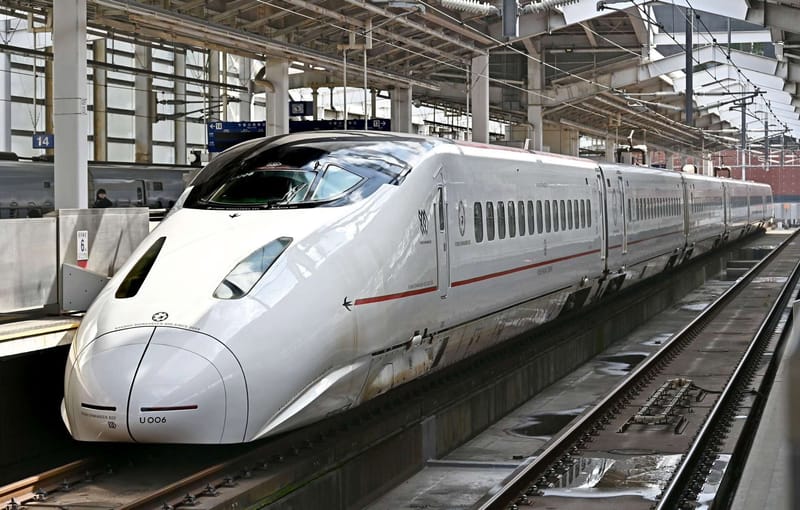
Kagoshima Will Pay for Your Bullet Train Ride from Fukuoka in 2026
Kagoshima is covering the full one-way shinkansen fare from Hakata for foreign visitors — a roughly 11,000-yen ride to a volcano, hot springs, and black pork heaven. Here's how it works and where to go.
A record 3.5-billion-yen tourism budget
Kagoshima Prefecture's initial budget for fiscal 2026 earmarks a record 3.5 billion yen — 1.2 billion more than the previous year — to boost tourism revenue, spread across 39 separate initiatives. International overnight stays in the prefecture still haven't recovered to pre-pandemic levels, and the situation has been compounded by the suspension of Kagoshima Airport's Hong Kong route since July 2025 and the ongoing absence of Shanghai flights. In response, the prefecture is setting aside roughly 278 million yen specifically to lure inbound travelers back.
At a press conference, Governor Koichi Shiota said that as Japan's population shrinks, inbound tourism matters more than ever to regional economies, and the biggest challenge right now is figuring out how to get visitors to Kagoshima without direct flights.
Free one-way shinkansen from Hakata to Kagoshima-Chuo
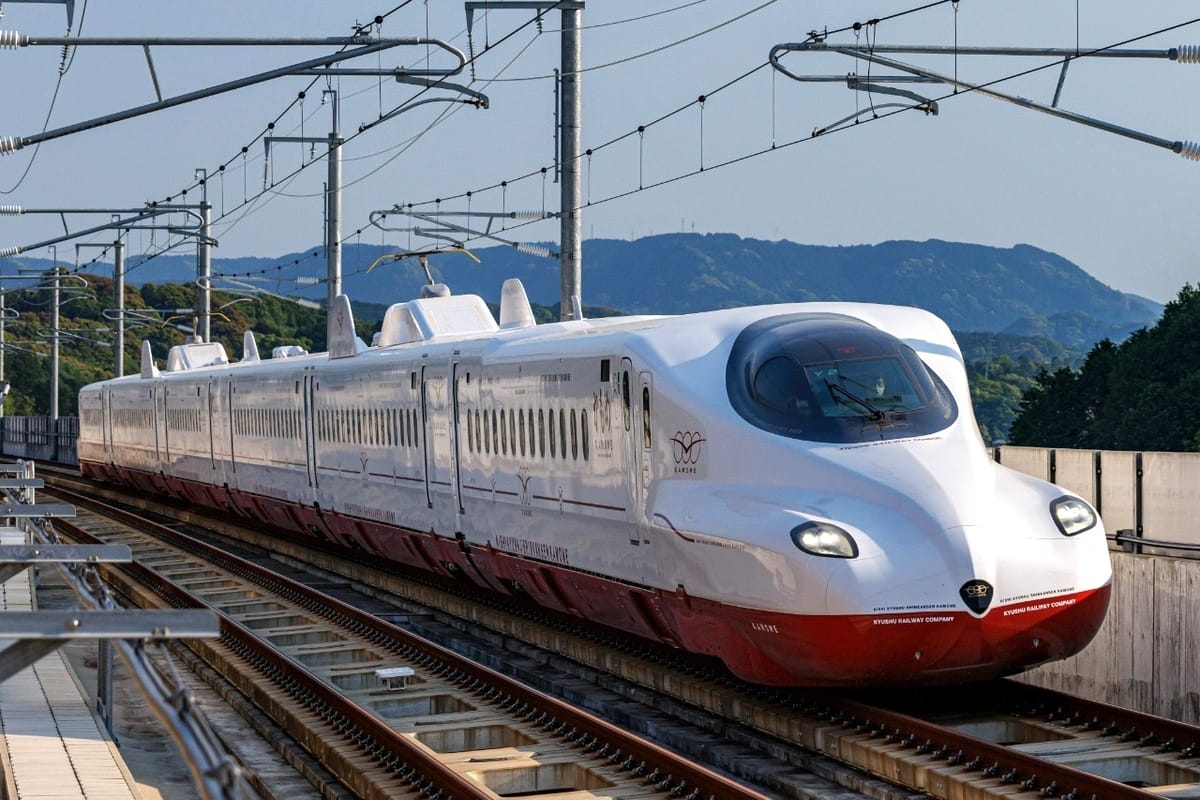
The headline measure is brilliantly simple: the prefecture will fully cover the one-way Kyushu Shinkansen fare from Hakata Station to Kagoshima-Chuo Station for eligible foreign tourists. The idea is to siphon some of the visitors already piling into Fukuoka down to Kagoshima — and with the journey taking only around an hour, it's a genuinely tempting offer.
At regular prices, a reserved seat from Hakata to Kagoshima-Chuo runs about 10,640 to 11,950 yen (roughly $70–$80 USD) depending on the train type and season, so it's a meaningful chunk off your travel budget.
Who qualifies: travelers from the four countries and regions already served by direct flights to Kagoshima Airport, plus visitors from the United States and Thailand — markets the prefecture is actively trying to grow. The campaign will also run digital promotions with online travel booking platforms.
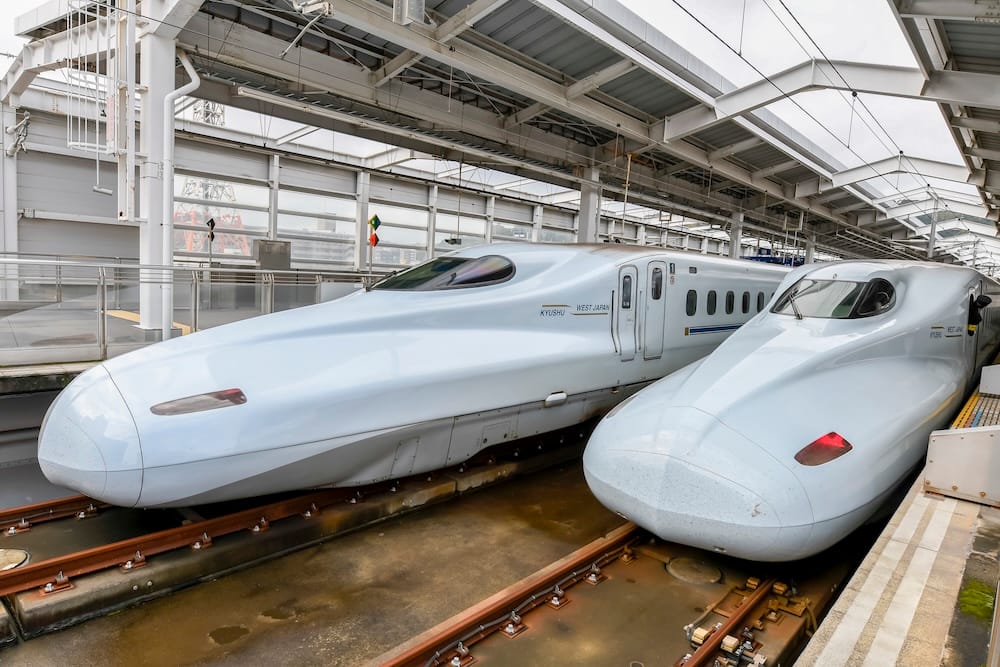
Kyushu Shinkansen: Hakata to Kagoshima-Chuo at a glance
| Detail | Info |
|---|---|
| Route | Kyushu Shinkansen, Hakata Station to Kagoshima-Chuo Station |
| Travel time | As fast as 1 hour 16 minutes on the Mizuho; 1 hour 20–40 minutes on the Sakura |
| Regular fare (reserved seat) | Roughly 10,640–11,950 yen depending on train and season |
| Main stops | Hakata — Shin-Tosu — Kurume — Kumamoto — Kagoshima-Chuo (the Mizuho only stops at Kumamoto) |
| Frequency | Multiple departures daily; the last train leaves Hakata around 10:20 PM |
Application details and exact eligibility conditions are expected to be announced closer to launch, so it's worth checking before you book.
Why the flight situation matters
Hong Kong Airlines resumed scheduled service to Kagoshima in March 2024, eventually building up to four flights a week. But in mid-2025, an online rumor falsely claiming a massive earthquake would strike Japan in July tanked demand — load factors plunged from around 70% to 30%. The route was fully suspended from July 2025 and the pause has since been extended through March 28, 2026. The airline says it isn't pulling out and is weighing a restart.
Governor Shiota has stressed that the prefecture will keep pushing to revive direct routes. In the meantime, the smoothest way to reach Kagoshima from overseas is to fly into Fukuoka and hop on the shinkansen south — and with the new subsidy, that's quietly become the most economical option too.
Five things worth your time in Kagoshima
Once you arrive at Kagoshima-Chuo, here's what's worth building into your itinerary.
Sengan-en garden and the World Heritage site
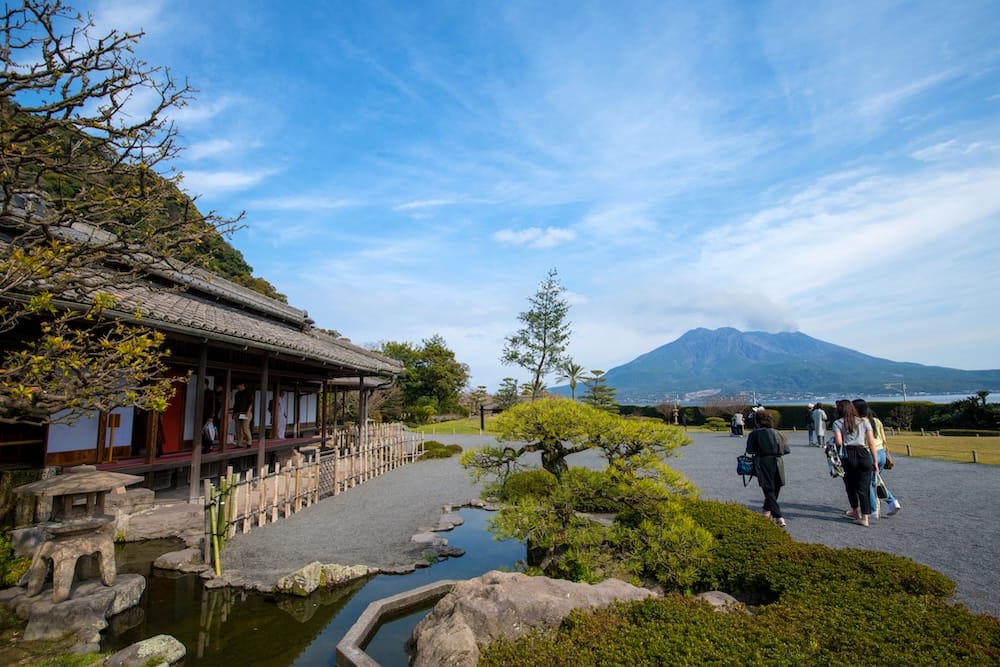
Built in 1658 as a villa for the Shimazu lords of the Satsuma domain, Sengan-en is a sprawling 15,000-tsubo (roughly 50,000 sqm) daimyo garden that famously uses Sakurajima volcano as its borrowed scenery. It's part of the UNESCO World Heritage \"Sites of Japan's Meiji Industrial Revolution,\" and the grounds include the Shoko Shuseikan museum and a working Satsuma kiriko glass studio you can tour. The new JR Sengan-en Station on the Nippo Main Line, which opened in March 2025, makes the trip just 10 minutes from Kagoshima-Chuo.
- Address: 9700-1 Yoshino-cho, Kagoshima City
- Hours: 9:00 AM – 5:00 PM, open year-round (closed on the first Sunday in March for the Kagoshima Marathon)
- Admission: 1,600 yen for adults; 800 yen for elementary, junior high, and high school students
- Getting there: Walking distance from JR Sengan-en Station (about 10 minutes by JR from Kagoshima-Chuo), or roughly 50 minutes on the City View sightseeing bus
Sakurajima volcano
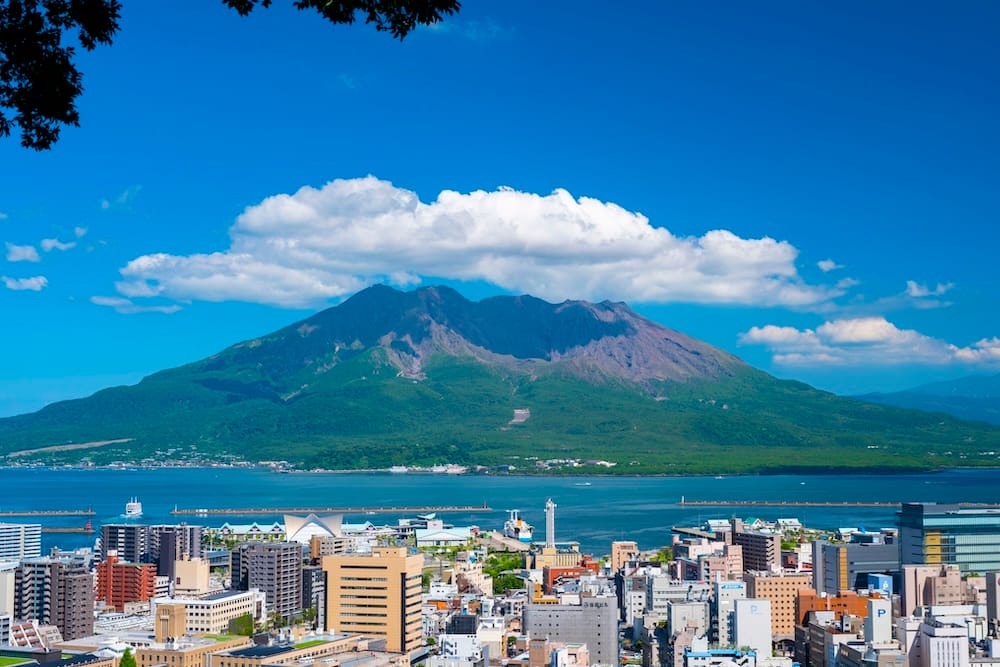
The symbol of Kagoshima: a 1,117-meter active volcano that's still smoking away today. The Sakurajima Ferry from Kagoshima Port runs 24 hours a day and makes the crossing in about 15 minutes. Yunohira Observatory is the highest point on the island that regular visitors can reach, and the Lava Seaside Park has a free 100-meter footbath — one of the longest in Japan. Check the current volcanic alert level before you go.
Tenmonkan and Kagoshima black pork
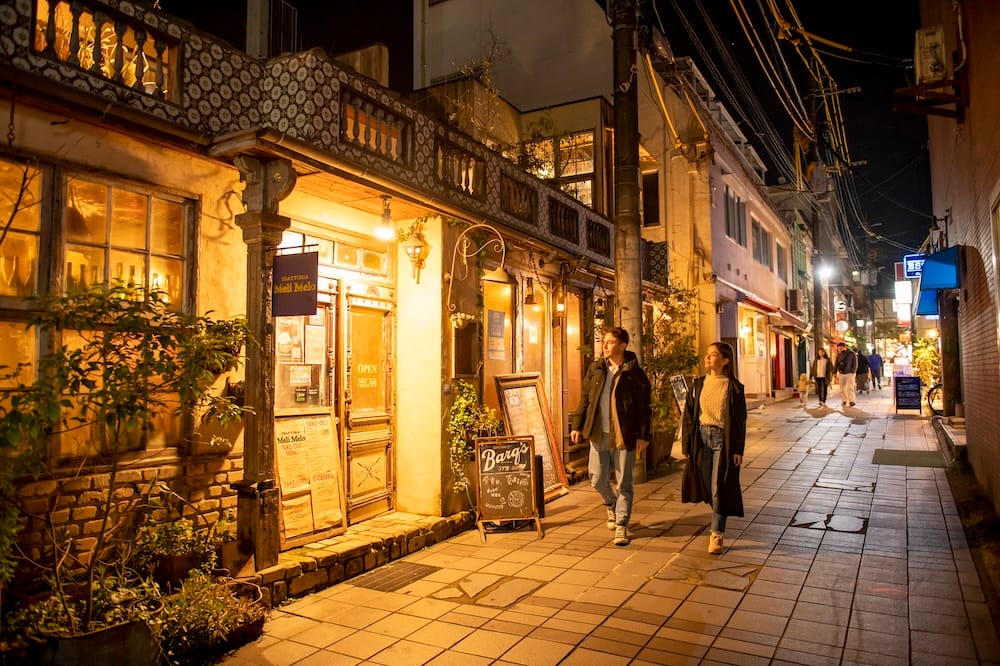
Tenmonkan is Kagoshima's main downtown shopping and dining district, packed with restaurants and souvenir shops. Local Kagoshima black pork (kurobuta) is the must-try here — most famously in shabu-shabu hotpot form, or as tonkatsu (panko-crusted, deep-fried cutlets). Long-running specialists around Tenmonkan, like Ajimori (founded in 1978 and credited as the birthplace of kurobuta shabu-shabu) and Kuro Katsutei, are usually a lot more affordable at lunchtime. While you're in the area, save room for shirokuma — Kagoshima's famous shaved ice piled with fruit and condensed milk, which was actually invented in Tenmonkan and is well worth a stop on a warm day.
Ibusuki sand baths
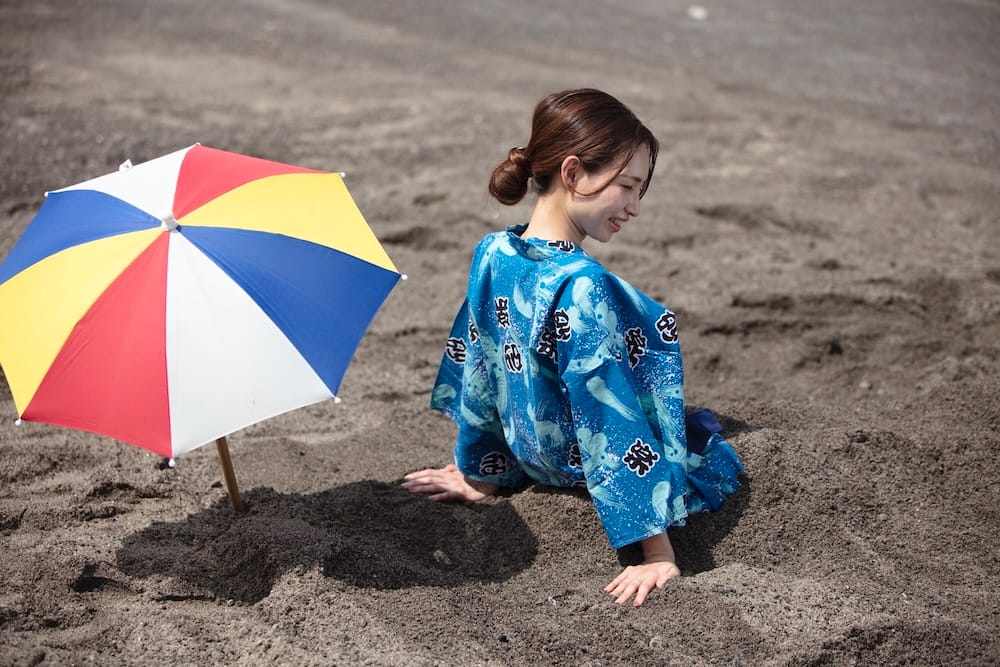
About 50 minutes from Kagoshima-Chuo on the limited express Ibusuki no Tamatebako on the JR Ibusuki Makurazaki Line. Ibusuki is famous for its sand baths — you lie on the beach and get buried up to the neck in naturally heated volcanic sand, which is genuinely one of the more surreal hot spring experiences in Japan. If you rent a car in Kagoshima, you can also loop around the wider Satsuma Peninsula: head to Makurazaki for fresh seafood, or out to Nagasakibana Lighthouse and Ryugu Shrine for the views.
Kirishima Jingu shrine
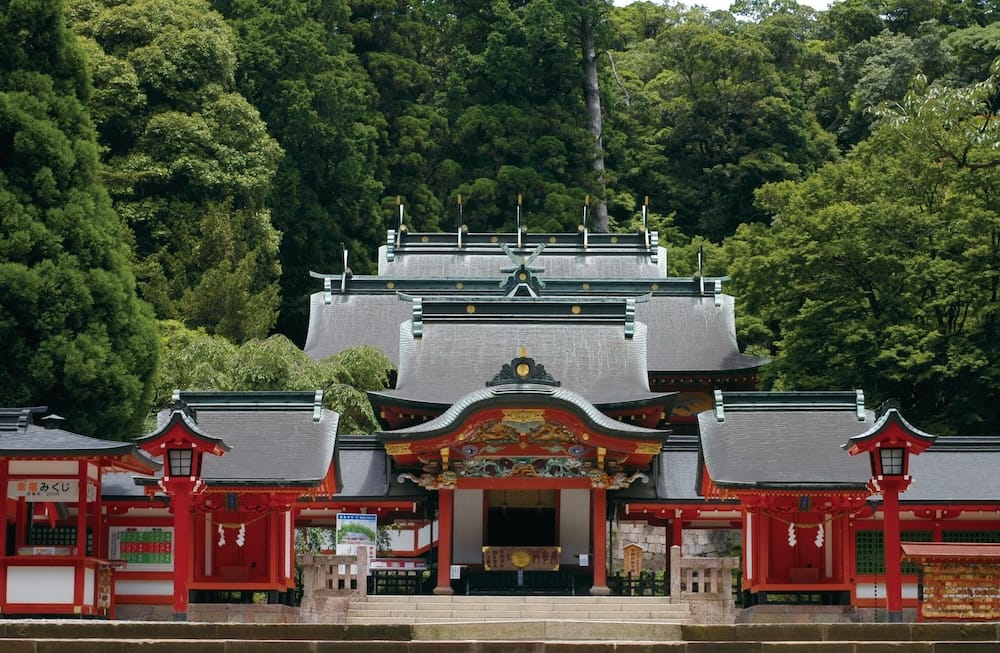
A designated National Treasure, this ancient shrine sits at the foot of the Kirishima mountain range. Take the JR Nippo Main Line from Kagoshima-Chuo to Kirishima-Jingu Station and transfer to a local bus. The surrounding Kirishima onsen area has a rich variety of hot spring inns and bathhouses, and Maruo Waterfall is unusual in that what comes pouring over it is actually hot spring water — the steam rising off the falls in autumn and winter is a genuinely cinematic sight.
Suggested itinerary: Fukuoka + Kagoshima by shinkansen
If you're starting in Fukuoka, here's an easy way to pair both cities in one trip.
Days 1–2: Fukuoka city. Wander Hakata and Tenjin, eat your way through the yatai food stalls, and catch the neon reflections along Nakasu at night.
Day 3: Shinkansen south to Kagoshima. Catch a morning Mizuho from Hakata (about 1 hour 16 minutes) and you'll be in Kagoshima-Chuo before noon. Hop on the JR Nippo Line to Sengan-en Station (just 10 minutes) for the World Heritage garden, then head to Tenmonkan for black pork shabu-shabu, and finish the day at Shiroyama Observatory watching the sun set over Sakurajima.
Day 4: Pick one — Sakurajima or Ibusuki. Option A: ferry across to Sakurajima, hike around Yunohira Observatory and the lava walking trails, soak your feet in the footbath, then ferry back. Option B: ride the Ibusuki no Tamatebako south, get buried in a sand bath, and enjoy Kinko Bay and Mt. Kaimon views on the way back.
Day 5: Head back or keep going. Take the shinkansen back to Hakata from Kagoshima-Chuo (note: you'll need to pay for the return ticket yourself if you used the subsidy on the way down), or extend the trip with a night in Kirishima's hot spring villages.
Practical tips
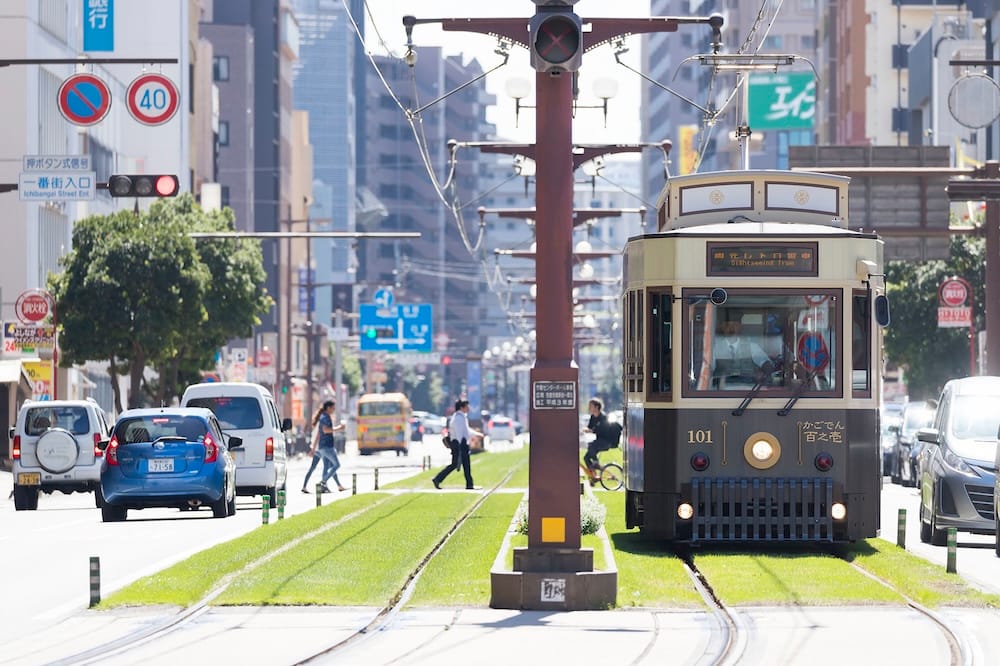
Getting around the city: The Kagoshima City Tram covers most of the main sights, with fares starting at 170 yen per ride. The City View sightseeing bus loops between Kagoshima-Chuo, Shiroyama, Sengan-en and other highlights; a one-day pass is 600 yen.
Buying shinkansen tickets: Foreign visitors can book online through the JR Kyushu reservation system, or buy on the spot at the green ticket counter (Midori-no-Madoguchi) or ticket machines at Hakata Station. If you're traveling on a JR Pass, the nationwide pass works on the Kyushu Shinkansen, and so does the JR Kyushu regional pass.
Wi-Fi and language: Free Wi-Fi is available around Kagoshima-Chuo Station and the Tenmonkan district. Most major attractions have signage and audio guides in multiple languages, including English.
Weather notes: Kagoshima sits at the southern tip of Kyushu and runs noticeably warmer than Fukuoka. In spring and summer, volcanic ash from Sakurajima occasionally drifts into the city — a light mask in your bag is a smart move.
Catch the subsidy while it lasts
The fact that Kagoshima Prefecture is willing to put serious money on the table to cover shinkansen fares is genuinely good news for anyone planning a Kyushu trip. Routing through Fukuoka and riding the bullet train south is fast, scenic, and now potentially free — making this an excellent moment to discover this volcano-flanked city. Application details and start dates will be posted on Kagoshima's official tourism website, so it's worth keeping an eye out as launch approaches.
Photos courtesy of the Kagoshima Prefecture Tourism Federation, Kagoshima City, and the Kagoshima Tourism & Convention Association.