Kyushu's Hydrangea Trail: 6 Stunning Spots for 2026
Skip the cherry-blossom crowds. In June, Kyushu's hydrangeas explode across waterfalls, mountain valleys, and shrine gardens. Here are 6 of the best spots, from a 100,000-bloom valley to wild horses grazing among the flowers, plus bloom times and travel tips.
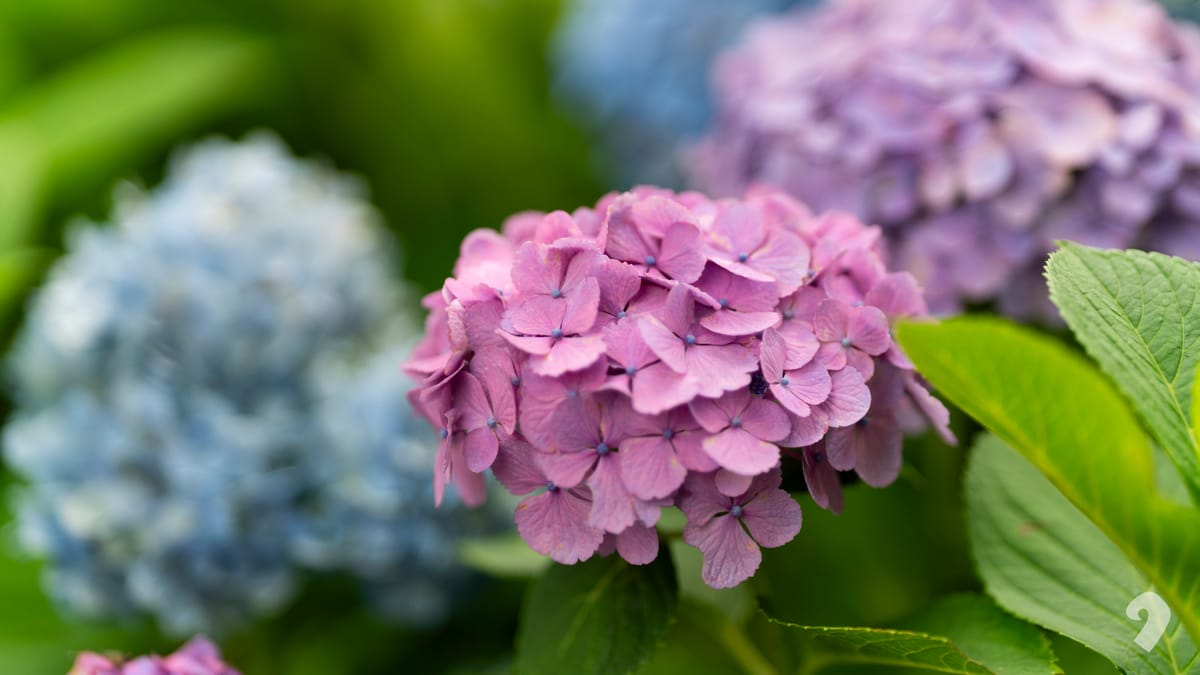
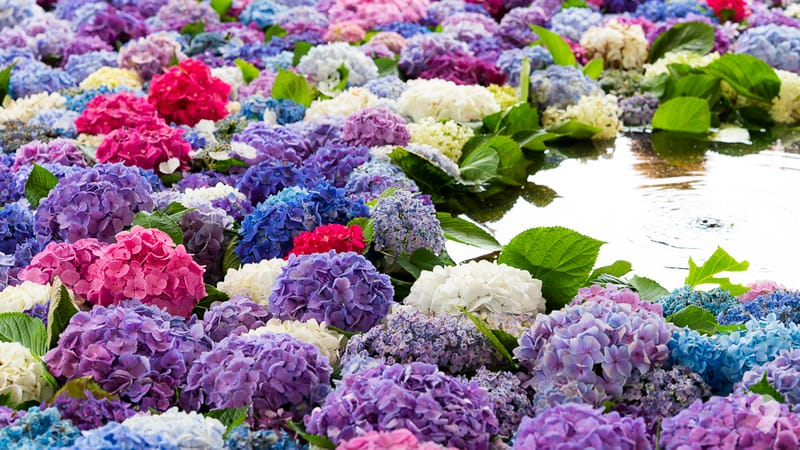
Most people who visit Japan time their trips around cherry blossoms in spring or the autumn leaves. But summer has a quieter, lesser-known flower season worth chasing. Right after the wisteria fades, the hydrangeas (called ajisai in Japanese) come into full bloom—and against a backdrop of Kyushu's forested mountains, waterfalls, and shrines, they create scenery completely different from the famous temple gardens up around Tokyo. From Fukuoka in the north to Kagoshima in the south, every prefecture in Kyushu has its own signature hydrangea spot. Add in the fact that flights and accommodation are more reasonable than in peak season, and you've got exactly the kind of timing only the in-the-know travellers take advantage of.
Fukuoka: Hakozaki Shrine's Hydrangea Garden & Edagawauchi Hydrangea Land
A sacred garden in the city: Hakozaki Shrine's Hydrangea Garden
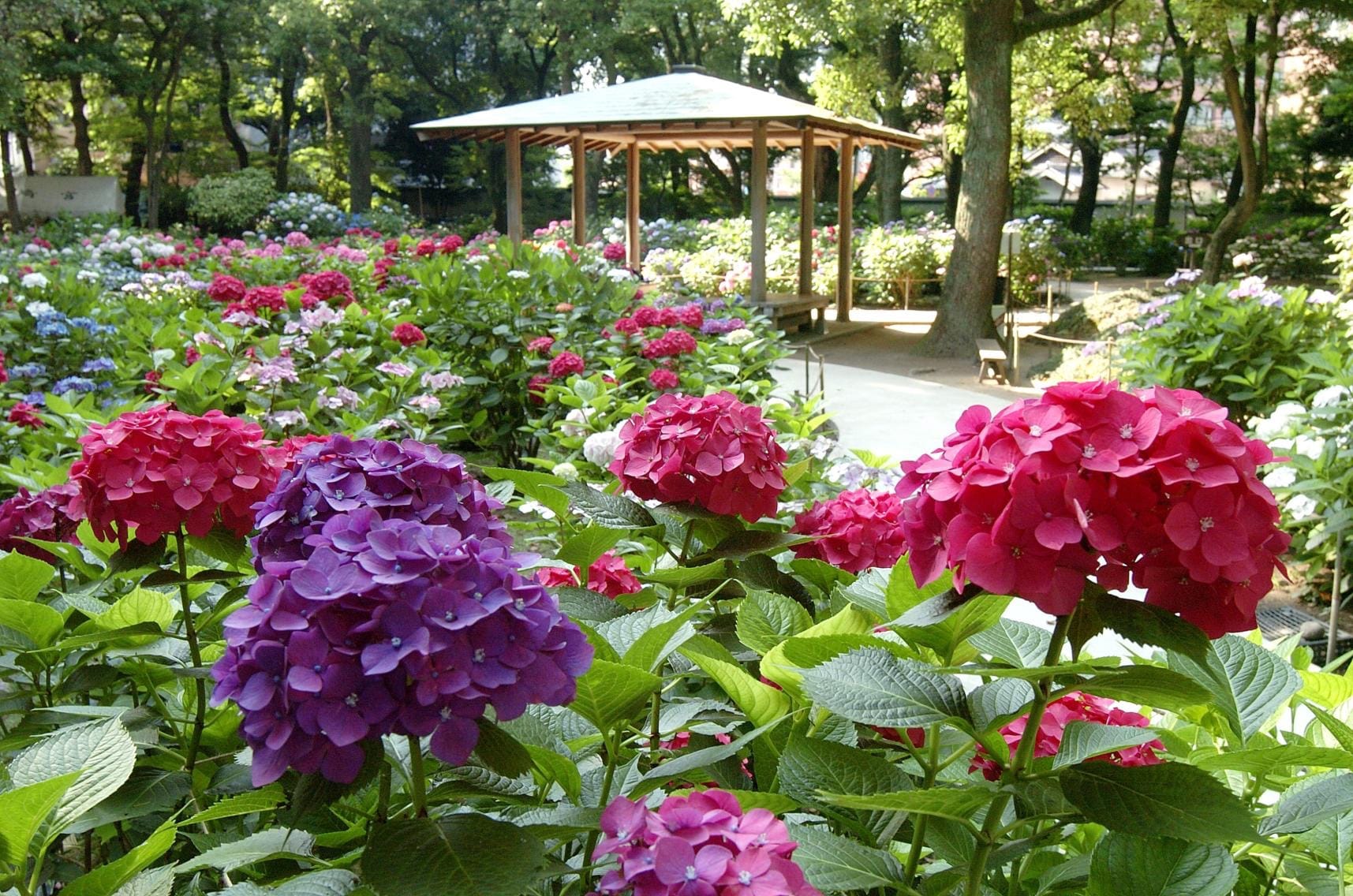
Hakozaki Shrine, in the eastern part of Fukuoka City, is one of Japan's three great Hachiman shrines, alongside Usa Jingu and Iwashimizu Hachimangu. Tucked away behind the western side of the main hall, its hydrangea garden is the easiest spot to reach if you're staying in the city. Spread across roughly 1,700 tsubo (about 5,600 square metres), the garden holds some 3,500 hydrangeas across 100 varieties, framed against the shrine's main hall—a designated National Important Cultural Property—and it draws around 30,000 visitors a year. The 2026 Hydrangea Festival runs from June 1 to June 30, open every day.
Getting there from central Fukuoka couldn't be easier: take the city subway to Hakozakimiyamae Station, and it's a 3-minute walk from Exit 1. If you've only got a day or two in Fukuoka, this is your best bet. During the same period, the adjacent Shin'en Flower Garden bursts into bloom with 5,000 lilies across 30 varieties, so you can see both in one go.
Hakozaki Shrine Hydrangea Garden (筥崎宮あじさい苑)
- Address: 1-22-1 Hakozaki, Higashi-ku, Fukuoka City
- Open: June 1–30, 2026
- Hours: 9:30–17:00 (last entry 16:30)
- Admission: ¥300 (the Shin'en Flower Garden is a separate ¥200; free for junior-high students and younger accompanied by a parent)
- Getting there: 3-minute walk from Hakozakimiyamae Station (Fukuoka City Subway)
Countryside scenery and 16,000 blooms: Edagawauchi Hydrangea Land
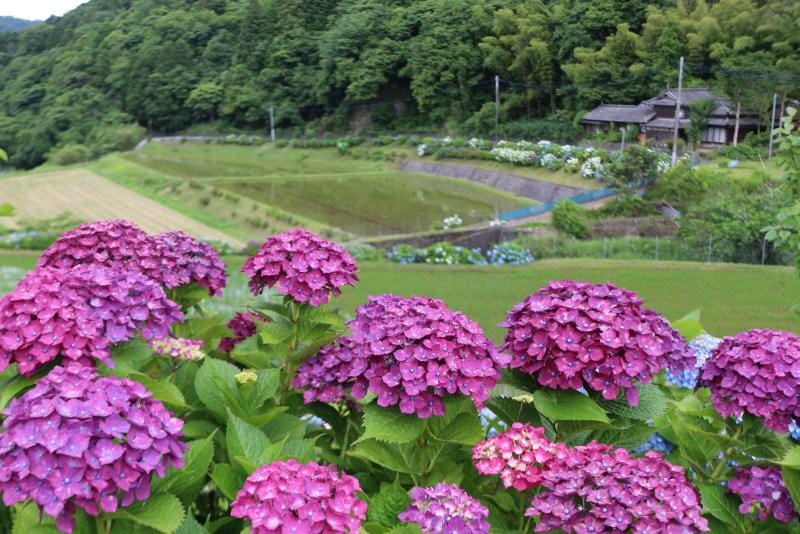
For hydrangeas with a genuine rural feel, head to Buzen City in Fukuoka Prefecture. In the Iwaya and Edagawauchi area at the foot of Mount Kubote, local residents and volunteers spent 25 years planting around 16,000 hydrangeas along the rice paddies and riverbanks. The 2026 Edagawauchi Hydrangea Festival runs from Saturday, June 6 to Sunday, June 21, with local produce stalls on weekends and a 2026 hydrangea photo contest. During the festival, a free shuttle bus runs from the parking area (the Iwaya Community Centre) to the venue.
Edagawauchi Hydrangea Land (枝川内アジサイランド)
- Address: Oaza Iwaya (Edagawauchi area), Buzen City, Fukuoka Prefecture
- Best viewing: early to late June
- Admission: free, open to wander
- Getting there: from Ujima Station (JR Nippo Main Line), take the Buzen City bus to "Iwaya Kasseika Centre-mae," about 30 minutes; or about a 10-minute drive from the Buzen IC on the Higashi-Kyushu Expressway
- Enquiries: Iwaya Community Centre, TEL 0979-88-2002
Saga: Hydrangeas and a waterfall at Migaeri Falls
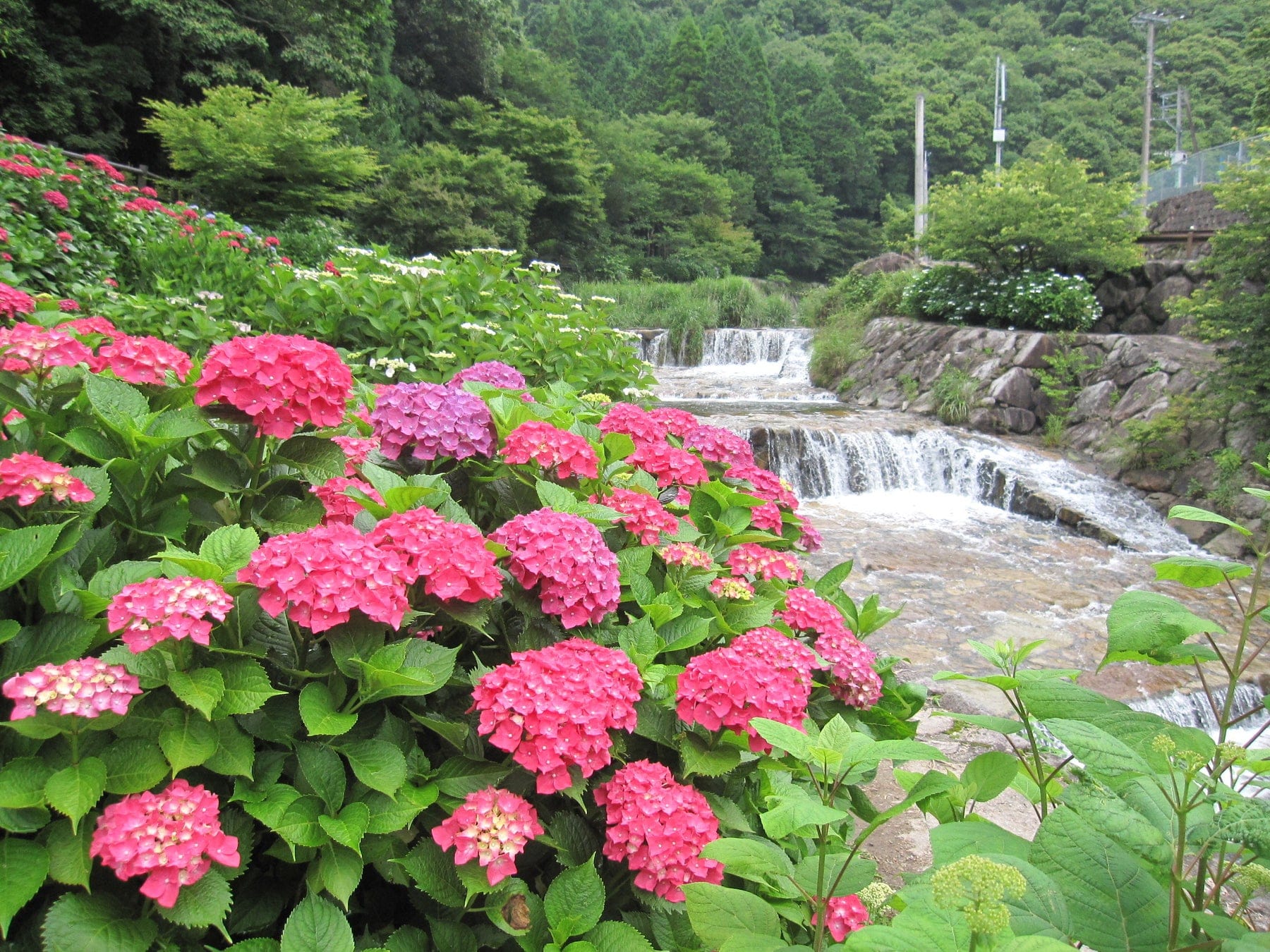
Migaeri Falls (見帰りの瀧) in Karatsu City, Saga Prefecture, is one of Japan's officially designated "100 Famous Waterfalls" and one of the tallest drops in all of Kyushu. Around the falls grow some 40,000 hydrangeas across 50 varieties, and the combination of flowers and rushing water makes this one of the most iconic flower-viewing scenes in the region.
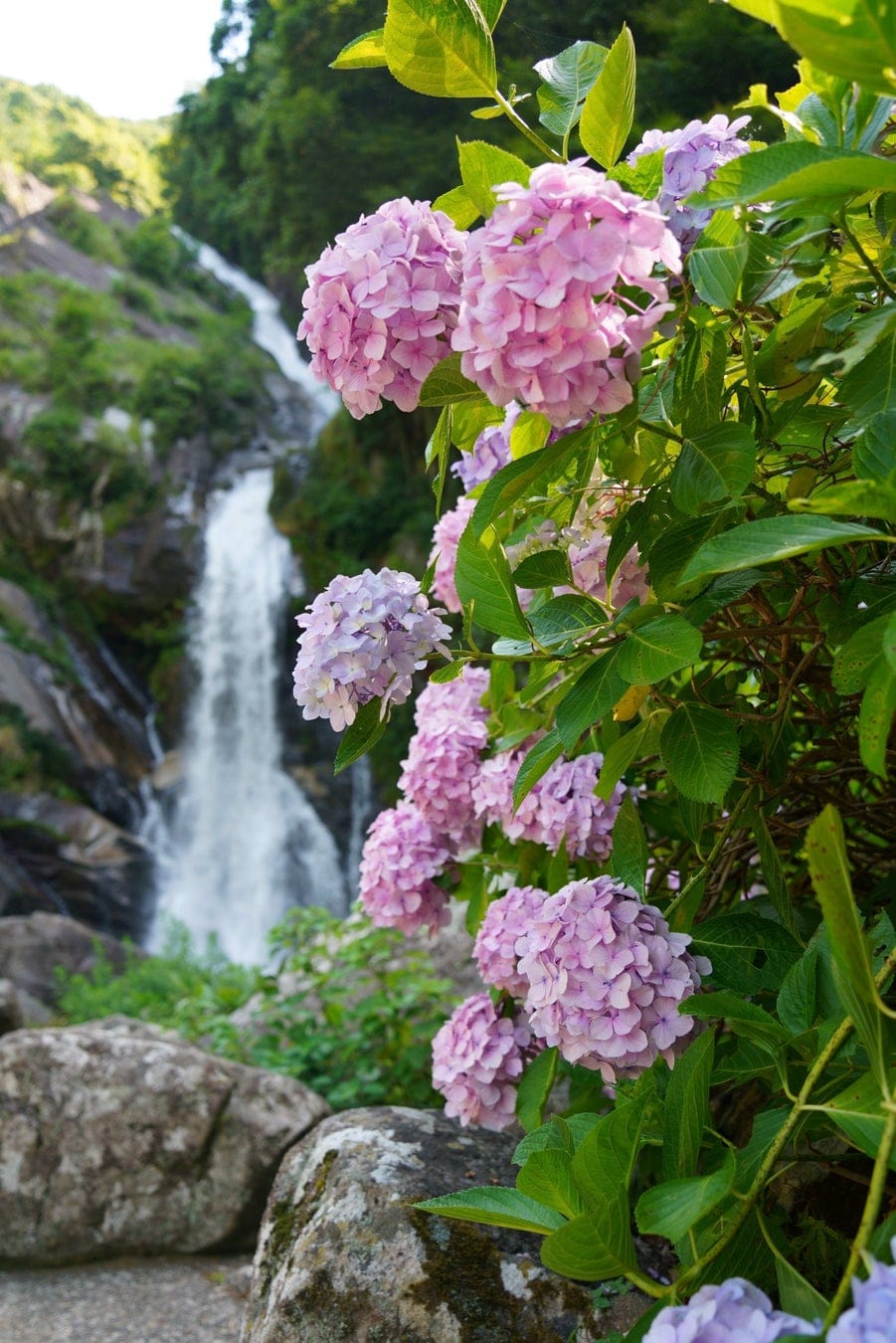
The 2026 Migaeri Falls Hydrangea Festival runs from Saturday, June 6 to Sunday, June 21. On festival weekends, the Hotaru Bridge parking area hosts produce stalls and food trucks, and some vendors set up on weekdays too. Evening illuminations run annually from May through September, with lights on from 19:20 to 22:00 each night. The daytime and after-dark moods each have their own charm—if your schedule allows, consider visiting during the day, heading into Karatsu for dinner, then coming back for the night view.
Migaeri Falls (見帰りの瀧)
- Address: around Igisa, Ouchi-cho, Karatsu City, Saga Prefecture
- Best viewing: early to late June
- Admission: free, open to wander
- Getting there: about a 7-minute taxi ride from Ouchi Station (JR Karatsu Line); or about an 18-minute drive from Karatsu IC on the Nishi-Kyushu Expressway
- Parking: 50 spaces (temporary lots added during the festival, with a shuttle bus on weekends)
Nagasaki: The 4.5-kilometre Sechibaru Hydrangea Road
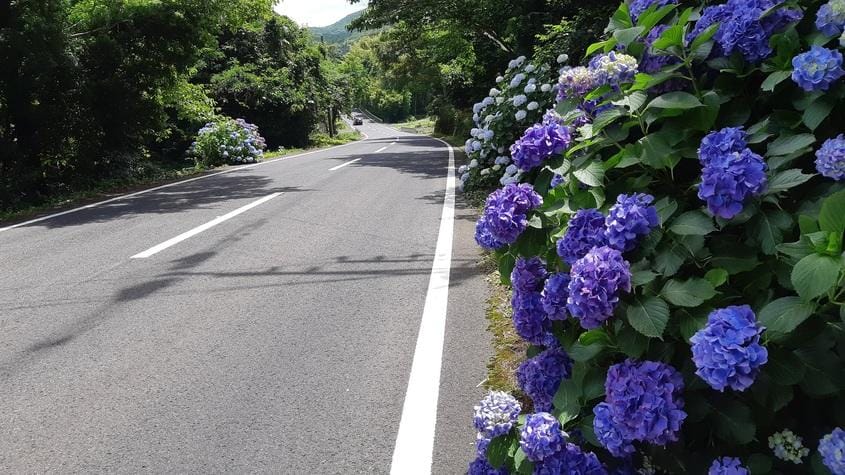
If you're driving around Kyushu, don't skip the Sechibaru Hydrangea Road (世知原あじさいロード) in Sasebo City, Nagasaki Prefecture. Along roughly 4.5 kilometres of road—from the public lodging Yamanoren to Ishizaka Pond—some 10,000 hydrangeas line both sides, with the scenery shifting from terraced rice fields to tea plantations to open highland.
Driving slowly with the windows down is the easy pleasure here, but getting out to walk a stretch has its own appeal. The blooms come a little later than elsewhere, lasting from mid-June into early July—ideal if you're not setting out until the end of the month.
Sechibaru Hydrangea Road (世知原あじさいロード)
- Address: Uwanohara, Sechibaru-cho, Sasebo City, Nagasaki Prefecture
- Best viewing: mid-June to early July
- Admission: free, open to wander
- Getting there: about a 30-minute drive from Sasebo-Mikawachi IC on the Nishi-Kyushu Expressway
Kagoshima: 100,000 blooms filling a valley at Shinonome no Sato
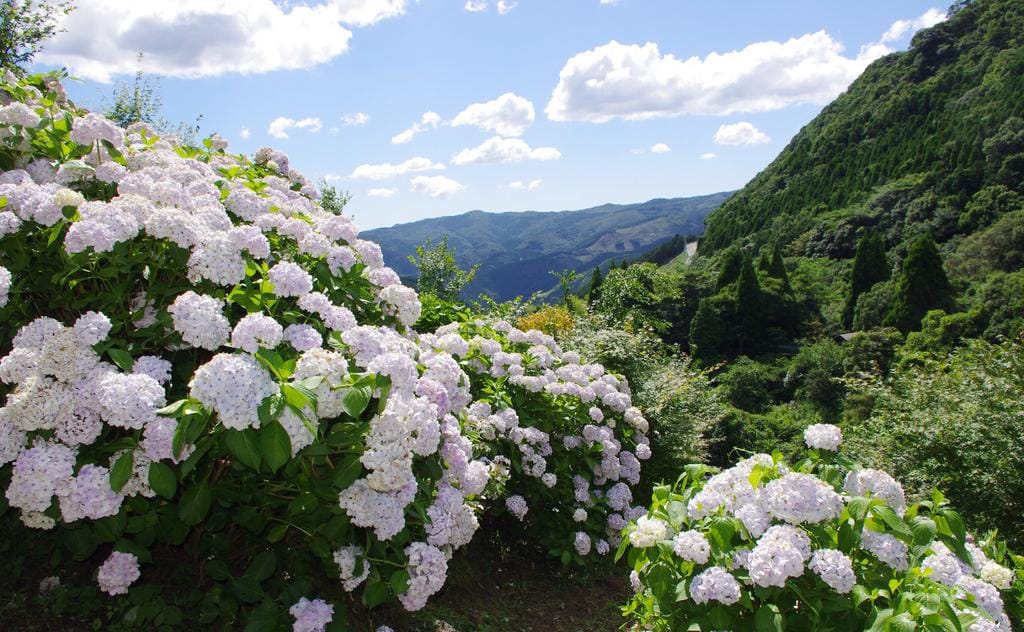
Among all of Kyushu's hydrangea spots, Shinonome no Sato in Izumi City, Kagoshima Prefecture, ranks right at the top. The garden makes full use of the natural terrain—mountains, valleys, and streams—to create roughly 40,000 tsubo (about 13 hectares) of grounds. A 3-kilometre walking trail winds past a string of different scenes: a "hydrangea field in the sky," flower-lined paths, blooms along the streamside, and five observation decks that take in the whole sea of flowers.
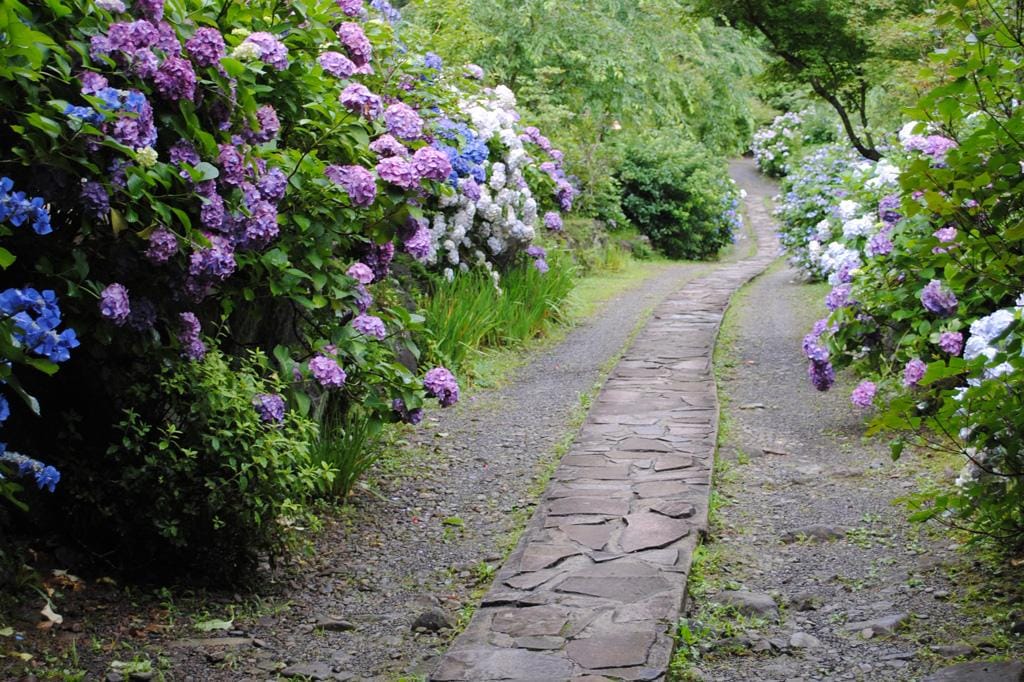
With over 100,000 hydrangeas across roughly 160 varieties, this is one of the largest hydrangea gardens in Kyushu, peaking from early to late June. During the festival, admission is ¥500 for junior-high students and up, free for elementary-age children and younger, ¥250 for visitors with disabilities, and ¥400 per person for groups of 20 or more. There's also a soba restaurant on-site, Kusanoi (生そば 草の居), serving juwari (100% buckwheat) soba—a good place to rest after walking the flowers. Note that you're not allowed to bring in outside food or drink.
Shinonome no Sato
- Address: 2881 Kamiokawachi, Izumi City, Kagoshima Prefecture
- Best viewing: early to late June
- Hours: 9:30–16:30
- Admission (during festival): ¥500 for junior-high students and up
- Getting there: about a 50-minute drive from Kurino IC on the Kyushu Expressway; about 45 minutes from Minamata IC on the Minami-Kyushu Nishi-mawari Expressway; or about a 25-minute taxi ride from JR Izumi Station
- Parking: 30 spaces
Miyazaki: Yamanokuchi Hydrangea Park & the wild horses of Cape Toi
28,000 blooms beneath the Kirishima mountains
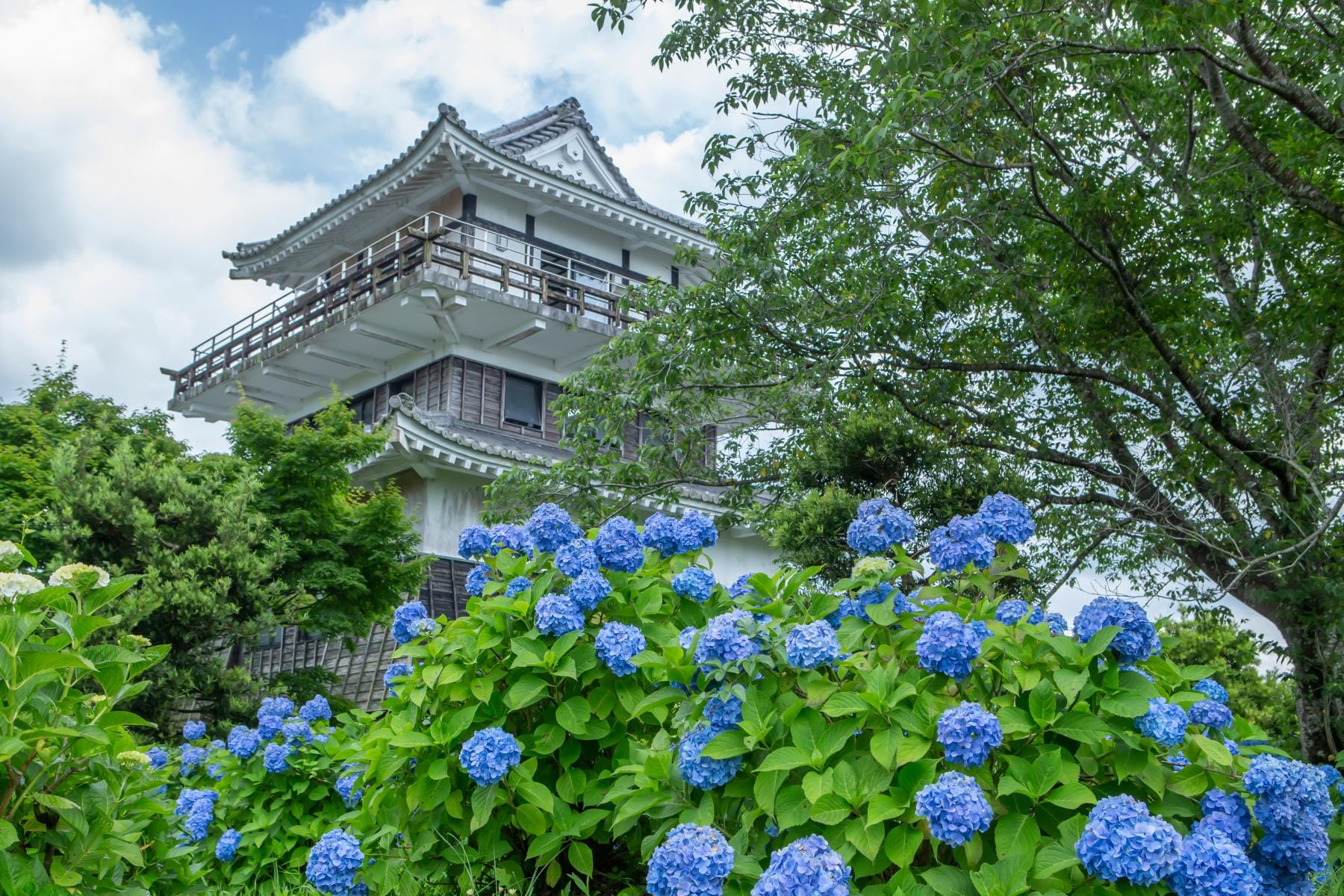
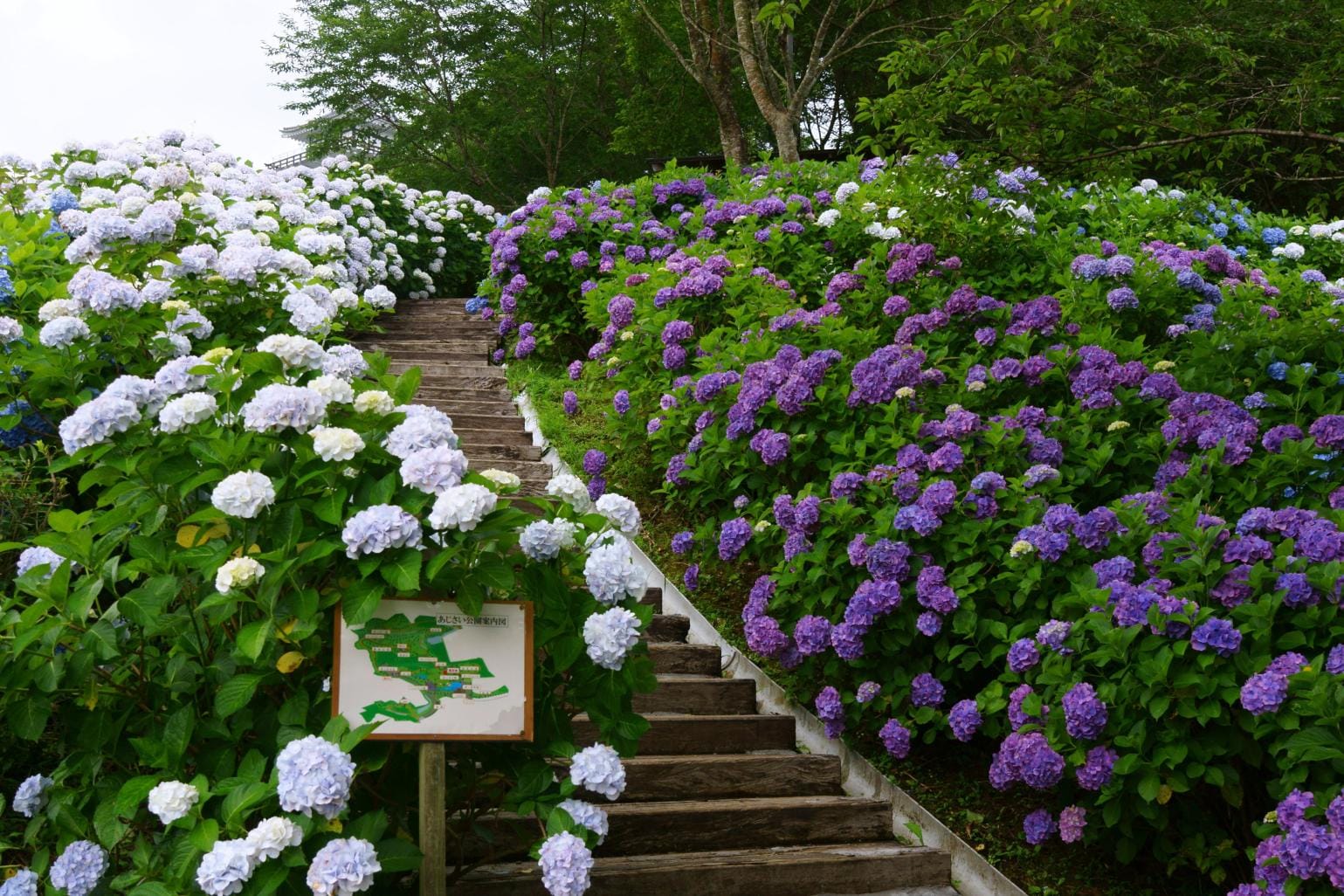
Yamanokuchi Hydrangea Park (山之口あじさい公園) in Miyakonojo City, Miyazaki Prefecture, is built around a castle-shaped observation tower atop a 210-metre hill. The park holds 28,000 hydrangeas across 126 varieties, and from the tower you can look out over the entire Kirishima mountain range.
Yamanokuchi Hydrangea Park (山之口あじさい公園)
- Address: 1630 Hanaki, Yamanokuchi-cho, Miyakonojo City, Miyazaki Prefecture
- Best viewing: late May to late June
- Admission: free, open to wander
- Getting there: about a 5-minute drive from Yamanokuchi Smart IC on the Miyazaki Expressway
- Parking: 80 spaces
Wild horses among the hydrangeas: Cape Toi
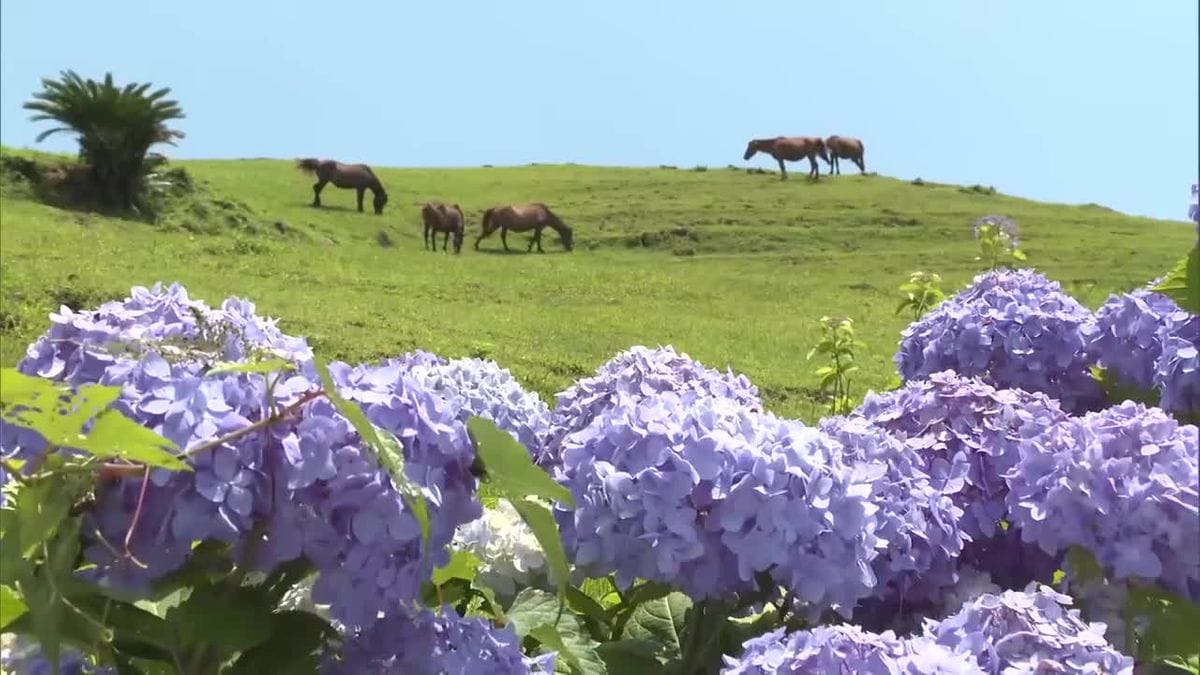
For something truly unusual, Cape Toi—the southernmost point of the Nichinan coast—is home to the Misaki-uma (御崎馬), wild horses designated a National Natural Monument. Foaling season runs from March to July, so a June visit means you might catch the rare sight of hydrangeas and wild horses in the same frame. The cape has around 10,500 hydrangeas in total.
To enter, you pay a wild-horse conservation contribution at the Komadome-no-mon (こまどめのもん) gate. The current official rates are ¥500 per car and ¥200 per motorcycle (some travel sites still list the old ¥400 figure, so it's worth confirming before you go). The horses roam freely inside the cape, so keep your speed under 30 km/h while driving, and never approach, feed, or walk behind them.
Cape Toi
- Address: Onaka-misaki, Kushima City, Miyazaki Prefecture
- Hours: April–September 8:30–18:00; October–March 8:00–17:30
- Wild-horse conservation contribution: ¥500 per car, ¥200 per motorcycle
- Getting there: about a 25–30-minute taxi ride from JR Kushima Station
Before you go: practical tips
Timing your trip: Kyushu's hydrangeas peak from early to late June, but with rising temperatures in recent years they've been blooming earlier, often hitting their best by mid-June. Go in early June and you'll catch the vivid colours of fresh blooms; leave it until the end of the month and some spots may already be past their prime. Kyushu's 2026 rainy season is arriving a touch later than usual, so the blooms are expected to run slightly later as well.
Beating the crowds: Popular spots like the Hakozaki Shrine garden and Migaeri Falls fill up noticeably after 10 a.m. on weekends. Aim to arrive right at opening—getting there before 9:30 makes for the most relaxed visit. Shinonome no Sato is remote enough that weekends there stay surprisingly manageable.
Rain gear: June is the rainy season, and the odds of rain are high. Hydrangeas look especially atmospheric in the wet, but come prepared with waterproof shoes, an umbrella, and a waterproof bag for your camera. Mountain spots like Shinonome no Sato have slippery trails, so hiking shoes are safer than sneakers.
Typhoon awareness: May through July marks the early stretch of Kyushu's typhoon season. Before setting out, check weather sites like Weather News (weathernews.jp) and tenki.jp, and keep an eye on announcements from JR Kyushu and the Fukuoka City Transportation Bureau.
Getting around: Apart from Hakozaki Shrine, most of these spots really require a car. If you'd rather not rent one, consider basing yourself in Fukuoka—visit Hakozaki Shrine first, then join a local day tour out to Edagawauchi or Migaeri Falls.
Combining with other stops: Pair your flower-viewing with a nearby hot spring—soak at Karatsu or Ureshino Onsen after Migaeri Falls, or explore central Izumi or Kagoshima City after Shinonome no Sato.
Kyushu's hydrangea spots are scattered across its prefectures, and each one has its own character—from a sacred garden in the city to a sea of flowers filling a valley. Set out during June's rainy season, skip the crowds of cherry-blossom and autumn-leaf season, and you'll get to experience Kyushu at its most serene and quietly elegant. Just remember to check the latest bloom conditions and event details before you go, so you don't miss the season.