Last Call for Shintencho: Tenjin’s Historic Arcade Closes in 2027
Tenjin is changing fast. Shintencho, Fukuoka’s historic shopping arcade, is set for demolition in 2027. Here’s when to visit, what’s replacing it, and which old-school corners are still hanging on.
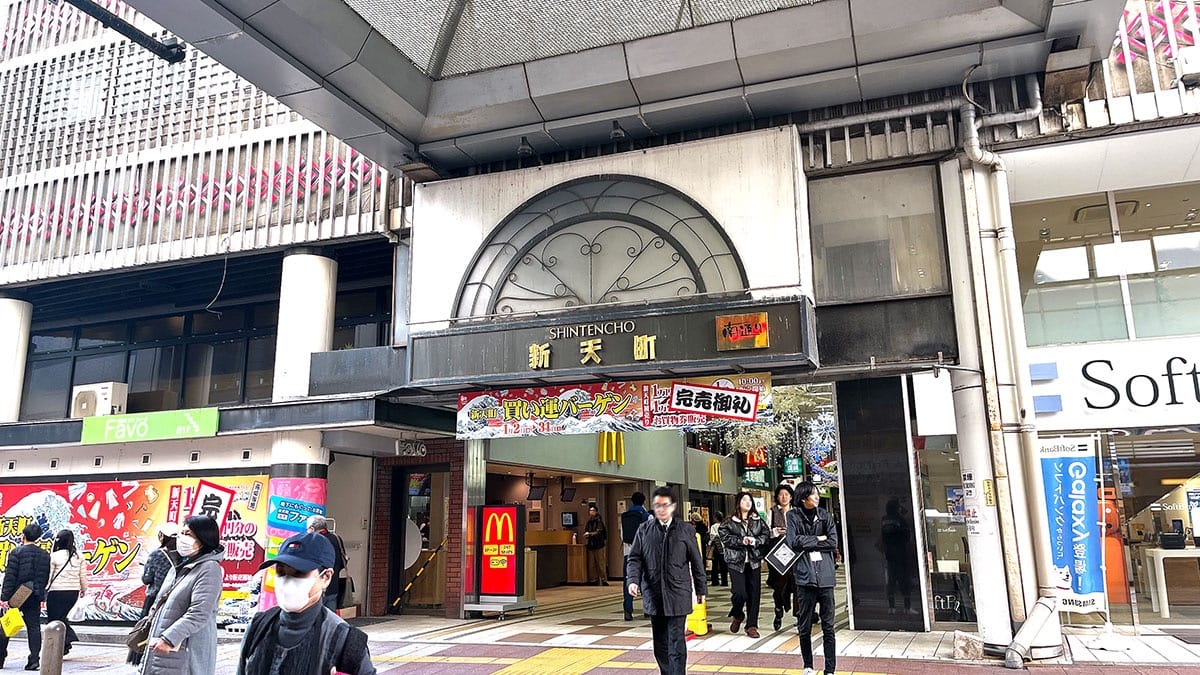
If you have spent any time in Tenjin, you have probably noticed that there always seems to be another corner hidden behind construction hoardings. Over the past few years, the list of vanished landmarks has kept growing: Fukuoka Building, Tenjin Core, Tenjin Vivre and IMS, all names that once appeared in guidebooks. In August 2026, Shintencho joined the list. Here are the three things worth knowing: how much time Shintencho has left, why Fukuoka is rebuilding so quickly, and which old-school spots have managed to stay put.
When will Shintencho disappear, and is there still time to visit?
Yes. You have until early 2027. According to an announcement from the Shintencho Shopping Street Commercial Cooperative on August 12, 2026, a farewell ceremony will be held at Shintencho Sun Dome on Sunday, February 14, 2027. After that, shops will gradually stop operating at their current locations, with demolition expected to begin around spring 2027.
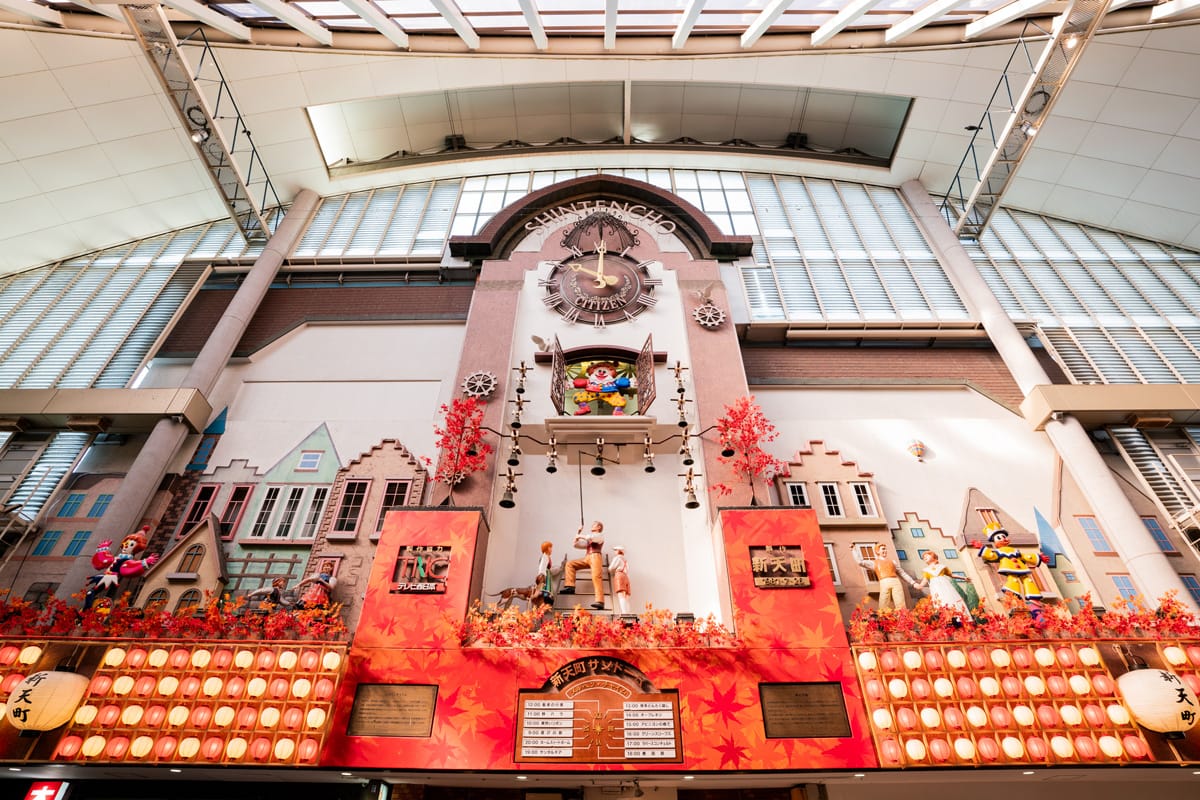
When you visit, it is worth timing your walk for the top of the hour. The 17-metre-tall mechanical clock, Marchen Chime, stands in Märchen Plaza. Built in 1981 to mark Shintencho’s 35th anniversary, it springs to life when the hour and minute hands overlap: figures of an elderly man and child ring bells, a clown dances, and music plays. The tower’s 12 bronze bells were individually handmade by the Dutch workshop Petit & Fritsen. A different tune plays every hour from 9 a.m. to 8 p.m., including the Fukuoka folk song Kuroda-bushi. Often described as the pioneer of mechanical clocks in Japanese shopping streets, it is set to be preserved in a new form after redevelopment, but this is the last stretch in which you can see the original as it stands today.
The arcade itself has plenty of history too. When Shintencho opened in 1950, it became western Japan’s first covered shopping street, inspiring a slogan still used today: “Rain or shine, there’s Shintencho.” The glass-roofed Sun Dome was added in 2008, and it is also a venue for the grand group dance during the Hakata Dontaku festival.
As for what happens after the closure, around 10 shops are expected to move together into the M2 and M3 floors of the nearby SOLARIA STAGE from March 2027, continuing to operate under the Shintencho name. Next-door Fukuoka PARCO is due to close at the end of February 2027. The two blocks will then be redeveloped together in a project costing about ¥189 billion.
Why is Fukuoka going through so much redevelopment?
Three big factors have lined up at the same time, which is why redevelopment has moved so quickly.
- The airport is extremely close. Fukuoka Airport is only about 5 km from Tenjin, and aviation regulations long kept building heights to roughly 65 to 76 metres. Replacing an old building could actually mean ending up with something shorter and smaller, so owners had little incentive to rebuild. That changed after Fukuoka was designated a National Strategic Special Zone in 2014, allowing height limits in some areas to rise to around 115 metres and making redevelopment far more attractive.
- An active fault runs beneath the city. The roughly 27 km-long Kego Fault cuts through central Fukuoka. After the 2005 Fukuoka Prefecture Western Offshore Earthquake reached a maximum intensity of lower 6 on Japan’s seismic scale, the earthquake resistance of older downtown buildings became harder to ignore. Shintencho’s own announcement cites aging structures and insufficient seismic resistance as reasons for redevelopment.
- The incentives come with a deadline. Fukuoka City launched the Tenjin Big Bang redevelopment program in 2015, offering floor-area ratio bonuses of up to 50%, but only for projects completed by December 31, 2026. Work that might otherwise have been spread over 30 years has effectively been compressed into a single decade.
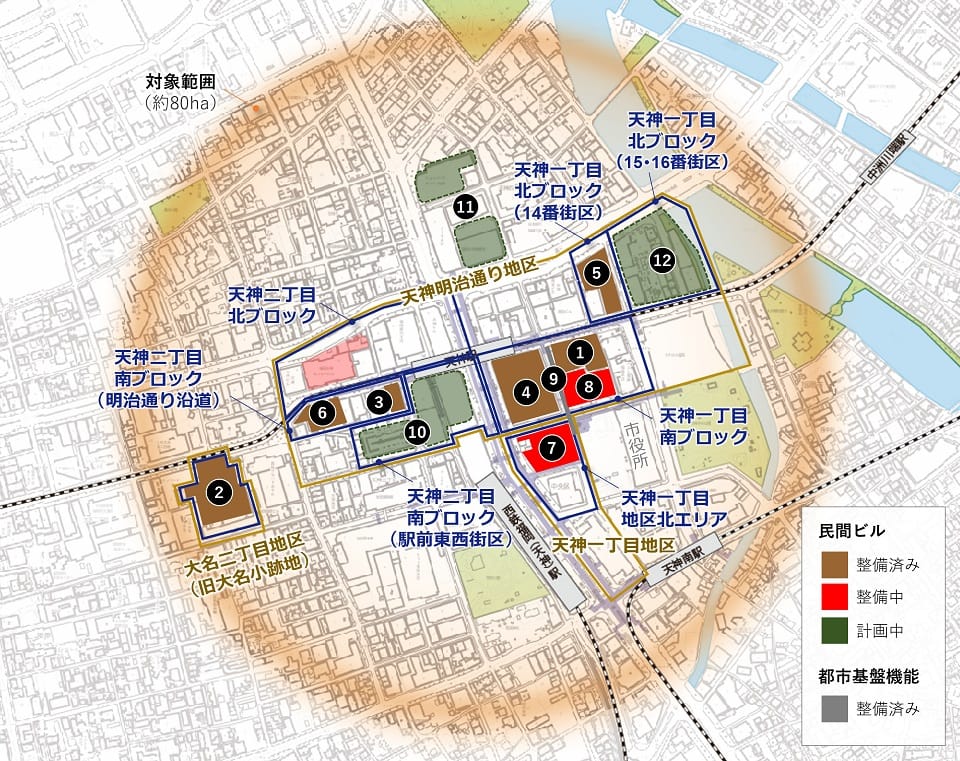
Fukuoka is also one of the relatively few Japanese cities still gaining population. A 2025 survey put the city’s population at 1,663,892, up 3.2% in five years, the fastest growth among Japan’s 20 government-designated cities. In other words, there is no shortage of demand for tenants once the new buildings open.
Which Tenjin landmarks have already disappeared?
These are some of the biggest recent changes, and the ones visitors are most likely to notice.
| Former building | What is there now |
|---|---|
| Fukuoka Building, Tenjin Core, Tenjin Vivre | ONE FUKUOKA BLDG. (opened April 24, 2025, with around 120 shops) |
| IMS | A new 21-storey building, scheduled for completion in December 2026 |
| Media Mall Tenjin (MMT) | Tenjin Business Center II (completed July 2026, with a large Junkudo bookstore) |
| Fukuoka Tenjin Center Building (built in 1976) | A new building about 106 metres tall, scheduled for completion in fiscal 2028 |
| Shintencho Shopping Street, Fukuoka PARCO | Two mixed-use buildings, scheduled to open in the 2030s |
According to official figures, 85 buildings in the Tenjin redevelopment area had been completed by the end of March 2026. The target is around 90 by the end of 2026 and roughly 120 in the 2030s. Around Hakata Station, 30 buildings had been completed over the same period, with a target of about 35 by the end of 2028.
Which old-school places have managed to survive?
Above ground, Tenjin is being transformed. Underground, remarkably little has changed. Tenjin Chikagai, the underground shopping mall known locally as Tenchika, opened on September 10, 1976. It stretches for about 590 metres across 12 blocks and has around 150 shops. Its 19th-century European-inspired stone paving, vine-patterned cast-aluminium ceilings and stained glass are all still part of the experience today. September 10, 2026, marks its 50th anniversary. Café Tirol, which has been there since opening day, is still serving its cheese hot dogs, making this one of Tenjin’s best places for both nostalgia and an escape from the summer heat.
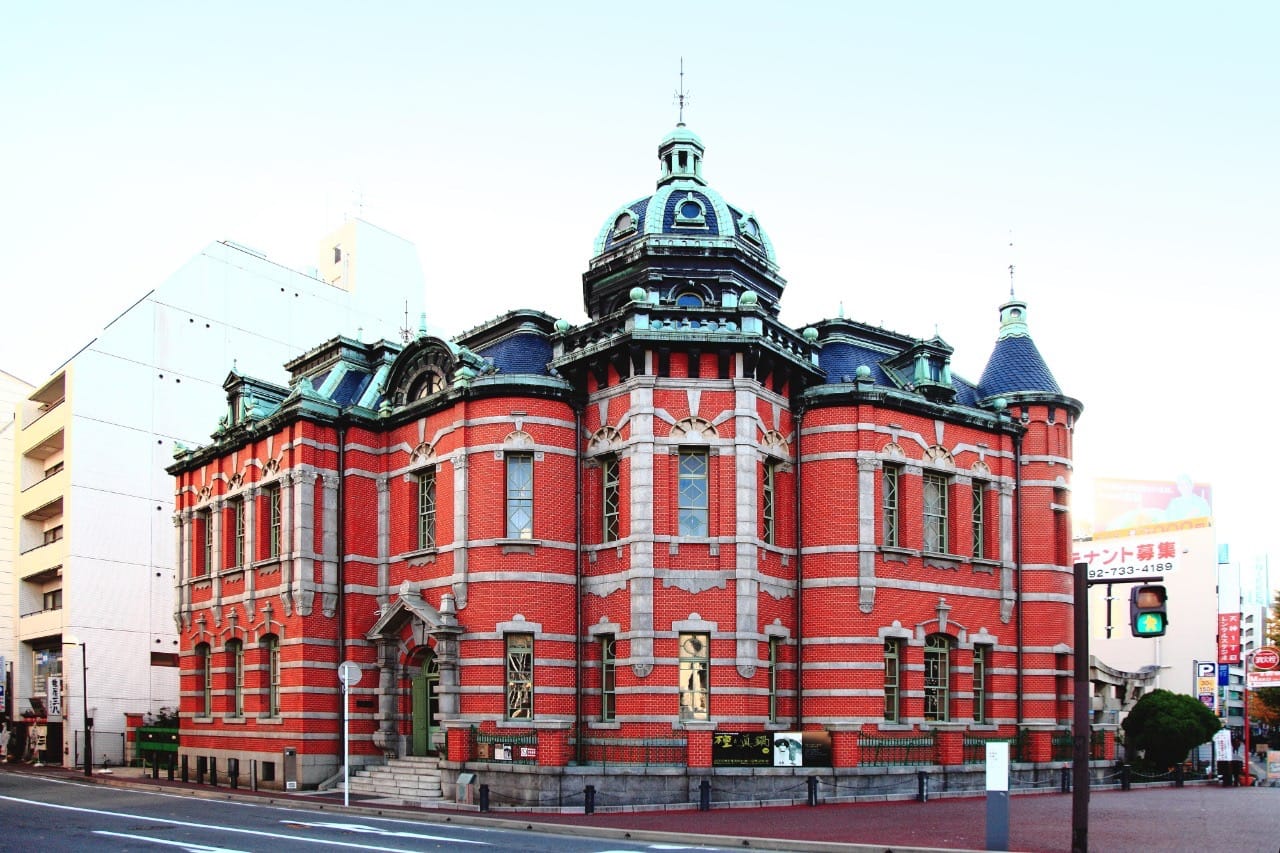
A few survivors remain above ground too. The Fukuoka City Red Brick Culture Center, completed in 1909 and co-designed by Kingo Tatsuno, one of the architects behind Tokyo Station, is an Important Cultural Property of Japan. Admission is free, it stays open until 10 p.m., and the illuminated brickwork is especially photogenic after dark. Reizensou, a former apartment building dating from 1958, was designated a Registered Tangible Cultural Property in 2024. It was the first privately built early postwar reinforced-concrete apartment building in Japan to receive that designation. Today, the building is filled with studios, a bagel shop and galleries. Owner Katsumi Yoshihara summed it up neatly: the more new buildings go up, the more value old ones have simply by still being there.
Continue east and you will reach Kawabata Shopping Arcade, a roughly 400-metre-long shopping street with more than 130 years of history. Its famous Kawabata Zenzai, a sweet red-bean soup, is served only on Fridays, Saturdays, Sundays and public holidays, and usually sells out by around 5 p.m.
Frequently Asked Questions
When does Shintencho officially close?
A farewell ceremony will be held at Shintencho Sun Dome on February 14, 2027. After that, individual shops will gradually stop operating at their current locations, with exact closing dates varying by store. Demolition is expected to begin around spring 2027. You can still visit as normal through the second half of 2026 and into early 2027.
Where will Shintencho’s shops move?
From March 2027, around 10 shops will relocate to part of the M2 and M3 floors of SOLARIA STAGE and continue operating under the Shintencho name. Other shops will arrange their own temporary locations, and an updated map of temporary stores will be posted on the official Shintencho website.
Is Tenjin just one big construction zone right now?
No. Tenjin Chikagai, Daimyo, Kego and the Nishi-dori shopping area are all operating normally, and new developments such as ONE FUKUOKA BLDG. are already open. Construction is mainly concentrated along Meiji-dori and around Shintencho and PARCO.
What else is about to disappear besides Shintencho?
Fukuoka PARCO is scheduled to close at the end of February 2027 and will be redeveloped together with Shintencho. Most of the other major changes around Tenjin are already complete or nearing completion, with the end of 2026 marking a major milestone for the Tenjin Big Bang program.
Are there still historic buildings worth seeing in Fukuoka?
Yes, and several are within walking distance of the city centre: the Fukuoka City Red Brick Culture Center (1909), the Former Fukuoka Prefectural Public Hall Guest House (1910), Reizensou (1958), Kawabata Shopping Arcade (more than 130 years old) and Tenjin Chikagai (1976).
What makes Tenjin’s transformation so fascinating is that old and new still sit side by side. For now, you can walk from a 1950s covered shopping arcade to a 1970s underground mall and then to a 2025 glass-fronted tower, all in a single day. If you want to capture that contrast, the second half of 2026 through early 2027 is your last chance.