Kyushu Food Guide: Must-Try Dishes in All 7 Prefectures
Discover Kyushu’s best local food, from Hakata ramen and Nagasaki champon to Kumamoto horse sashimi and Kagoshima black pork. Includes historic restaurants, prices from ¥550, opening hours and 4–5 day food itineraries.
Each of Kyushu’s seven prefectures has its own signature dishes, many with well-documented origins. Nagasaki champon was created at a Chinese restaurant founded in 1899, Oita’s chicken tempura originated at a Beppu restaurant established in 1926, and spicy mentaiko first went on sale in Hakata’s Nakasu district in 1949. Fukuoka makes a convenient starting point, with Kumamoto and Kagoshima accessible by Shinkansen in around an hour or more. A four- or five-day trip gives you time to explore the food of three or four prefectures. This guide covers the specialties, original restaurants, prices and opening hours in each prefecture, followed by suggested food itineraries.
What are the must-try foods in Kyushu’s seven prefectures?
Each of Kyushu’s seven prefectures has one to three standout local specialties. The table below highlights the dishes worth traveling for and the restaurants featured in this guide.
| Prefecture | Must-try dishes | Featured restaurants |
|---|---|---|
| Fukuoka | Hakata ramen, motsunabe (もつ鍋), mizutaki (水炊き), karashi mentaiko (辛子明太子) | Ganso Nagahamaya (元祖長浜屋), Ichiran Main Shop (一蘭 本社総本店), Ganso Motsunabe Rakutenti (元祖もつ鍋 楽天地), Mizutaki Ganso Suigetsu (水たき元祖 水月) |
| Saga | Yobuko live squid sashimi (イカの活き造り), Saga beef (佐賀牛) | Osakanadokoro Genkai (お魚処 玄海) |
| Nagasaki | Nagasaki champon (ちゃんぽん), sara udon (皿うどん) | Shikairo (中華料理 四海樓) |
| Kumamoto | Horse sashimi or basashi (馬刺し), Kumamoto ramen, taipien (太平燕) | Kumamoto Ramen Kokutei Main Shop (熊本ラーメン 黒亭 本店) |
| Oita | Toriten chicken tempura (とり天), ryukyu marinated sashimi (りゅうきゅう) | Restaurant Toyoken (レストラン東洋軒) |
| Miyazaki | Chicken nanban (チキン南蛮), hiyajiru chilled soup (冷や汁) | Ogura Main Shop (おぐら本店) |
| Kagoshima | Kurobuta pork shabu-shabu (黒豚しゃぶしゃぶ), keihan chicken rice (鶏飯), Shirokuma shaved ice (白熊) | Kurobuta Ryori Ajimori (黒豚料理 あぢもり), Tenmonkan Mujaki (天文館むじゃき) |
How we chose: We prioritize restaurants credited with creating each dish or widely recognized as its original home. They offer versions closest to the traditional recipes and are easy to find on Google Maps using their Japanese names.
What should you eat in Fukuoka? Hakata ramen, motsunabe, mizutaki and mentaiko
On your first visit to Fukuoka, make time for at least Hakata ramen and motsunabe. If your schedule allows, add a mizutaki chicken hot pot dinner. All three are readily available around Hakata, Tenjin and Nakasu.
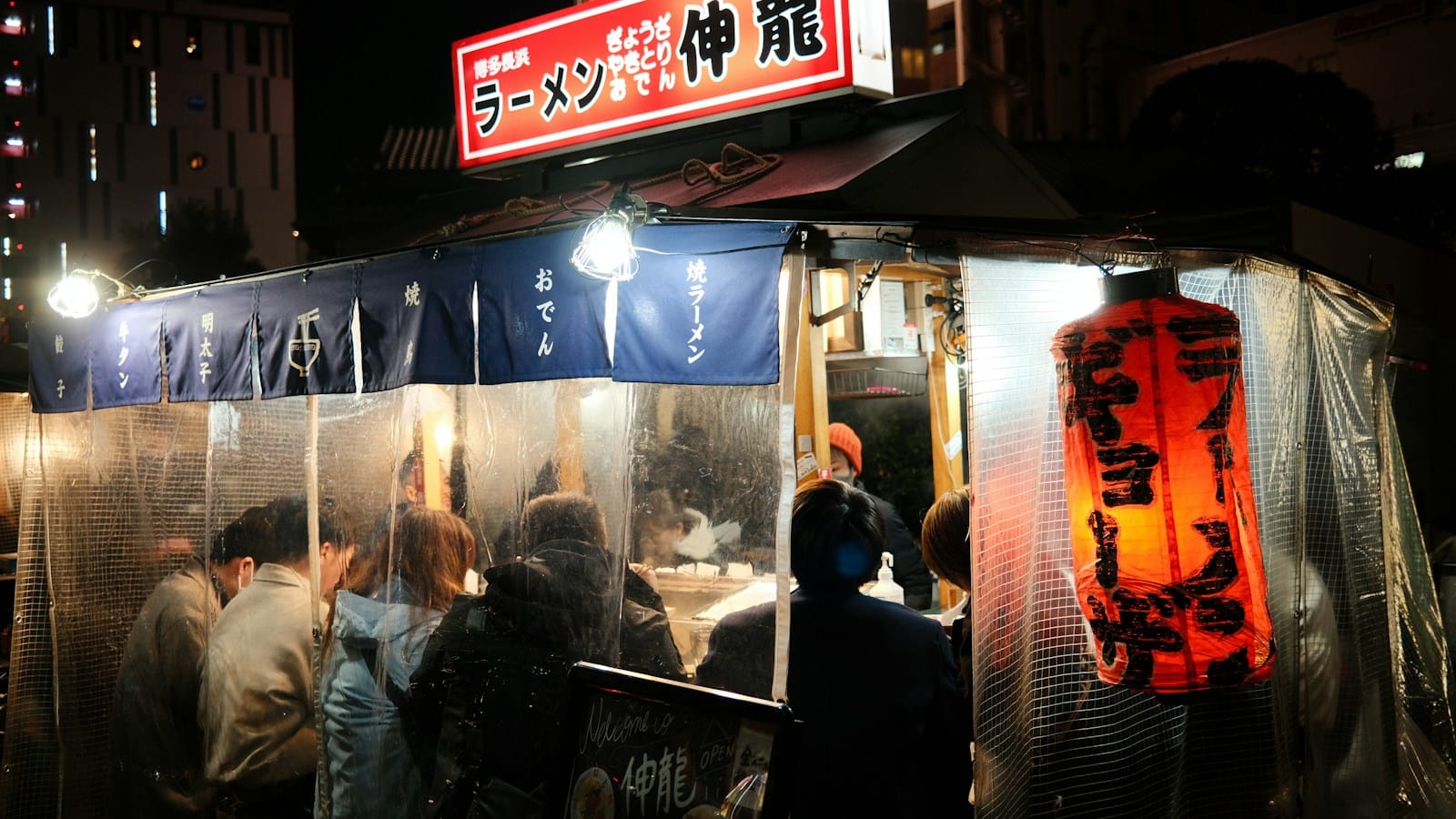
Hakata ramen: Thin noodles, creamy tonkotsu broth and extra noodles
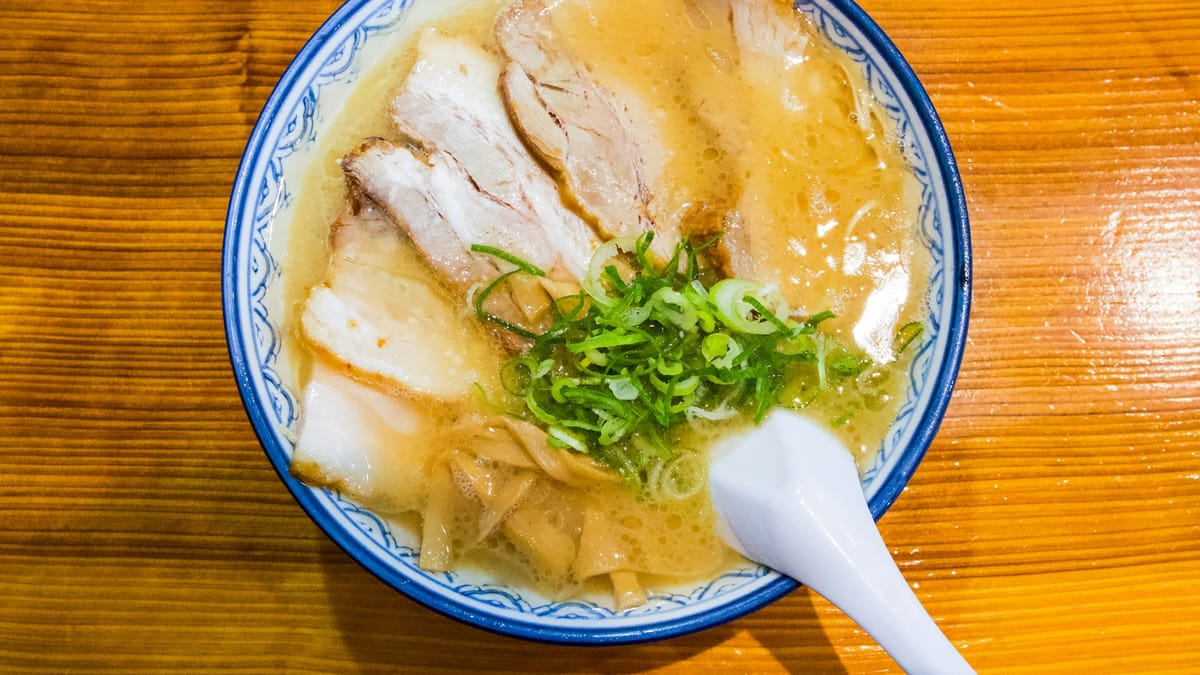
Hakata ramen combines a cloudy pork-bone broth with exceptionally thin, straight noodles. Portions of noodles tend to be small, and ordering kaedama (替玉), an extra serving of noodles added to the remaining broth, is a local custom. Common noodle firmness options, from firmest to softest, are barikata (バリカタ), kata (カタ), futsu (普通) and yawa (やわ). Kata is a good starting point for first-timers.
- Ganso Nagahamaya: Established in 1952, this restaurant serves just one dish: ramen. Address: 2-5-25 Nagahama, Chuo Ward, Fukuoka. Hours: approximately 5:00 to 25:45, closing earlier on Tuesdays. Open year-round. Ramen ¥550; extra noodles ¥150. Buy a meal ticket from the machine outside before entering.
- Ichiran Main Shop: Address: 5-3-2 Nakasu, Hakata Ward, Fukuoka, approximately 1 minute on foot from Nakasu-Kawabata Station. Open 24 hours, with no regular closing days. An order sheet lets you choose your broth richness and noodle firmness, making ordering straightforward without Japanese. The official information consulted did not specify the price of a bowl.
[Editor’s note: Add actual waiting times at Ganso Nagahamaya and Ichiran Main Shop on weekday evenings and weekends.]
Motsunabe: Beef offal hot pot finished with champon noodles
Motsunabe is a hot pot of beef offal, generous amounts of garlic chives and cabbage, and sliced garlic, cooked in a soy sauce or miso-based broth. Once the main ingredients are finished, diners add champon noodles or rice to make a final dish. Its origins lie in the postwar practice of cooking offal and garlic chives in aluminum pots. After the dish won a bronze award in Japan’s 1992 New Words and Buzzwords Awards, it became popular nationwide.
| Restaurant | Address | Opening hours | Closed | Price per person |
|---|---|---|---|---|
| Ganso Motsunabe Rakutenti Tenjin Imaizumi Main Shop (元祖もつ鍋 楽天地 天神今泉本店) | 2F, 1-19-18 Imaizumi, Chuo Ward, Fukuoka | 17:00–24:00 (last order 23:30) | Open daily | ¥1,070 |
| Hakata Motsunabe Ikkei Hakata Station Branch (博多もつ鍋 一慶 博多駅店) | B1, JRJP Hakata Building, JR Hakata Station | 11:00–24:00 (last order 23:00) | Open daily except January 1 | ¥1,180 |
Rakutenti is the cheaper of the two. Ikkei is located at Hakata Station and serves lunch, making it a convenient choice just after arriving or when traveling with luggage.
Mizutaki: Drink the chicken broth before eating the meat
Mizutaki is a chicken hot pot made with a cloudy broth simmered from chicken bones. The broth is left unseasoned, and diners begin by drinking a small bowl before eating the chicken, meatballs and vegetables with ponzu citrus sauce and yuzu kosho. According to Fukuoka Prefecture’s Crossroad Fukuoka tourism website, Heisaburo Hayashida, a Nagasaki native, developed the dish using Western clear soup and Chinese white broth techniques he had learned in Hong Kong. He introduced it at Suigetsu in 1905.
- Mizutaki Ganso Suigetsu: Address: 3-16-14 Hirao, Chuo Ward, Fukuoka. Last orders at 20:30, from 17:00. Reservations required. Closed Mondays except public holidays. Courses cost ¥5,300 or ¥6,300, plus a service charge (2024 information).
Karashi mentaiko: Born in Nakasu in 1949
Fukuya founder Toshio Kawahara drew inspiration from the marinated fish roe he had eaten in Busan and introduced Japan’s first karashi mentaiko in Nakasu in 1949. He shared his recipe with other businesses, helping establish Fukuoka as Japan’s mentaiko capital. Restaurants serve it in dishes such as mentaiko tamagoyaki and mentaiko rice bowls. For edible souvenirs, see our Kyushu Souvenir Guide and Price List. Another regional specialty worth trying is steamed eel rice in nearby Yanagawa; see our Guide to Yanagawa’s Traditional Eel Restaurants.
What should you eat in Saga and Nagasaki? Yobuko squid, Saga beef and champon
Saga and Nagasaki are known for freshly prepared squid sashimi from Yobuko Port, premium Saga beef, and Chinese-influenced champon and sara udon. All make good food-focused day trips from Fukuoka.
Yobuko live squid sashimi: Squid so fresh it is still translucent
Yobuko, a fishing town in Karatsu, is famous for live squid sliced into sashimi immediately before serving. The flesh remains translucent, with a firm texture and delicate sweetness. After you finish the sashimi, the remaining tentacles are typically prepared as tempura. From around March to November, restaurants mainly serve yariika squid (ヤリイカ), while the thicker-fleshed aoriika (アオリイカ) is more common from December to March. Set meals generally cost ¥3,000–¥4,000.
- Osakanadokoro Genkai: Address: 508-3 Tononoura, Yobuko-cho, Karatsu. Hours: 11:00 to 18:00 for last orders, or 15:30 on Tuesdays. Closed Mondays. Live squid sashimi set meal ¥2,860 (December 2024 information).
Live squid can sell out when weather conditions are poor or catches are limited. Arriving before the lunch rush is advisable.
Saga beef: Wagyu with strict marbling standards
To qualify as Saga beef, cattle must be Japanese Black wagyu raised by farmers within the Saga Prefecture JA group’s designated area. The meat must achieve a quality grade of 4 or 5 and a Beef Marbling Standard (BMS) score of at least 7. You can try Saga beef at yakiniku restaurants in Karatsu, Ureshino and Takeo, making it easy to combine a meal with a hot spring visit. See our Comparison of Kyushu’s 10 Best Onsen Towns.
Nagasaki champon and sara udon: Chinese-inspired dishes from the Meiji era
Nagasaki champon combines thick noodles with a pork-and-chicken-bone broth, pork, seafood and plenty of vegetables. Sara udon uses similar ingredients in a thickened sauce poured over crispy fried noodles. Shikairo founder Heishun Chin adapted a Fujian-style noodle soup into champon. According to tradition, he created it to provide an affordable, filling meal for Chinese students living in Nagasaki.
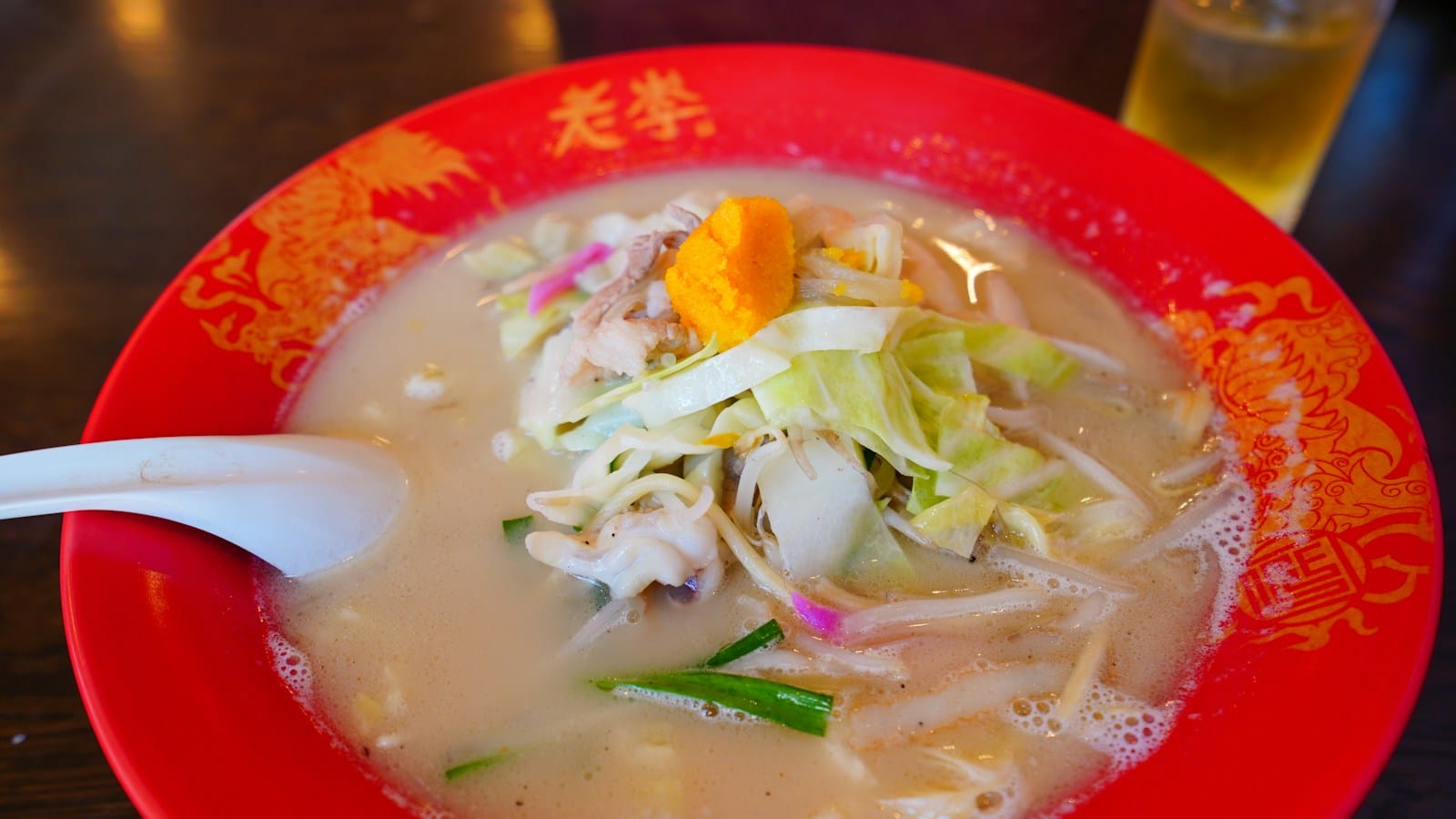
- Shikairo: Established in 1899. Address: 4-5 Matsugae-machi, Nagasaki. Lunch from 11:30 to 15:00; dinner from 17:00 to 20:00. Irregular closing days, plus December 30 to January 2. Champon ¥1,080 (2020 price; confirm the current price before visiting).
Shikairo is close to Oura Cathedral and Glover Garden, making it an easy lunch or dinner stop before or after sightseeing.
[Editor’s note: Confirm lunchtime queues at Shikairo and the current price of champon.]
What should you eat in Kumamoto and Oita? Horse sashimi, ramen and chicken tempura
Kumamoto is famous for horse sashimi and ramen flavored with roasted garlic oil. Oita is known for chicken tempura and ryukyu marinated fish. Both food traditions pair well with trips to onsen destinations such as Aso and Beppu.
Kumamoto horse sashimi (basashi): Served with sweet soy sauce, garlic and ginger
Kumamoto is Japan’s largest horse-meat-producing prefecture. Horse sashimi is commonly served as a platter of lean and marbled cuts, accompanied by sweet soy sauce, minced garlic and ginger. According to tourism information published by Japan’s Ministry of Land, Infrastructure, Transport and Tourism, the tradition is said to date back to Kiyomasa Kato, who built Kumamoto Castle. Alongside karashi renkon and ikinari dango, basashi is regarded as one of Kumamoto’s three signature foods. Many regional restaurants around Shimotori and Kamitori in central Kumamoto serve it. Cooked horse-meat dishes are also available if you prefer not to eat raw meat.
Kumamoto ramen and taipien: Roasted garlic tonkotsu and glass noodle soup
Kumamoto ramen also uses pork-bone broth, but its noodles are thicker than Hakata ramen and it is flavored with fragrant roasted garlic oil, known as mayu (マー油). Taipien (タイピーエン) is a soup of mung bean glass noodles in chicken-and-pork broth, topped with a fried egg, seafood and vegetables. It originated from Fuzhou cuisine in China’s Fujian Province. Korantei (紅蘭亭), which opened in Kumamoto in 1934, is regarded as one of the original restaurants.
- Kumamoto Ramen Kokutei Main Shop: Established in 1957. Address: 2-1-23 Nihongi, Nishi Ward, Kumamoto. Hours: 10:30 to 21:00. No regular closing days. Budget approximately ¥1,000.
For sightseeing and transportation around Kumamoto City and Aso, see our Kumamoto Travel Guide 2026.
Oita’s toriten chicken tempura and ryukyu marinated sashimi
Toriten consists of marinated chicken coated in tempura batter and fried until lightly crisp. It is typically eaten with ponzu citrus sauce and mustard. Ryukyu is made by marinating sashimi, often yellowtail, in a sauce of soy sauce, sugar and sesame. It can be served over rice or as ochazuke with tea poured over it.
- Restaurant Toyoken: Established in 1926 and recognized as the birthplace of toriten. Address: 7-8-22 Ishigakihigashi, Beppu. Hours: 11:00 to 15:30 and 17:00 to 22:00. Closed on the second Tuesday of each month. Approximately 10 minutes by car from JR Beppu Station. The official website did not list a price for the toriten set meal.
For help planning a trip to Yufuin and Beppu, see our Oita Travel Guide.
What should you eat in Miyazaki and Kagoshima? Chicken nanban, black pork, keihan and Shirokuma
Southern Kyushu’s signature dishes include Miyazaki’s chicken nanban and chilled hiyajiru, along with Kagoshima’s black pork, keihan chicken rice and Shirokuma shaved ice. Many of Kagoshima’s best-known restaurants are concentrated in Tenmonkan, so an overnight stay gives you enough time to sample them.
Miyazaki chicken nanban and hiyajiru
Chicken nanban is fried chicken dipped in a sweet-and-sour vinegar sauce and topped with tartar sauce. The dish originated in Nobeoka, Miyazaki Prefecture. Hiyajiru is a traditional summer dish made by grinding grilled fish, miso and sesame into a paste, thinning it with cold broth and pouring it over barley rice.
- Ogura Main Shop: One of the restaurants credited with creating chicken nanban, using chicken breast from Hyuga chickens. Address: 3-4-24 Tachibanadori Higashi, Miyazaki. Hours: 11:00 to 15:00 and 17:00 to 20:30. Closed Tuesdays and the first and third Wednesdays of each month. Approximately 3 minutes by bus from JR Miyazaki Station. Prices were not specified in the source information.
Kagoshima black pork: The Berkshire breed known as “Roppaku”
Kagoshima Kurobuta (かごしま黒豚) must come from Berkshire pigs, recognizable by white markings on their four legs, snout and tail. These six white areas give the breed its Japanese nickname, Roppaku (六白), meaning “six whites.” During the final fattening stage, sweet potatoes make up 10–20% of the feed for at least 60 days, producing fat prized for its sweetness without excessive greasiness. Kurobuta is commonly served as shabu-shabu or tonkatsu.
- Kurobuta Ryori Ajimori: Known as the birthplace of kurobuta pork shabu-shabu. Address: 13-21 Sennichi-cho, Kagoshima. Closed Wednesdays. Budget approximately ¥3,000–¥6,000 per person. Opening hours could not be verified; check before visiting.
Keihan chicken rice and Shirokuma shaved ice
Keihan is a traditional dish from Amami Oshima. Shredded chicken, thin strips of egg and pickled papaya are placed over white rice, then topped with hot chicken broth. It is said to have been served to officials of the Satsuma Domain during the Edo period. Shirokuma is shaved ice topped with condensed milk, fruit and red beans arranged to resemble a bear’s face. Tenmonkan Mujaki is recognized as its original home.
- Tenmonkan Mujaki: Address: 1F, 5-8 Sennichi-cho, Kagoshima. Hours: 11:00 to 19:00. Irregular closing days. Regular Shirokuma ¥950; smaller Baby size ¥700.
The regular serving is quite large, so two people may want to share one bowl.
How should you plan a Kyushu food itinerary?
For a four- or five-day food trip, the most practical approach is to use Fukuoka as your base and visit one or two additional prefectures. The itineraries below assume you are traveling without a rental car. Journey times are approximate; check the JR Kyushu website before departure.
| Itinerary | Best for | What to eat | Travel from Hakata |
|---|---|---|---|
| 4 days: Fukuoka + Nagasaki | First-time visitors and families | Hakata ramen, motsunabe, champon | Approximately 1 hour 20 minutes to Nagasaki |
| 5 days: Fukuoka + Kumamoto + Kagoshima | Meat lovers | Horse sashimi, Kumamoto ramen, kurobuta pork, Shirokuma | Shinkansen: approximately 35 minutes to Kumamoto and 1 hour 20 minutes to Kagoshima-Chuo |
| 5 days: Fukuoka + Oita | Travelers focused on hot springs | Hakata ramen, motsunabe, toriten | Approximately 2 hours to Beppu by JR limited express |
If you arrive in Fukuoka during the afternoon, motsunabe makes a convenient first-night dinner. If you avoid raw food, choose fried squid or cooked horse meat instead. If you do not eat beef, champon and kurobuta pork are alternatives. Vegetarians may find ordering more difficult, as pork-bone and fish-based broths are widely used.
Practical Kyushu food tips: Budgets, reservations and ordering
Expect to spend around ¥550–¥1,100 for a meal of ramen, champon or shaved ice, ¥1,000–¥4,000 for motsunabe or live squid sashimi, and ¥3,000–¥6,300 for mizutaki or kurobuta shabu-shabu.
- Meal ticket machines: Many ramen restaurants require you to buy a ticket before taking a seat. Some machines accept cash only.
- Last orders: Many established restaurants stop taking dinner orders between 20:00 and 21:00. Aim to arrive before 19:30.
- Reservations: Popular mizutaki, kurobuta shabu-shabu and motsunabe restaurants often fill up on weekends. Your hotel reception may be able to make a reservation for you.
- Closing days: Smaller restaurants often close on a Monday, Tuesday or Wednesday. Check their schedules before visiting.
Frequently asked questions
What are the must-try foods in Kyushu?
Kyushu’s signature dishes include Hakata ramen and motsunabe in Fukuoka, Yobuko squid in Saga, champon in Nagasaki, horse sashimi in Kumamoto, toriten chicken tempura in Oita, chicken nanban in Miyazaki, and kurobuta shabu-shabu and Shirokuma shaved ice in Kagoshima. First-time visitors can start with Fukuoka’s specialties and explore other prefectures as their itinerary allows.
What is the difference between Hakata ramen and Kumamoto ramen?
Both use pork-bone broth, but Hakata ramen features very thin noodles and offers extra servings called kaedama. Kumamoto ramen uses thicker noodles and roasted garlic oil for a distinctive toasted garlic flavor. Ramen at Ganso Nagahamaya costs ¥550, while a meal at Kokutei Main Shop costs approximately ¥1,000.
Where can you eat authentic Nagasaki champon?
Shikairo in Matsugae-machi, Nagasaki, is recognized as the birthplace of Nagasaki champon. Founded in 1899, it serves lunch from 11:30 to 15:00 and dinner from 17:00 to 20:00, with irregular closing days. Confirm current prices before visiting.
How much should you budget for a Kyushu food trip?
Budget approximately ¥1,600–¥7,400 per person per day for one noodle dish and one hot pot meal, excluding breakfast and desserts. Ramen followed by motsunabe is among the cheaper combinations, while champon and a mizutaki course are at the higher end.
What is the easiest way to explore Kyushu’s local food?
Many of Kyushu’s signature dishes and original restaurants are found in prefectural capitals, making it straightforward to plan meals around your sightseeing route. In four or five days, you can enjoy ramen, hot pots, seafood and desserts across several destinations. Fukuoka alone offers ramen, motsunabe and mizutaki; head south for horse meat and kurobuta pork, or west to Nagasaki for champon. Established restaurants sometimes change their hours and prices, so check closing days and last-order times before visiting.
Information updated October 2026