Kyushu’s Best Unagi: 6 Eel Spots Worth the Trip
From Yanagawa’s steaming seiro-mushi to crisp Kansai-style eel in Miyazaki, these six Kyushu favourites serve unagi at its best—plus practical prices, access tips and the story behind Japan’s fully farmed eel breakthrough.
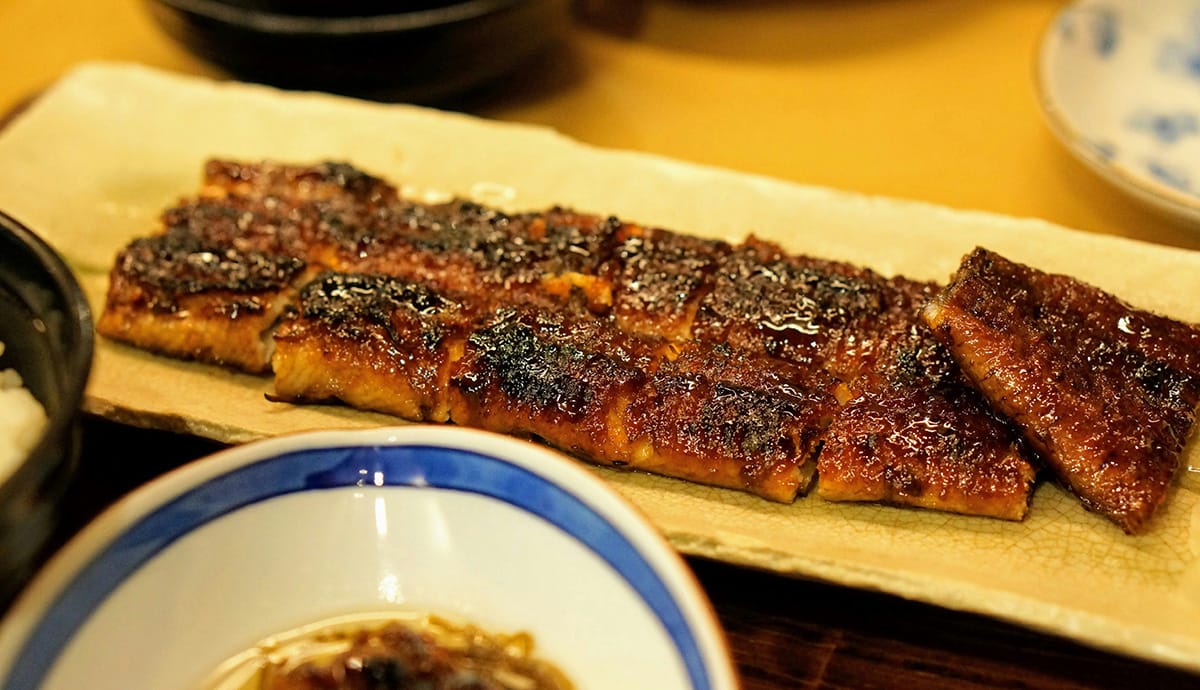
Pick up a pack of grilled eel in a Japanese supermarket and it is far more likely to be labelled “Product of China” than “Product of Japan.” More than 70% of the eel eaten in Japan is imported, while the country’s wild-caught native eel harvest fell to just 52 tonnes in 2024. Even eel farms have long depended on young eels sourced overseas. Kyushu, however, is not only one of the best places to eat unagi; it is also at the forefront of new aquaculture technology. Yamada Suisan in Oita Prefecture recently achieved a breakthrough that could bring fully farmed Japanese eel closer to the mainstream. Below are three distinct Kyushu eel styles and six standout places every unagi fan should know.
Three Ways to Eat Unagi in Kyushu: Yanagawa, Kanto and Kansai Styles
Japanese eel cooking is usually split into Kanto and Kansai styles, with the key difference being whether the eel is steamed and at what stage. Kyushu offers both traditions, plus a third style all its own in Yanagawa.
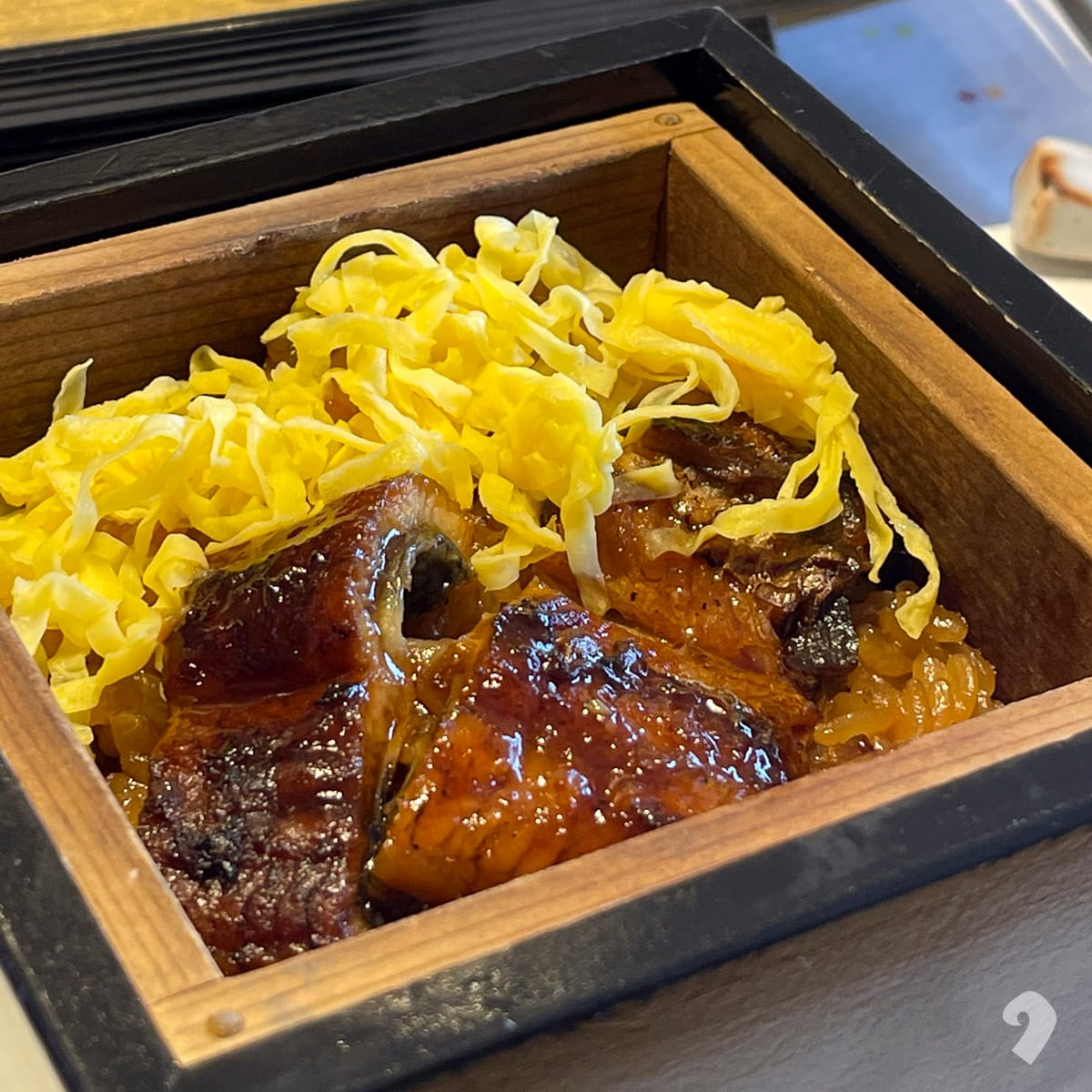
- Yanagawa seiro-mushi (うなぎのせいろ蒸し): Rice mixed with sauce is steamed once, topped with charcoal-grilled kabayaki eel and fine ribbons of egg, then steamed again. Lift the wooden lid and a cloud of steam rushes out; every grain of rice has soaked up the eel’s richness and savoury-sweet sauce, and the whole dish stays piping hot to the last bite. This is Yanagawa’s signature local speciality in Fukuoka Prefecture.
- Kanto style: The eel is split along the back, grilled without sauce, steamed, then grilled again. The result is exceptionally soft and almost melts in the mouth—the classic method behind Tokyo-style unaju.
- Kansai style: The eel is split along the belly and grilled directly over charcoal without steaming, giving it crisp skin, a smoky aroma and a pleasantly springy bite. A celebrated old-school restaurant in Saito, Miyazaki, follows this tradition.
Seiro-mushi is generally traced to Ganso Motoyoshiya in Yanagawa’s Asahi-machi district, founded in 1681. The dish has since been recognised by Japan’s Agency for Cultural Affairs as one of the country’s “100-Year Foods.” Yanagawa now has more than 20 specialist eel restaurants, each with its own sauce recipe. Trying two in one day is not as excessive as it sounds.
Where Should You Eat Unagi in Yanagawa?
For history and tradition, choose Ganso Motoyoshiya; for convenience, Wakamatsuya is hard to beat. The two restaurants are less than ten minutes apart by car or on foot, but their atmosphere, menus and prices are noticeably different.
Ganso Motoyoshiya Main Restaurant: the Birthplace of Seiro-Mushi
Set in a thatched-roof building dating from the Meiji era, Ganso Motoyoshiya has tatami rooms overlooking a peaceful courtyard. Its cooking method has remained unchanged for more than three centuries, and the house sauce is continually replenished in the traditional way. For the original seiro-mushi experience, this is the place. The trade-off is that it sits at the top end of Yanagawa’s price range, and weekends are first come, first served with no reservations.
- Name: Ganso Unagi Seiro-mushi Motoyoshiya Main Restaurant
- Address: 69 Asahi-machi, Yanagawa, Fukuoka 832-0022
- Hours: 10:30 am–8:00 pm (last order 7:00 pm)
- Closed: Mondays (or the following day when Monday is a public holiday)
- Prices: Seiro-mushi ¥4,800; special seiro-mushi ¥5,200; kabayaki ¥4,900; unagi rice bowl ¥3,700. The official website states that consumption tax is charged separately.
- Phone: 0944-72-6155
- Website: https://www.motoyoshiya.jp/
- Access: About a 12-minute walk from Nishitetsu Yanagawa Station
- Also located at: Yanagawa Okinohata and Iwataya in Tenjin, Fukuoka
Wakamatsuya: Steps from the Yanagawa River Cruise
Founded during the Ansei era (1854–1860), Wakamatsuya sits beside the canals in Okinohata, just a five-minute walk from the end of the Yanagawa river cruise. That makes it the easiest restaurant to fit into a sightseeing itinerary. The building is wheelchair accessible, and its seiro-mushi uses only the body of the eel, with the head and tail removed, a gentler introduction for anyone unsure about eel’s stronger flavours. Prices start at ¥3,500, with more choices than Motoyoshiya.
- Name: Unagi Cuisine Wakamatsuya
- Address: 26 Okinohata-machi, Yanagawa, Fukuoka 832-0065
- Hours: 11:00 am–2:30 pm and 5:00–8:00 pm (last order 7:15 pm)
- Closed: Wednesdays and the first and third Tuesdays of each month; open on public holidays
- Prices: Ume seiro-mushi ¥3,500; seiro-mushi ¥3,900; premium seiro-mushi ¥4,230; unagi rice bowl ¥3,460; small rice bowl ¥2,595
- Phone: 0944-72-3163
- Website: https://wakamatuya.com/
- Access: Five minutes on foot from the Nishitetsu Bus Ohana stop; about ten minutes by taxi from Nishitetsu Yanagawa Station
- Note: The official website says reservations are not accepted on weekends, public holidays or for same-day visits. At busy times, expect a numbered-ticket system and waits of around an hour.
A Classic Unagi Restaurant in Central Fukuoka
Yoshizuka Unagiya in Nakasu is one of Fukuoka’s best-known eel restaurants, just a six-minute walk from the subway. Founded in 1873, it occupies a mansion-like building beside the river in Nakasu. Its signature konashi grilling technique produces eel that is crisp outside and tender within, finished with a slightly sweet sauce. When Yanagawa will not fit your schedule—or you have only half a day in Fukuoka. This is the most practical alternative. Just be prepared to queue.
- Name: Hakata Nadayo Yoshizuka Unagiya
- Address: 2-8-27 Nakasu, Hakata Ward, Fukuoka 810-0801
- Hours: 10:00 am–9:00 pm (seating begins at 10:30 am; last order 8:15 pm)
- Closed: Wednesdays, the second and fourth Tuesdays of each month, plus the Obon and New Year holidays
- Prices: Unagi rice bowl ¥2,260; premium unagi rice bowl ¥3,010; unaju ¥3,760; premium unaju ¥4,510; special unaju ¥5,260
- Phone: 092-271-0700
- Website: https://yoshizukaunagi.com/
- Access: About a six-minute walk from Nakasu-Kawabata subway station
- Note: Reservations are accepted by phone only. There are just five parking spaces, and private rooms carry a 10% room charge.
Another central option is Ganso Motoyoshiya’s counter inside Iwataya in Tenjin. It has four counter seats, opens from 10:00 am to 8:00 pm, and closes only on New Year’s Day—ideal for an unagi break between shops.
For Farm-to-Table Unagi: Miyazaki or Kagoshima?
Unagi no Eki in Shibushi, Kagoshima, is the strongest farm-to-table stop, while Irifune in Saito, Miyazaki, is a benchmark for Kansai-style eel. The production figures explain why: Japan farmed 19,167 tonnes of eel in 2022. Kagoshima produced 7,858 tonnes, or 41.0% of the national total; Miyazaki contributed 18.6%, while Shizuoka slipped to fourth place. Shibushi alone accounts for more than half of Kagoshima’s output.
| Prefecture | Farmed production in 2022 | Share of Japan total |
|---|---|---|
| Kagoshima | 7,858 tonnes | 41.0% |
| Aichi | 4,205 tonnes | 21.9% |
| Miyazaki | 3,574 tonnes | 18.6% |
| Shizuoka | 2,365 tonnes | 12.3% |
Source: Ministry of Agriculture, Forestry and Fisheries, Fisheries and Aquaculture Production Statistics.
Unagi no Eki (Shibushi, Kagoshima)
Shibushi is Japan’s leading eel-producing city, and this combined factory, farm shop and restaurant is the place to taste its local unagi. The eels are raised without medication in the company’s own ponds, using groundwater pumped from 70 metres below ground. With 94 seats and a large car park, the spacious complex is especially convenient for road trippers.
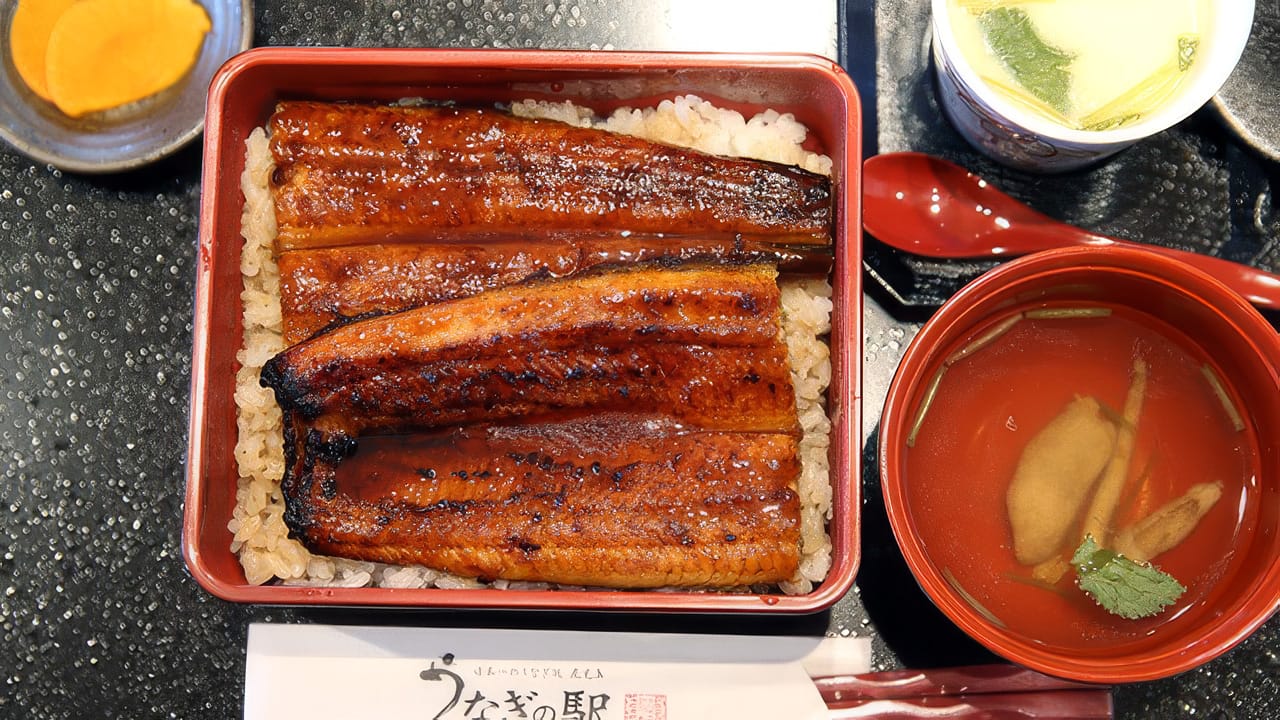
- Name: Unagi no Eki (at Yamada Suisan’s Shibushi factory)
- Address: 1286-8 Shibushi, Shibushi-cho, Shibushi, Kagoshima 899-7103
- Hours: Restaurant 11:00 am–3:00 pm; farm shop 10:00 am–6:00 pm
- Closed: Mondays (or Tuesday when Monday is a public holiday)
- Prices: No fixed price list is published online. The menu includes organic unaju, hitsumabushi, unagi rice bowls and multi-course eel meals.
- Phone: 099-478-8181
- Website: https://yamadasuisan.com/unaginoeki/
- Access: About 2.5 km from JR Shibushi Station; driving is recommended
- Note: Opening hours vary considerably across travel websites. Check the official site and call before setting out.
Unagi no Irifune (Saito, Miyazaki)
Founded in 1894, Irifune welcomes as many as 250,000 diners a year. So many that it has a separate waiting room next door. Its eel is grilled directly over binchotan charcoal without steaming, firmly in the Kansai tradition, with skin crisp enough to hear as you bite. The restaurant even advises tasting the first mouthful without sansho pepper. Its house-created gojiru, a rich soybean miso soup, has since become a standard side dish at eel restaurants across Miyazaki.
- Name: Unagi no Irifune
- Address: 3316-3 Minamikata, Saito, Miyazaki 881-0027
- Hours: 11:00 am–2:30 pm and 4:30–8:00 pm (last order 7:30 pm)
- Closed: Tuesdays; check the official closure calendar for temporary changes
- Prices: Takeaway eel bento ¥2,840; special eel bento ¥3,930; one serving of kabayaki ¥2,560; dine-in set meals roughly ¥2,500–¥7,000
- Phone: 0983-43-0511
- Website: http://www.u-irifune.com/
- Access: About 40 minutes by car from Miyazaki City, near the Saitobaru Archaeological Museum
- Note: Reservations are not accepted on busy days, and even on weekdays the restaurant may stop taking guests once fully booked.
Unagi no Eki Saiki (Saiki, Oita)
Opened on 11 June 2026 in a converted conveyor-belt sushi restaurant, this company-run shop sells its own medication-free kabayaki eel, eel bento, seafood products from the factory and local Saiki souvenirs. It is the closest visitor stop to the site where fully farmed eel is being developed. There is no dine-in seating, though, so bento is takeaway only.
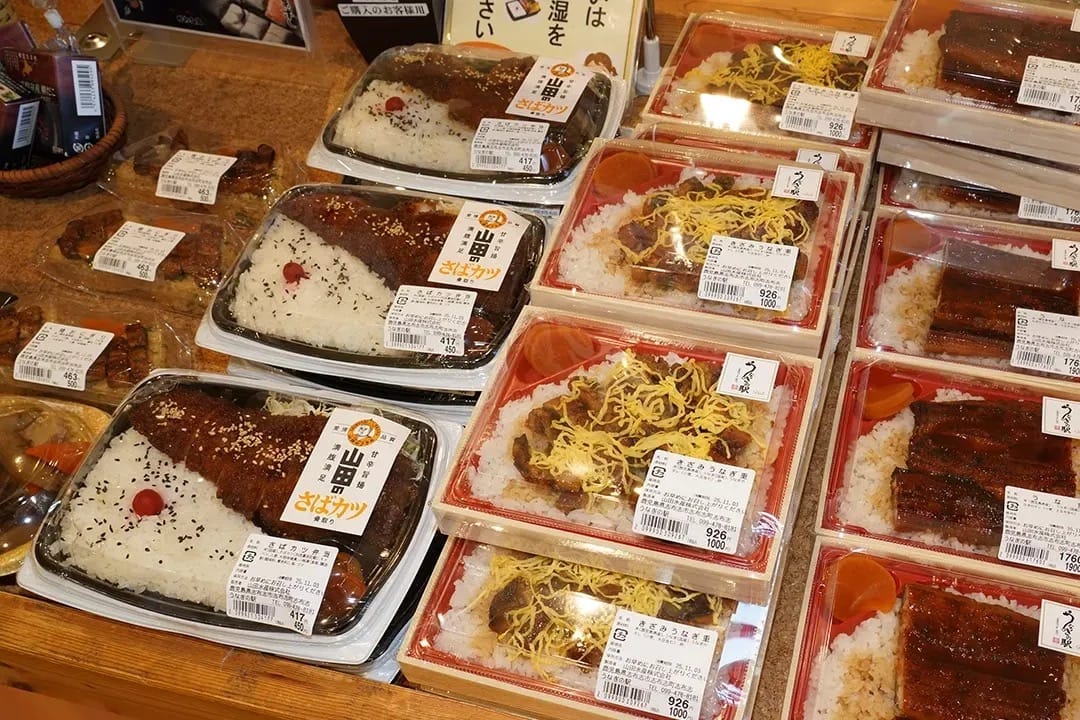
- Name: Unagi no Eki Saiki
- Address: 1-13 Joka Higashimachi, Saiki, Oita 876-0848
- Hours: 10:00 am–6:00 pm (until 5:00 pm on Sundays)
- Closed: Wednesdays (or the following day when Wednesday is a public holiday)
- Phone: 0972-28-5600
- Website: https://yamadasuisan.com/unaginoeki-saiki/
- Access: Near JR Saiki Station; about one hour by car from Oita City
What Is Fully Farmed Eel?
“Fully farmed” means completing the eel’s entire life cycle in captivity: hatchery-born eels are raised into broodstock, their eggs are collected and hatched, and the young are then grown to market size without taking wild glass eels from the ocean. Most eel sold as “farmed” still begins with juvenile eels caught in the wild.
Japan’s Fisheries Research and Education Agency achieved the technology in 2010, but early costs were far too high for commercial use. The production cost of a hatchery-raised juvenile eel has fallen from about ¥40,000 in fiscal 2016 to roughly ¥1,800 today, yet that is still three to four times the price of a wild-caught juvenile. Yamada Suisan, based in Saiki, Oita, focused on feed. In nature, eel larvae eat the eggs of the spiny dogfish, itself an endangered shark—effectively using one threatened species to save another. An alternative feed based on chicken eggs solved the problem. The eels were then raised in Shibushi in what the company says is the world’s first eel-farming cycle completed without antibiotics or synthetic antibacterial agents.
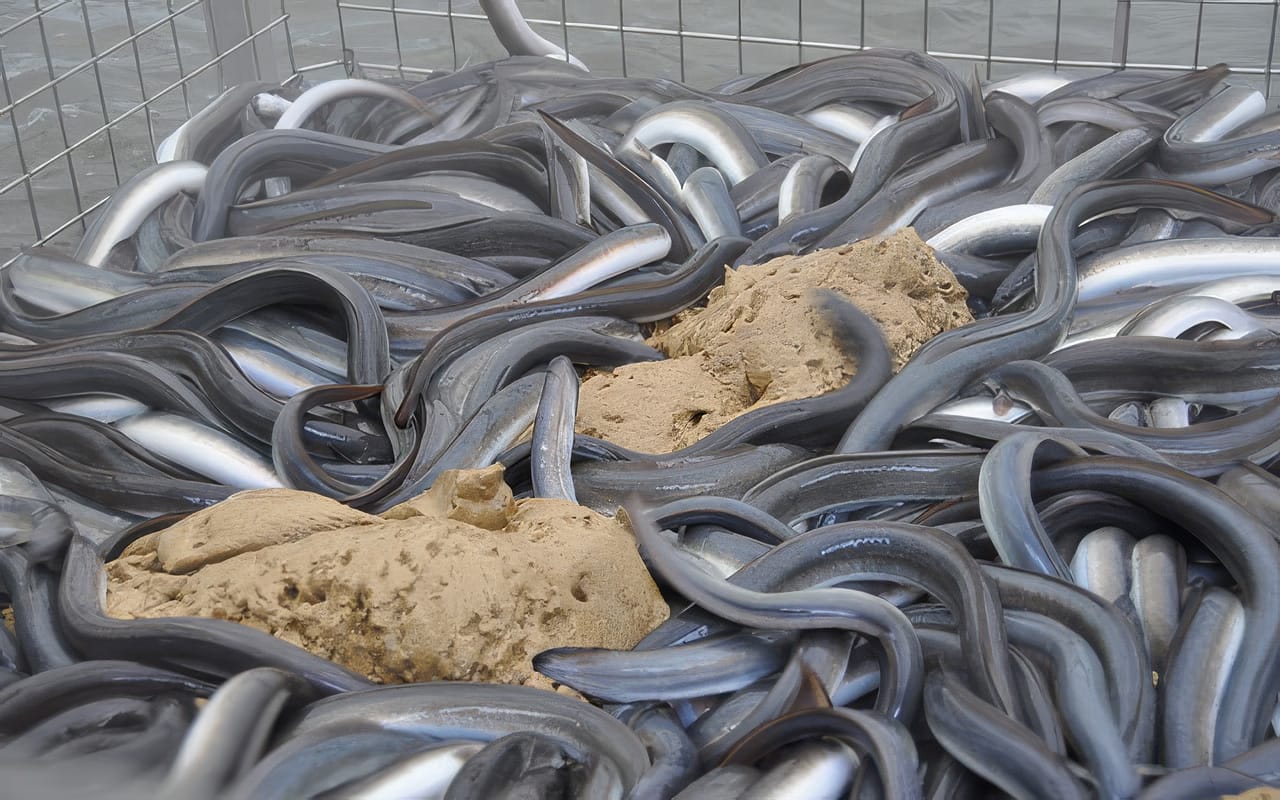
On 29 May 2026, the first batch of around 600 eels went on sale to the public. For now, they are limited to online sales and department-store channels rather than a permanent product line, and they are not yet available in restaurants.
Company president Shintaro Yamada has said that fully farmed eel is neither clearly better nor worse than conventional farmed eel; flavour depends more on processing and sauce. The goal is not to create a tastier eel, but to diversify supply and reduce dependence on wild or imported juveniles.
Unagi Trivia
- It took humans two thousand years to discover where eels spawn. In May 2009, a University of Tokyo team led by Katsumi Tsukamoto recovered the world’s first 31 naturally spawned eel eggs near the southern end of the West Mariana Ridge, at a depth of around 160 metres. Over its lifetime, an eel may swim roughly 6,000 kilometres across the Pacific and back.
- The custom of eating eel on Doyo no Ushi no Hi may have started as marketing. Legend says the Edo-period scholar Gennai Hiraga advised a struggling eel shop to hang a sign announcing “Today is the Day of the Ox,” triggering a sales boom. The story has no clear source and is widely considered a later invention. There really was a belief that foods beginning with the Japanese sound “u” helped ward off summer fatigue on the Day of the Ox—but umeboshi plums, uri melons and udon were all on the list, not just unagi.
- Eel is unusually affordable in 2026. A strong 2025 juvenile-eel catch pushed supermarket kabayaki prices in Japan down by around 10%, while some retailers promoted larger portions instead. Environmental media have cautioned, however, that a bigger catch does not necessarily mean wild stocks have recovered.
- Some Fukuoka locals grow up thinking seiro-mushi is eaten all over Japan. In reality, it is a local speciality found mainly around Yanagawa and is surprisingly difficult to find outside Kyushu, a fact many residents discover only after leaving the region.
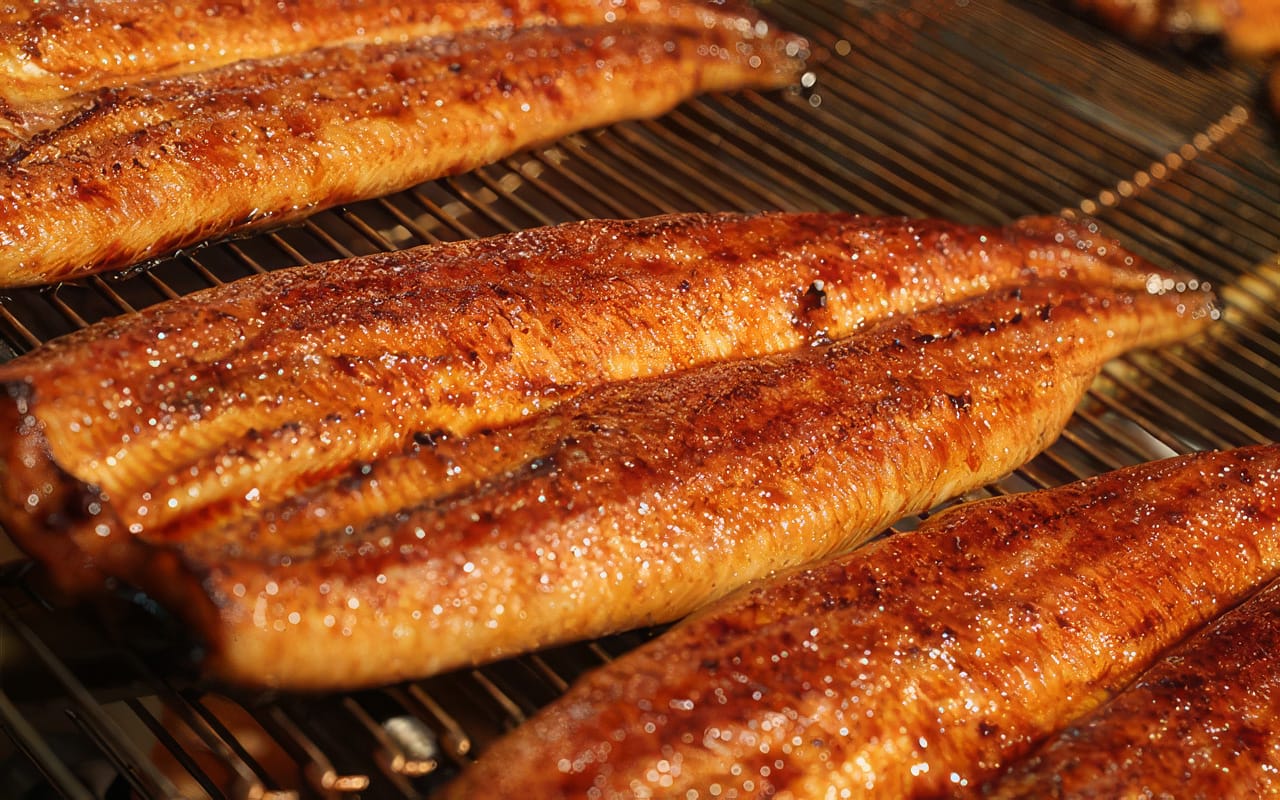
Frequently Asked Questions
Where is Kyushu most famous for eel? Yanagawa in Fukuoka Prefecture is the best-known dining destination, with more than 20 specialist restaurants serving the local seiro-mushi style. For production, Kagoshima leads: it supplied 41% of Japan’s farmed eel in 2022, and Shibushi accounted for more than half of the prefecture’s total.
How is Yanagawa seiro-mushi different from a regular eel rice bowl? For seiro-mushi, sauce-seasoned rice is steamed once, topped with kabayaki eel and shredded egg, then steamed again and served in the wooden steamer so it stays piping hot. With ordinary unaju or unadon, the grilled eel is simply laid over plain rice, so the sauce does not permeate every grain.
How long does it take to reach Yanagawa from Fukuoka, and what does it cost? The limited express from Nishitetsu Fukuoka (Tenjin) Station to Nishitetsu Yanagawa takes about 50 minutes and costs around ¥960 each way. The digital Dazaifu–Yanagawa Sightseeing Ticket costs ¥3,620 and includes return rail travel plus the river cruise.
Do Kyushu eel restaurants require reservations? Wakamatsuya in Yanagawa does not accept weekend, public-holiday or same-day reservations; numbered tickets are issued on site, and waits can reach an hour. Ganso Motoyoshiya is also first come, first served on weekends. Yoshizuka Unagiya in Fukuoka accepts reservations by phone only.
Can visitors eat fully farmed eel at a Kyushu restaurant? Not yet. The first batch of around 600 eels released in 2026 was a limited trial sold mainly online and through department stores, not as a permanent item. Yamada Suisan says it will consider serving them at its own outlets once production scales up.